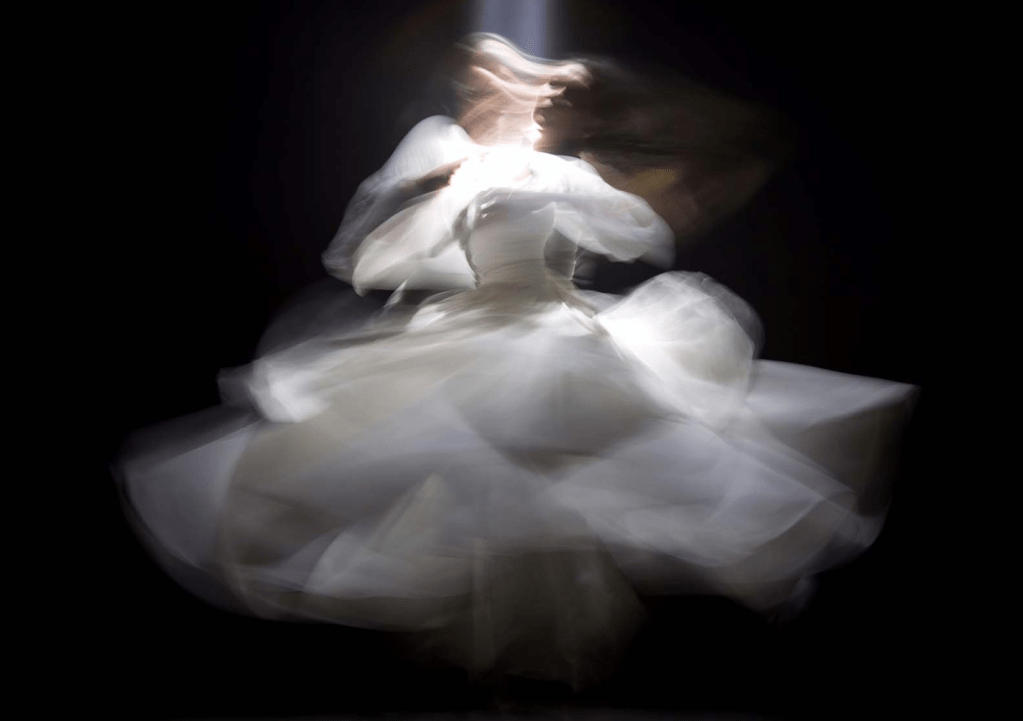
Pain and its Shadow

Pain creates a shadow. That much is undeniable. And with it comes an instinct—raw, immediate, human.

The urge to hurt someone because you were hurt is natural. It’s an afterthought. A reflex. The nervous system fires before wisdom arrives. That first dark impulse—the flash of retaliation, the desire to strike back—is not a moral failure. It’s biology. We are human, after all.

But instinct is not instruction.

Someone who has truly understood shadow work knows this difference intimately. They know that while the impulse is real, acting on it is foolish. Short-sighted. It might feel satisfying in the moment—like relief, like justice—but it always backfires. Always.

Here’s the paradox most people miss:
the shadow itself knows this.

The shadow is not reckless. It is intuitive. Its intelligence lies in discernment—in knowing which actions drain you instead of protect you. True shadow integration does not encourage explosion or revenge. It teaches restraint. It offers protection that is quiet, strategic, and enduring, not the kind that lashes outward for temporary relief, but the kind that preserves your integrity long after the moment has passed.

No foolish negative outward action here.
No outward action at all.

That is real control. Real control of your mind, your psyche, yourself.

The Point of the Shadow Is Liberation

This is where healing becomes unmistakable.

You know you are not healed yet when you still feel the urge to use your shadow to attack something—to feel powerful, justified, or momentarily relieved of the pain you endured. That urge doesn’t mean you’re strong. It means you’re still inside the wound.

Healing reveals itself when that urge dissolves.

When hurting back no longer feels satisfying.
When retaliation feels heavy instead of empowering.
When you no longer need to prove what you survived.

That is not weakness. That is freedom.

When I did my shadow work, it wasn’t rebellious. It wasn’t loud. It wasn’t performative. There were no declarations, no theatrics, no enemies to conquer.

I sat with my pain (a.k.a. my shadow).

For hours, days, weeks, months, years…

Crying. Shivering. My body trembling as if every cell was finally allowed to speak. I felt it fully—without distraction, without escape—asking God to help me endure it.

That was it.

No revenge.
No outward action.
No destruction of anyone else.

That is why I say shadow work is a divine practice. Not because it glorifies darkness, but because it demands surrender. It asks you to sit in the uncomfortable truth long enough for it to transform you. It has nothing to do with rebellion and everything to do with reverence—for your pain, your body, and your capacity to endure without becoming what harmed you.

The shadow, when honoured correctly, does not make you darker.

It makes you free.

And Here Is the Part No One Talks About

When you stop reacting, something shifts.

When you refuse to act out your shadow through harm, your growth becomes the force. Quiet. Unavoidable. Surgical.

The person who tried to bring you down doesn’t get your anger.
They don’t get your retaliation.
They don’t even get your attention.

They get something far more destabilising:

They get left behind.

Your healing hits where no attack ever could.
Your alignment exposes what was never solid.
Your becoming does the work you never needed to do outwardly.

That is the real power of shadow work!

Not destruction.
Not revenge.
Not proving anything.

Just transformation so complete that the darkness that once threatened to consume you becomes the very thing that carries you forward.

Effortless.
Intuitive.
Untouchable.

Feminism, Polarity & The Myth We Accidentally Broke

There’s a question I’ve been sitting with for a while now — not as a feminist, not as a woman, but as a human being trying to understand our collective psychology:

What happens when feminism forgets the feminine?
And masculinity forgets the masculine?

Because lately, the conversations I overhear — in cafés, on group chats, over wine nights — don’t sound like empowerment anymore. They sound like a war cry.

Not against patriarchy.
Against men.

A frustration so sharp it’s starting to look like hatred.

And somewhere in all of this, I can hear Carl Jung whispering:

“What you resist, persists.
What you fight externally is usually what you have not reconciled internally.”

We didn’t break the patriarchy.
We internalised it.
Then we flipped it.
And now some women are wielding that same masculine shadow with pride — domination, dismissal, superiority masked as empowerment.

But that’s not feminism.
That’s just patriarchy in drag.

The Forgotten Polarity

Jung spoke of animus (the masculine within women) and anima (the feminine within men).
A healthy psyche holds both — but in balance.

When the feminine rejects its own softness, intuition, empathy, and receptivity, and instead elevates aggression, dominance, and emotional rigidity, it becomes the very thing it was trying to dismantle:
a distorted masculine archetype.

And when the masculine rejects its own strength, direction, courage, and containment in fear of being “toxic,” it collapses into passivity, shame, and confusion — a distorted feminine archetype.

We are not meeting each other.
We are trading shadows.

And so the polarity collapses.

Where there was once magnetism, we now have resistance.
Where there was once attraction, we now have fear.
Where there was once mutual respect, we now have competition.

This is not evolution.
This is fragmentation.

Feminism Was Never Meant to Erase Differences

I believe in feminism — with my whole chest.
But I believe in a version that honours polarity, not erases it.

Strength is not exclusively masculine.
Softness is not exclusively feminine.
But the archetypal energies exist for a reason.

Men and women were never meant to be identical.
They were meant to be complementary — yin and yang, form and flow, structure and intuition.

When we stop honouring these polarities, we don’t become equal.
We become disconnected.

Disconnected from ourselves
and from each other.

The System Is the Problem — Not Most Men

Here’s the truth:

Most men are not sitting in dark rooms plotting how to keep us down.
Most men are not deciding promotions, pay gaps, or reproductive laws.

The system — built by generations of unconscious masculine energy — is what we’re fighting.

Not the average man sitting next to us at dinner.
Not the friend who is trying.
Not the man who is learning to be better.

But we treat them the same anyway.

And ironically, that is how toxic masculinity operates:
“Group them all together. Punish them all.”

The shadow is the same.
Only the costume changed.

Men Are Not the Enemy. Women Are Not the Victims.

There are things men are naturally wired for that women can’t touch.
There are things women are naturally wired for that men can’t reach.

This is not inequality.
This is polarity.

A tree grows tall because the roots grow deep — not because the branches declare war on them.

And yet here we are, hacking at each other’s roots.

Here’s What I Believe:

A healed woman does not hate men.
A healed man does not fear strong women.
A healed society knows how to hold both energies without forcing them into battle.

Feminism was never about conquering men.
It was about conscious partnership.

Masculine and feminine — in both men and women — meeting in the middle, not overpowering each other.

When we weaponise feminism, we don’t free anyone.
We just recreate oppression with different branding.

The real revolution is internal:
Women reclaiming their feminine without shame.
Men reclaiming their masculine without fear.
All of us integrating the parts of ourselves we’ve disowned.

This is how patriarchy actually breaks.
Not through war —
but through wholeness.

The Fine Line Between Humour and Hurt

If I died today (don’t worry, I’m not planning to), I know in my heart I’ve lived a full life. I’ve seen enough, felt enough, survived enough for at least three lifetimes. The highs, the lows, the absurd plot twists — I’ve experienced life in 360 degrees.

And one thing has always carried me through it all:

Humour.

Humour has been my most loyal companion. It softened the blow when life got harsh. It helped me stay afloat when the weight of everything felt unbearable. If survival was an art, humour was the paint I used to colour the darkest parts of my story.

Humour has been my oxygen mask in the airplane of life — except I never waited for the turbulence. I’ve been putting that mask on since take-off.

People who know me will tell you I can find comedy in almost anything.
Pain? I can turn it into a joke.
Heartbreak? Give me 10 minutes and I’ll have you laughing.
Life falling apart? I’ll add a punchline.

Humour made me lovable. The life of the party. The person who “has it all together.”

But here’s the plot twist no one saw coming — not even me:

I was coping, not healing.

Humour helped me survive, but it didn’t help me feel.

The Joker Mask

For the longest time, my humour wasn’t a personality trait, it was armour.

A beautifully sequined, sarcastic, quick-witted suit of armour that made everyone around me comfortable, while I slowly bled underneath.

On the outside:
Witty. Charming. Resilient. Strong.

On the inside:
Exhausted. Numb. Holding back tears with a smile.

The Joker metaphor isn’t accidental. His character wasn’t about comedy — it was about the tragedy of concealed pain. When your laughter becomes a shield, comedy turns into a coping mechanism. And coping mechanisms, when overused, become cages.

Matthew Perry is the one who comes to mind for me. He wasn’t just funny — he was funny to survive. The world adored him for his humour, but the humour was also his hiding place. Eventually, the hiding became too heavy.

I don’t know his personal story in detail. The media tells a version that suits them. But I know the feeling of being “the funny one.” I know the emotional cost of performing happiness while drowning quietly.

You can’t outrun your pain forever. At some point, the mask slips. And when it does, the fall is brutal.

When Humour Stops Helping

For a long time, I’d skip straight to the punchline because the alternative — sitting with the pain felt unbearable.

I thought:

If I can laugh at it, it can’t hurt me. But humour doesn’t erase pain. It delays it. It numbs it. And numbness always has an expiry date.

So lately, I’ve been re-evaluating my relationship with humour. Not abandoning it, just… evolving with it.

Humour is still one of my greatest gifts. But now, I choose to use it after I’ve felt the truth of what happened, not as a way to avoid it.

And that shift has changed everything.

My New “Humour + Healing” Timeline

If I were to map it out, this is what it now looks like:

1. Tragedy happens. Everything feels like a joke, except it’s not. Not yet.

2. Experience it. Really feel it. No laughing. No deflecting. No “I’m fine.” Sit with the discomfort. Bleed a little if you have to.

3. THEN laugh. Loudly. With friends, alone, in the shower, doesn’t matter. Humour is powerful medicine after the wound has been acknowledged.

4. Grieve again — this time consciously. There comes a moment when the laughter fades and the truth hits you. “This was actually messed up.” Don’t run. Feel it.

5. Finally, release it — with laughter. This time, the humour isn’t numbing you. It’s freeing you.

And here’s the wildest part I’ve noticed:

The more traumatic the experience…the funnier it becomes after you’ve truly healed it. Not because the tragedy was small, but because you survived something enormous, and laughter becomes your victory roar.

Why This Balance Matters

Humour without healing is escapism.
Healing without humour is unbearable.

But humour after healing?
That’s alchemy.

That’s turning darkness into light.
That’s reclaiming your story.
That’s laughing from the soul, not from the surface.

I still believe humour is sacred.
It has saved me more times than I can count.
But now I know it’s not the destination — it’s a stage of the journey.

Feel first.
Laugh second.
Heal through both.

Because the truth is:
Life will always give us chaos.
Humour makes it bearable.
Healing makes it meaningful.

Alive. Very Alive.

I was reminded of the book The Subtle Art Of Not Giving A Fuck by Mark Manson recently when I hiked up a mountain to catch the sunrise. The book ends with a chapter about him standing at the edge of the cliff, pulling himself back to the trail as the adrenaline rushing through his blood dissipates. A stranger sees him there, eyes wide, body still vibrating from the silence, the sheer nearness of death. 

The stranger asks Mark:

“Is everything okay? How are you feeling?”

There is a pause. Mark responds:

“Alive,” he says. “Very alive.”

That part stayed with me.
Not the philosophy. Not the optimism.
Not the existential theory of life or death.

Just that moment:
Alive. Very alive.

Because that feeling does not come from safety. It comes from standing at the threshold, where your mind quiets, your body trembles, and your soul steps forward to speak.

I think everyone needs to stand there once. Not necessarily on a cliff but at their edge. Whatever edge life has placed for them. Because when you strip everything away —
the noise, the roles, the expectations — what remains is the truth of your life.

And here is my truth:

If today was my last day, I know I have lived. Fully. Chaotically. Messily. With every version of myself, even the broken ones, shining through. The choice to be alive was never half-hearted for me. Even my pain has been wholehearted. Even my joy has been loud.

Yes, I have unfinished dreams. But I have no unfinished living.

And maybe that is why, if I were on that cliff, I wouldn’t jump, not because I am afraid to die, but because I am not done living. The story is still happening. The threads are still weaving. The meaning is still unfolding.

The only tragedy, I think, is not death. It is reaching the end and realising you never really showed up. If you find yourself fifty years from now saying, “I could have lived more,” then the heartbreak is not in dying — it is in not having lived.

This is why the edge matters. Because the moment you look down, and everything goes silent, and your mind finally stops fighting, you will know exactly what remains.

Your truth.
Your life.
Your aliveness.

And stepping back from that edge, with breath still in your lungs, is the moment you return to the world very alive. Ready to live life to the fullest, because afterall, life is fragile. You never know when your last day on planet Earth will be.

Missing Someone

Missing someone isn’t one emotion. It’s a spectrum — quiet, wild, and sometimes cruel. It shifts depending on what part of the past it clings to, what kind of love it remembers, and what kind of silence it leaves behind.

1. Missing the Memories

The most familiar kind. You think you miss your ex — the late-night calls, the shared experiences, inside jokes that once made ordinary days feel cinematic. You miss the relationship, however messy or imperfect it was, because it held a version of you that believed in love a certain way — wildly, recklessly, without knowing better.

And maybe that’s what you’re really missing — her, the old you. The one who kept showing up, even when things didn’t make sense. Loving that past version of yourself is necessary. Because as we grow, that part of us, the one that loved so fearlessly dies a little. What remains is her ghost, whispering reminders of who we once were.

So perhaps it isn’t the person or even the relationship you miss. It’s that echo inside you, the memory of your own innocence, the hope that once burned bright before it learned the art of self-protection.

2. Missing Someone “Just Because”

Then there’s the kind that arrives uninvited. No song, no photograph, no reason at all. You just find yourself thinking of your friends from when you were in college (young, wild and free), the ones who made you laugh until your stomach hurt, who held your secrets without judgment, who made you feel safe enough to simply be. With them, there was no need to edit yourself or explain your silences.

You don’t miss one particular moment; you miss the energy of belonging. It’s not sadness, it’s remembrance. A quiet gratitude for what was. Your heart still hums their frequency, the familiar vibration of genuineness, even if your lives have drifted apart or your cities no longer overlap.

3. Missing the Person

This one is quieter and deeper. It’s not about what you did together, it’s about who they were. The way they made you feel grounded, seen, alive. You could have every photograph, every message, and still feel the hollow of their absence. Because this isn’t nostalgia, it’s knowing that something irreplaceable once existed. It’s missing what no one else could ever be.

4. Missing Through Love

I once came across a quote:

“You cannot miss someone as much as you love them.”

The depth of your missing will never exceed the depth of your love. You feel it most when you think of family — your parents, your roots. You miss them even when they’re right there, sitting beside you. You miss the versions of them that existed when you were small, the safety of their presence before life’s complexities took over. This kind of missing isn’t about loss; it’s about continuity, love echoing through time, changing shape but never fading.

5. The Kind That Feels Like Longing

And then, there’s the rarest kind. The missing that refuses to fade. The kind that feels like longing — sacred, eternal. It’s what you feel for a true love, the one who touched your soul in ways you can’t unlearn. You move forward, you live your life, but something in you still turns toward them, like a flower bending to the light. You can’t explain it. You can’t quiet it. It doesn’t ask for reunion. It simply is.

It’s love without demand — pure, patient, infinite.

There are many ways to miss someone. Some are fleeting; others stay for years. Some ache; others heal. But maybe the truth is this, missing isn’t always pain. Sometimes it’s a quiet way of remembering love in all its forms.

Because sometimes, the missing is the love.

Time, Memory, and the Art of Letting Go

“And if Time is anything akin to God, I suppose that Memory must be the Devil.” – Claire Fraser, Outlander

I’ve thought a lot about this line lately. It’s one of those quotes that stays with you, not because it’s dramatic, but because it’s true.

Time heals, they say. And maybe it does. It softens the edges, dulls the sting, lets you breathe again. But memory, memory doesn’t forget. Memory lingers. It plays its little tricks, sometimes like a ghost that refuses to rest.

Time may close the wound, but the scar stays.

And perhaps that’s what Claire meant, that time, like God, is merciful. It gives us distance, perspective, grace. But memory, the Devil, keeps pulling us back. It whispers, remember how that felt? Sometimes with warmth, other times with ache. The scar becomes a reminder, not just of what happened, but of what we still carry inside.

So what is time really healing? The pain, I suppose. The sharpness of it. But the memory, the scar, it stays, as it should. It reminds us of the work that’s still left to do.

There’s a song by David Guetta called Memories that puts it rather beautifully:

“All the crazy shit I did tonight
Those will be the best memories
I just wanna let it go for the night
That would be the best therapy for me.”

That lyric “I just wanna let it go” is the missing piece.
Time alone doesn’t heal. Letting go does.

And yet, I’ve struggled with that part — the letting go. Holding on feels easier sometimes, doesn’t it? We get used to the pain; it becomes familiar, almost comforting in its predictability. But pain was never meant to be a home. Eventually, it catches up with you, demanding to be felt, to be acknowledged, to be released.

That’s the divine magic of time, it confronts you with the memories exactly when you’re ready to face them. You feel the ache so deeply that there’s no choice left but to let it move through you. That’s when release becomes inevitable. After all, we were never meant to hold on to the weight of our wounds.

Healing isn’t about forgetting or staying far enough so you don’t feel its presence anymore. It’s about revisiting the pain long enough to understand it, to really feel it, and then to let it move through you instead of dodging it. That’s how time becomes divine. Because if time passes and the pain remains locked away, untouched, then memory will keep dragging you back to the same moment, again and again.

Time only heals what you allow yourself to feel.

Maybe that’s what it means to turn time into therapy. To sit with what hurts, to let the tears fall, to stop resisting the ache until, slowly, it begins to dissolve.

Feel the pain.
Let it go.
Heal.

And one day, when memory comes knocking again, it won’t hurt as much. You’ll trace the scar gently and smile, not because you’ve forgotten, but because you’ve finally made peace with remembering. Because that’s what true healing is: forgiving and remembering. Forgiving the past, yourself, and the people who became part of your pain. Not to erase what happened, but to set yourself free. Forgiveness is what transforms the scar from a mark of suffering into a symbol of survival.

And on the other side of all that feeling, after the tears, the release, the remembering comes peace. Not the fleeting kind that depends on circumstances or closure, but the quiet, grounded peace that settles in once you stop trying to control what was never meant to be. It’s a peace that doesn’t need answers. A peace that trusts that what left was never yours to hold, and what remains is exactly what’s meant to stay.

That’s when the memories soften, the body exhales, and the soul finally rests.

Maybe peace isn’t the absence of pain, but the grace to remember without bleeding. – Namrata Adsul

When the mind quiets, the soul begins to hum

We’ve all heard the phrase “mind over matter.” It’s one of those mantras we cling to when life tests us — push harder, think stronger, keep going. And for a while, it works. The mind is powerful; it bends reality, rationalizes pain, and convinces us we can make it through anything.

For years, I wore this kind of resilience like armour.
Every challenge was a battlefield, and I fought with mental strength alone. Mind over matter was my survival tool until the mind itself became the battlefield.

That’s when I realised:
The mind is not the final frontier of strength. It is just the first.

There is something deeper beneath it — the soul. It doesn’t argue or demand. It doesn’t need logic or proof. It simply knows.

The mind pushes. The soul guides.
The mind analyzes. The soul accepts.
The mind tries to control reality. The soul understands there isn’t one — that everyone’s reality is uniquely shaped by their experiences. At the level of the soul, matter doesn’t even exist, only energy, intuition, and truth.

So maybe it’s not mind over matter anymore. It’s soul over mind.

Because when the mind falters, the soul doesn’t swoop in to fix it — it simply reminds us that we were never broken in the first place.

The mind survives the world. The soul transcends it.

And one day, when you find your way out of the heaviness, you’ll notice a different kind of peace waiting for you. Not the temporary kind that depends on circumstances or certainty, but a grounded calm that comes from releasing control over what was never meant to be yours. A peace that doesn’t need answers. A peace that trusts that what left was never meant to stay, and what remains is exactly what’s aligned.

Someone once told me, at a moment when I had completely given up, that maybe the way through wasn’t to fight the darkness, but to give in to it. To stop resisting the fall long enough to actually land because only when you’ve met the ground can you find the strength to rise again.

He said, “There’s a long way ahead, full of bright green pastures of possibility. It feels dark now, overwhelming even, but if you get back up… you’ll get to live the life that’s already unfolding for you.”

Maybe soul over mind isn’t esoteric at all.
Maybe it’s the part of us that survives the fall.
Not the polished resilience the world praises, but the raw, scraped-knee, tear-stained kind you only earn at the bottom.
The kind that whispers:

Not like this. Get up. One more time.

The mind helps us function.
The soul — that inner fire — helps us rise.

Photo artist unknown.

Gryffindor

“You might belong in Gryffindor, where dwell the brave at heart. Their daring, nerve, and chivalry set Gryffindors apart.” — Sorting Hat

I’ve always known, deep in my bones, that I’m a true Gryffindor. Even when fear clung to my skin, I somehow managed to rise. Bravery didn’t always feel like a roar—more often, it arrived quietly, wrapped in trembling hands and uncertain steps. But I showed up. Again and again.

Still, there comes a time when being too brave, too often, leaves the pot of courage bone-dry. I remember those years when I lived on the edge. I flirted with risk, danced with chaos, and mistook recklessness for resilience. Every decision pushed a boundary. Every choice felt like I was testing the limits.

Until one day, the pot was empty. And I finally sat myself down. Body tired, heart heavier than I cared to admit. I realised how much I had been burning through myself just to prove I was brave.

That’s when the doubt crept in. Not all at once, but through quiet whispers of “what if” and a lingering fear of the unknown. That combination held me hostage. Kept me safe, but small. It made me wonder—was the pot truly empty, or did I convince myself it was? Maybe I was trying to protect myself from everything that felt too big, too fast, too uncertain.

In those moments, I lost her—the truest version of me. The one who once dared without second-guessing. I shrank into the shadows of hesitation, even when something inside me knew the unknown might be a good thing. But it wasn’t the world I was afraid of. It was the storm within.

So, I stayed. I didn’t run this time. I met the inner demons I had spent a lifetime avoiding. I didn’t fight them, I listened. And after many moons of letting the tides of memory and emotion crash over me, I found my footing again.

And now, when I speak of bravery, it’s not the loud, performative kind. It’s the kind that grows roots. The kind that allows space for softness. The kind that whispers—you’re safe now.

So yes, Sorting Hat, go ahead. Place me in Gryffindor. I no longer wear courage like a mask. I carry it quietly, but deeply. I feel brave from the inside. Brave at heart.

Diary Entry Day 7: Rebirth at 33

In the midst of remembering all that I’ve lived through, I’ve forgotten to actually live.

I recently turned 33. Growing older used to feel terrifying — not because of age, but because of how many years I felt I had already lost. I survived my childhood, endured my teenage years, and stumbled through early adulthood. I grew up too fast. I had to.

When I was talking to someone recently, I told them that this birthday feels different. I want it to be a rebirth. A reset. A conscious beginning.

For the first time, I’m starting to imagine beautiful things. Not just the life I escaped from, but the life I want to create. I’m not losing my youth. I’m growing into a version of myself that finally feels like home.

The best things in my life haven’t happened yet.
There’s love to be discovered, the kind that grows deeper with time.
There’s the possibility of becoming a mother, of raising children with awareness and tenderness.
There’s meaningful work ahead, work that feels aligned with who I am.

Even thinking about these things brings tears to my eyes. Because for so long, I couldn’t. I didn’t dare to hope. It felt too risky. Too far away. Too unsafe.

But now, I do hope. I do dream.

Yes, I’ve lost a lot. Yes, trauma shaped my path. But it didn’t break me. I’ve lived. I’ve gathered stories and strength. And I know, deep down, that the version of me who walked through all that darkness has earned her joy. Not as a reward, but as a right.

I’m proud of myself. Truly proud. That’s something I haven’t said often enough.

Will I still get triggered? Yes. Will fear visit me again? Probably. These things don’t disappear overnight. They live in the body. They resurface. But now I know how to face them.

I used to hope I’d one day forget everything that happened. But I’ve learned that forgetting doesn’t free you. It only delays the return. So I’m done running. This happened. These are the cards I was dealt. And still, I’m here. And still, I get to live a beautiful life.

Today’s Truth:

I’m not healing to erase the past.
I’m healing to remember the future I still get to have.
This is my rebirth — not in spite of what I’ve lived through, but because I chose to keep living.

Diary Entry Day 6: Reckoning with the Shadow

Today’s hesitation wasn’t about writing what happened to me. It was about writing what I’ve done because of it.

Yesterday, I wrote that there’s evil in me too. I stand by that. Trauma doesn’t just leave physical or emotional aftereffects. Sometimes, it creates patterns of behavior that are hard to admit — especially when they hurt other people.

This morning, I wanted to be honest with myself. Given how intense and extreme my experiences have been, I know there’s no way I’ve made it through without causing harm. I’m not a saint. I’ve had moments where the pain I didn’t want to feel found its way out as anger. As cruelty. As defensiveness. As superiority.

Sometimes it was unintentional. But other times, I knew.

I’ve justified it in the past. I didn’t say it out loud, but in my head, I thought, “This is what men have done to me. So what if I bring them down a little?” The truth is, some of the kindest men in my life have received the worst of me. I’ve belittled them, mocked them, hit where it hurt, all while telling myself they could handle it. That they were strong enough. That it didn’t matter.

But it did matter. They were good to me. And I hurt them anyway.

This is hard to admit. But I don’t want to be someone who blames my past forever. I’ve done that before. I’ve told myself that the reason I lash out is because of what I endured. But it’s not their fault. The people I’ve hurt didn’t abuse me. They didn’t leave me unprotected as a child.

They didn’t deserve my rage.

I think back to my ex. To a few close male friends. I see the way I pushed them away when they tried to help me. I see how my ego stepped in and said, “Don’t let them be right.” So I said something mean. Something cold. Something that cut deep.

I realize now, that was the same thing done to me. The men who hurt me — they were probably running from their own suffering. My father definitely was. He grew up with an alcoholic dad who beat him and then died young. I can imagine that pain. And I can see how he never learned to stop it from spreading.

That’s what I’m trying to do. I’m trying to stop the chain reaction.

I know some of the things I’ve done may seem small. But the timing of a word, the edge of a tone, can break someone who’s already on the edge. I don’t want to carry that weight anymore.

I want to alchemize this darkness. That’s what I said in my book. I called myself an alchemist. If I meant it, I can’t keep channeling my pain in ways that quietly hurt others. Even when it’s justified. Even when it’s subtle. Even when it feels easier.

Today’s Truth:

The pain I didn’t want to feel turned into a shadow I didn’t want to see.
But seeing it is how I stop it from growing.
I am not just what happened to me.
I am what I choose to do with what it left behind.