Next Chapter: Are Humans Meant to Survive—or to Evolve?

In the quiet pages of Charles Darwin’s 1836 notebook, a chilling observation appears. While standing on Australian soil, watching the interaction between white settlers and Indigenous people, he wrote:

“…the thoughtless aboriginal, blinded by these trifling advantages is delighted at the approach of the white man, who seems predestined to inherit the country of his children.”

Darwin was not recording a policy or a crime. He was observing what he believed to be a biological inevitability. To him, displacement appeared almost prewritten—predestined. The “fitter” power arriving to take its place.

Nearly two centuries later, as we watch the devastation unfold in places like Ukraine, we are forced to ask an uncomfortable question:


Have we evolved at all, or are we still trapped inside a 19th-century understanding of “survival of the fittest”?

The Misuse of “Fitness”

Darwin arrived at his conclusions through observation—through nature, through ecosystems, through the cycle of life. In the natural world, the “fittest” is not always the strongest or the most aggressive, but the most adaptable.

Somewhere along the way, humans distorted this idea.

We took a descriptive theory and turned it into a moral justification.

In the hands of modern political power, “fitness” has come to mean dominance. Resources, weapons, endurance—who can last the longest, who can impose their will most effectively. When a country uses its immense power to crush another, this is not evolution. It is a choice.

And we are choosing it repeatedly.

We funnel billions into warfare while healthcare systems crumble, food shortages persist, and entire populations live in precarity. We are choosing to be fit for war rather than fit for life.

The Modern Jungle: Social Darwinism in Disguise

The predestination Darwin observed did not disappear. It simply changed locations.

Today, it lives in boardrooms instead of battlefields.

We’ve sanitised the language of conquest. We talk about “hostile takeovers,” “crushing the competition,” “winning markets.” This is Social Darwinism dressed in professional attire—the belief that for one person, company, or country to succeed, another must lose.

Success becomes vertical rather than expansive. Measured by height, not depth. By how far we stand above others, not by how much value we create.

When we normalise pulling others down as “just business,” we are not evolving—we are reenacting the same logic Darwin recorded in 1836, only now with better technology and higher stakes.

The False Necessity of War

There is a familiar argument that war is necessary—that conflict creates momentum, forces innovation, and drives progress. History does show that wars accelerate technological development. But empowerment at what cost?

Lives are lost on both sides—human lives that mean very little to the people dictating warfare from a distance. Political power struggles have been reduced to contests of endurance. This war is not serving the people of Ukraine. Whatever the outcome, it will simply reflect who stayed “strong” the longest.

Strength has been confused with suffering.

A Biological Detour

There is something else that keeps bothering me.

Humans are not biologically designed to live in a constant state of survival.

Yes, we can survive. We are resilient, adaptive, astonishingly capable. But survival was meant to be temporary—a response to immediate danger, not a permanent operating system. The human nervous system is built to return to safety, connection, creativity, and rest once the threat has passed.

Chronic survival does not make us stronger. It makes us reactive. Fearful. Tribal. It shuts down empathy and narrows perception. Neuroscience shows this clearly. Prolonged fight-or-flight degrades the very capacities that make us human.

So why is this ideology of survival continually promoted as the engine of human evolution?

Because survival mode is easy to control.

Fear simplifies narratives.
Fear collapses nuance.
Fear makes domination feel necessary.

Darwin saw the white man as “predestined” to inherit the land—but that destiny was written in gunpowder, not DNA.

War is not a biological necessity. It is a failure of imagination.

Redefining Fitness

Darwin described what he observed. What we do with it is our responsibility.

Humans are the only species capable of reflection—of choosing differently. If survival is the only metric we optimise for, we may continue to exist, but we will never truly evolve.

Perhaps the truly “fit” are not those who survive at the expense of others, but those evolved enough to realise that survival is no longer the goal.

The real question is no longer who survives
but who dares to imagine a world where survival is not the price of progress.

And whether we are brave enough to live it.
Closing Chapter: Fortuitous Purpose

Some years are meant to be survived.
Others are meant to be understood only after they pass.

2025 was not loud. It did not demand proof. It did not ask me to become someone new by force. Instead, it arrived like a quiet alignment—where effort dissolved and intention finally caught up with action. Even in moments of uncertainty, I could feel it: every difficult season before this one was converging into something whole.

This year did not need explanation.
It needed recognition.

Each morning, I woke up slightly altered. Not unrecognizable, just refined. The girl I have been, year after year, kept growing into a more powerful version of herself. Not through resistance. Not through struggle. But through inevitability.

There is something in me that keeps rising. I don’t know where it comes from, or how deep it runs. I only know that no amount of pain or sorrow has ever managed to keep me from standing back up. That force—quiet, relentless, unromantic—is my truest inheritance.

Maybe one day it will run out.
Maybe that day will come when my work here is complete.

Until then, I don’t count life in years.
I count it in selves.

How many versions of me are still waiting to live.
How many lives remain folded inside this one.

Fortuitous Purpose was never about having answers.
It was about trusting that meaning reveals itself through motion—through living honestly, choosing consciously, and letting truth surface when it’s ready.

This chapter closes not because the journey is over,
but because I no longer need to explain why I walk forward.

The rest will unfold in its own time.

My Truth

I believe truth begins within, not above me.
I do not seek permission to think, feel, or question.
What I live by is what has revealed itself through experience, not inheritance.

I believe pain is not a moral test, nor a punishment.
It is information.
What matters is not that it happened, but what I choose to become because of it.

I believe free will is sacred — including the free will of those who choose differently from me.
I do not need to control others to feel safe.
Restraint, when chosen consciously, is strength — not weakness.

I believe growth does not require domination, correction, or righteousness.
If my values cannot coexist with another’s freedom, they are not values — they are fear.

I believe wisdom is not reserved for the pure, the ordained, or the powerful.
It emerges wherever honesty meets responsibility.
Anyone can access it. No title required.

I believe healing does not make me superior.
It makes me accountable — for my actions, my impact, and my silence.

This is what I believe now.
If experience teaches me otherwise, I will listen.
If my understanding evolves, I will evolve with it.

This creed is not a rule for others.
It is a mirror for myself.

Pain and its Shadow

Pain creates a shadow. That much is undeniable. And with it comes an instinct—raw, immediate, human.

The urge to hurt someone because you were hurt is natural. It’s an afterthought. A reflex. The nervous system fires before wisdom arrives. That first dark impulse—the flash of retaliation, the desire to strike back—is not a moral failure. It’s biology. We are human, after all.

But instinct is not instruction.

Someone who has truly understood shadow work knows this difference intimately. They know that while the impulse is real, acting on it is foolish. Short-sighted. It might feel satisfying in the moment—like relief, like justice—but it always backfires. Always.

Here’s the paradox most people miss:
the shadow itself knows this.

The shadow is not reckless. It is intuitive. Its intelligence lies in discernment—in knowing which actions drain you instead of protect you. True shadow integration does not encourage explosion or revenge. It teaches restraint. It offers protection that is quiet, strategic, and enduring, not the kind that lashes outward for temporary relief, but the kind that preserves your integrity long after the moment has passed.

No foolish negative outward action here.
No outward action at all.

That is real control. Real control of your mind, your psyche, yourself.

The Point of the Shadow Is Liberation

This is where healing becomes unmistakable.

You know you are not healed yet when you still feel the urge to use your shadow to attack something—to feel powerful, justified, or momentarily relieved of the pain you endured. That urge doesn’t mean you’re strong. It means you’re still inside the wound.

Healing reveals itself when that urge dissolves.

When hurting back no longer feels satisfying.
When retaliation feels heavy instead of empowering.
When you no longer need to prove what you survived.

That is not weakness. That is freedom.

When I did my shadow work, it wasn’t rebellious. It wasn’t loud. It wasn’t performative. There were no declarations, no theatrics, no enemies to conquer.

I sat with my pain (a.k.a. my shadow).

For hours, days, weeks, months, years…

Crying. Shivering. My body trembling as if every cell was finally allowed to speak. I felt it fully—without distraction, without escape—asking God to help me endure it.

That was it.

No revenge.
No outward action.
No destruction of anyone else.

That is why I say shadow work is a divine practice. Not because it glorifies darkness, but because it demands surrender. It asks you to sit in the uncomfortable truth long enough for it to transform you. It has nothing to do with rebellion and everything to do with reverence—for your pain, your body, and your capacity to endure without becoming what harmed you.

The shadow, when honoured correctly, does not make you darker.

It makes you free.

And Here Is the Part No One Talks About

When you stop reacting, something shifts.

When you refuse to act out your shadow through harm, your growth becomes the force. Quiet. Unavoidable. Surgical.

The person who tried to bring you down doesn’t get your anger.
They don’t get your retaliation.
They don’t even get your attention.

They get something far more destabilising:

They get left behind.

Your healing hits where no attack ever could.
Your alignment exposes what was never solid.
Your becoming does the work you never needed to do outwardly.

That is the real power of shadow work!

Not destruction.
Not revenge.
Not proving anything.

Just transformation so complete that the darkness that once threatened to consume you becomes the very thing that carries you forward.

Effortless.
Intuitive.
Untouchable.

The Art of Un-Reading: Why We Must Question the History We Inherited

Paulo Freire once nailed it: true literacy isn’t just about reading the word, but reading the world. That means looking beyond the text and into the systems, the power plays, and the hidden agendas that manufactured that text in the first place.

And let’s be honest, this kind of intellectual excavation is most urgently required when we crack open the accounts we lazily call “history.”

The Lies We All Agreed Upon

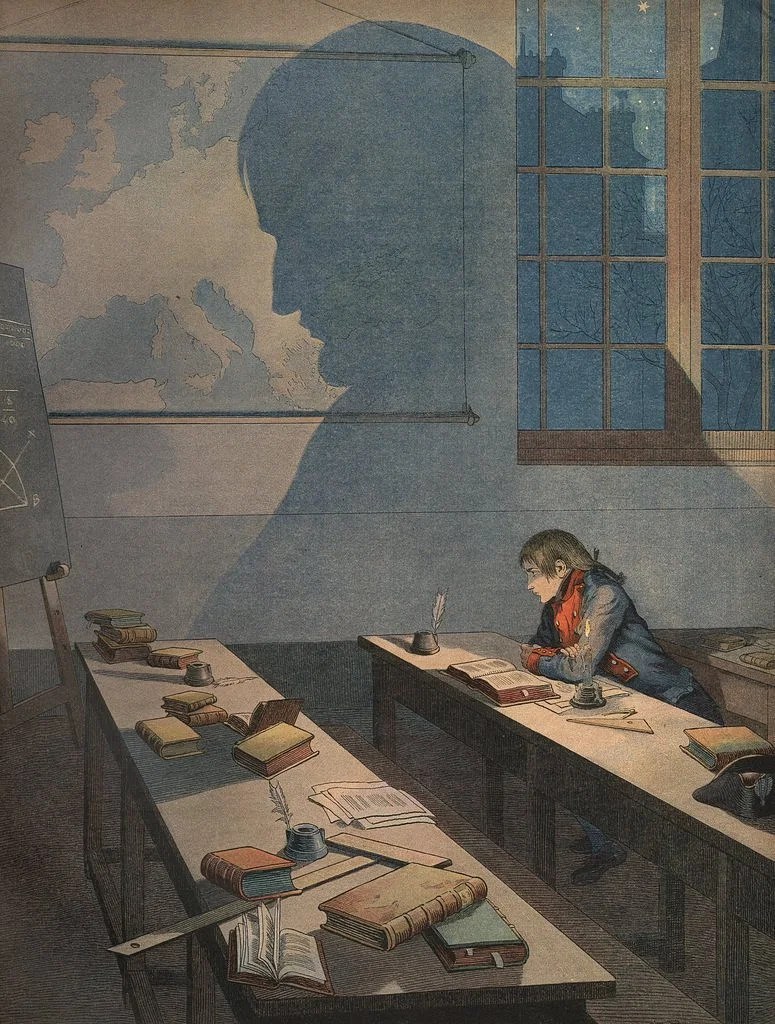
Napoleon Bonaparte famously declared, “History is a set of lies agreed upon.”

It sounds like a cynical, high-level tweet. But the more you sit with it, the more ominous it becomes. Because when the folks with power write history, they aren’t writing a mirror for you to learn from. They’re writing a memoir—a meticulously edited, self-flattering, career-justifying memoir.

Napoleon proved this point on St. Helena, where he spent his final years mythologizing himself as a tragic hero, a visionary crushed by global fear. And the world? We just shrugged and accepted it. His version became the nation’s framework, and his self-portrait was adopted as their identity.

This is where Freire’s warning hits hardest.

When we inherit a compromised story, the lie becomes the foundation. We stop seeing history as a record and start treating it like a ghost map—a map drawn by the conqueror that shows only the boundaries they want you to respect, not the messy reality of the land itself.

The Problem With Hand-Me-Down Propaganda

The real punch in Napoleon’s quote isn’t that he lied, but that we collectively agreed to call it the truth.

History filtered through the powerful is a subtle, pervasive tool for control. When people—especially those historically marginalized—inherit the tales written by their oppressors, they unconsciously absorb the worldview that justifies their own limited position. They grow up unable to tell the difference between objective patriotism and high-budget propaganda.

If the history we start with is distorted, the lesson we pull from it is corrupted. And if the lesson is corrupted, the future we build is structurally flawed. This is precisely why entire societies keep repeating the same spectacular failures, just in trendier outfits. When the story is broken, the cycle is inevitable.

My own obsession with memory and truth comes from this very tension. Memory is always edited. Identity is always curated. History is always a negotiation. A nation remembers what makes it look good and conveniently forgets what makes it accountable. And wherever collective memory has a blind spot, future generations are left carrying inherited delusions as if they were established facts.

We Owe Honesty to the Future

Freire argued that liberation starts with critical consciousness—the willingness to question every tale, to unlearn every inherited illusion, and to “read the world” beneath the tidy surface. If we don’t do this work, we aren’t remembering history; we’re just running the script again.

The main imperative, then, isn’t to track down the elusive, perfect historical truth—that ship probably sailed—but to rigorously commit to the truth right here, in the present moment.

We don’t owe perfect clarity to the past. We owe honesty to the future.

If our children are going to build a smarter world, they can’t use our myths as blueprints. They deserve analytical clarity, not heroic self-narratives. They deserve a history that isn’t afraid to name its own shortcomings.

To “read the word and the world” is to hold both warnings at once: the stories we agree upon shape our societies, and only a commitment to truth keeps us from reliving the cycles we pretend we’ve outgrown.

Let’s commit to leaving behind fewer lies than we inherited. Only then will the next generation read the world not as it was edited for them, but as it actually is.

Feminism, Polarity & The Myth We Accidentally Broke

There’s a question I’ve been sitting with for a while now — not as a feminist, not as a woman, but as a human being trying to understand our collective psychology:

What happens when feminism forgets the feminine?
And masculinity forgets the masculine?

Because lately, the conversations I overhear — in cafés, on group chats, over wine nights — don’t sound like empowerment anymore. They sound like a war cry.

Not against patriarchy.
Against men.

A frustration so sharp it’s starting to look like hatred.

And somewhere in all of this, I can hear Carl Jung whispering:

“What you resist, persists.
What you fight externally is usually what you have not reconciled internally.”

We didn’t break the patriarchy.
We internalised it.
Then we flipped it.
And now some women are wielding that same masculine shadow with pride — domination, dismissal, superiority masked as empowerment.

But that’s not feminism.
That’s just patriarchy in drag.

The Forgotten Polarity

Jung spoke of animus (the masculine within women) and anima (the feminine within men).
A healthy psyche holds both — but in balance.

When the feminine rejects its own softness, intuition, empathy, and receptivity, and instead elevates aggression, dominance, and emotional rigidity, it becomes the very thing it was trying to dismantle:
a distorted masculine archetype.

And when the masculine rejects its own strength, direction, courage, and containment in fear of being “toxic,” it collapses into passivity, shame, and confusion — a distorted feminine archetype.

We are not meeting each other.
We are trading shadows.

And so the polarity collapses.

Where there was once magnetism, we now have resistance.
Where there was once attraction, we now have fear.
Where there was once mutual respect, we now have competition.

This is not evolution.
This is fragmentation.

Feminism Was Never Meant to Erase Differences

I believe in feminism — with my whole chest.
But I believe in a version that honours polarity, not erases it.

Strength is not exclusively masculine.
Softness is not exclusively feminine.
But the archetypal energies exist for a reason.

Men and women were never meant to be identical.
They were meant to be complementary — yin and yang, form and flow, structure and intuition.

When we stop honouring these polarities, we don’t become equal.
We become disconnected.

Disconnected from ourselves
and from each other.

The System Is the Problem — Not Most Men

Here’s the truth:

Most men are not sitting in dark rooms plotting how to keep us down.
Most men are not deciding promotions, pay gaps, or reproductive laws.

The system — built by generations of unconscious masculine energy — is what we’re fighting.

Not the average man sitting next to us at dinner.
Not the friend who is trying.
Not the man who is learning to be better.

But we treat them the same anyway.

And ironically, that is how toxic masculinity operates:
“Group them all together. Punish them all.”

The shadow is the same.
Only the costume changed.

Men Are Not the Enemy. Women Are Not the Victims.

There are things men are naturally wired for that women can’t touch.
There are things women are naturally wired for that men can’t reach.

This is not inequality.
This is polarity.

A tree grows tall because the roots grow deep — not because the branches declare war on them.

And yet here we are, hacking at each other’s roots.

Here’s What I Believe:

A healed woman does not hate men.
A healed man does not fear strong women.
A healed society knows how to hold both energies without forcing them into battle.

Feminism was never about conquering men.
It was about conscious partnership.

Masculine and feminine — in both men and women — meeting in the middle, not overpowering each other.

When we weaponise feminism, we don’t free anyone.
We just recreate oppression with different branding.

The real revolution is internal:
Women reclaiming their feminine without shame.
Men reclaiming their masculine without fear.
All of us integrating the parts of ourselves we’ve disowned.

This is how patriarchy actually breaks.
Not through war —
but through wholeness.

The Fine Line Between Humour and Hurt

If I died today (don’t worry, I’m not planning to), I know in my heart I’ve lived a full life. I’ve seen enough, felt enough, survived enough for at least three lifetimes. The highs, the lows, the absurd plot twists — I’ve experienced life in 360 degrees.

And one thing has always carried me through it all:

Humour.

Humour has been my most loyal companion. It softened the blow when life got harsh. It helped me stay afloat when the weight of everything felt unbearable. If survival was an art, humour was the paint I used to colour the darkest parts of my story.

Humour has been my oxygen mask in the airplane of life — except I never waited for the turbulence. I’ve been putting that mask on since take-off.

People who know me will tell you I can find comedy in almost anything.
Pain? I can turn it into a joke.
Heartbreak? Give me 10 minutes and I’ll have you laughing.
Life falling apart? I’ll add a punchline.

Humour made me lovable. The life of the party. The person who “has it all together.”

But here’s the plot twist no one saw coming — not even me:

I was coping, not healing.

Humour helped me survive, but it didn’t help me feel.

The Joker Mask

For the longest time, my humour wasn’t a personality trait, it was armour.

A beautifully sequined, sarcastic, quick-witted suit of armour that made everyone around me comfortable, while I slowly bled underneath.

On the outside:
Witty. Charming. Resilient. Strong.

On the inside:
Exhausted. Numb. Holding back tears with a smile.

The Joker metaphor isn’t accidental. His character wasn’t about comedy — it was about the tragedy of concealed pain. When your laughter becomes a shield, comedy turns into a coping mechanism. And coping mechanisms, when overused, become cages.

Matthew Perry is the one who comes to mind for me. He wasn’t just funny — he was funny to survive. The world adored him for his humour, but the humour was also his hiding place. Eventually, the hiding became too heavy.

I don’t know his personal story in detail. The media tells a version that suits them. But I know the feeling of being “the funny one.” I know the emotional cost of performing happiness while drowning quietly.

You can’t outrun your pain forever. At some point, the mask slips. And when it does, the fall is brutal.

When Humour Stops Helping

For a long time, I’d skip straight to the punchline because the alternative — sitting with the pain felt unbearable.

I thought:

If I can laugh at it, it can’t hurt me. But humour doesn’t erase pain. It delays it. It numbs it. And numbness always has an expiry date.

So lately, I’ve been re-evaluating my relationship with humour. Not abandoning it, just… evolving with it.

Humour is still one of my greatest gifts. But now, I choose to use it after I’ve felt the truth of what happened, not as a way to avoid it.

And that shift has changed everything.

My New “Humour + Healing” Timeline

If I were to map it out, this is what it now looks like:

1. Tragedy happens. Everything feels like a joke, except it’s not. Not yet.

2. Experience it. Really feel it. No laughing. No deflecting. No “I’m fine.” Sit with the discomfort. Bleed a little if you have to.

3. THEN laugh. Loudly. With friends, alone, in the shower, doesn’t matter. Humour is powerful medicine after the wound has been acknowledged.

4. Grieve again — this time consciously. There comes a moment when the laughter fades and the truth hits you. “This was actually messed up.” Don’t run. Feel it.

5. Finally, release it — with laughter. This time, the humour isn’t numbing you. It’s freeing you.

And here’s the wildest part I’ve noticed:

The more traumatic the experience…the funnier it becomes after you’ve truly healed it. Not because the tragedy was small, but because you survived something enormous, and laughter becomes your victory roar.

Why This Balance Matters

Humour without healing is escapism.
Healing without humour is unbearable.

But humour after healing?
That’s alchemy.

That’s turning darkness into light.
That’s reclaiming your story.
That’s laughing from the soul, not from the surface.

I still believe humour is sacred.
It has saved me more times than I can count.
But now I know it’s not the destination — it’s a stage of the journey.

Feel first.
Laugh second.
Heal through both.

Because the truth is:
Life will always give us chaos.
Humour makes it bearable.
Healing makes it meaningful.

On Temples, Miracles, and the Real Meaning of Prayer

I picked up a book from a temple here in India — a slim little volume filled with stories of deities performing miracles. People healed, wishes granted, losses restored. Page after page celebrated the gods for intervening at the perfect moment, as if the universe itself had leaned in to whisper, “Here, take this blessing.”

Beautiful stories. Comforting stories. But something about the entire framework made me pause. Because somewhere along the way, India took worshipping too far.

We treat gods like cosmic vending machines — insert coconut, donate ₹101, and request: a promotion, a spouse, a visa, a miracle.

But do gods even want to be worshipped? I doubt they’re sitting there tallying coconuts or adjusting interest rates on our prayers. They don’t operate on transactions. They don’t do it for the fruit offerings or the queues or the temple bells. If anything, God doesn’t need devotion. We do.

And that’s when it hit me:
Most people don’t go to the temple to connect.
They go to offload.
Vent.
Beg.
Plead.
Fear.
Bargain.

Connection is almost an afterthought.

But praying, real praying, is not a performance. It is not about bending the divine to your will. It is sitting with yourself and God in the same breath. It is emptying the noise. It is being brutally honest about what hurts.

Prayer is connection, not negotiation.

Temples only facilitate this because their vibration helps you drop into stillness faster. But the real connection can happen anywhere — on your bedroom floor, in the middle of a heartbreak, in a moving train, or even while brushing your teeth. God listens everywhere, because God isn’t in the idol; God is in the access point you open inside yourself. And here’s the part that deepened everything for me:

If destiny is already written, why do we pray?

This question tugs at me every time I walk out of a temple. Because philosophically, spiritually, astrologically, everything is written in the stars. Our timelines unfold exactly as they must. So if prayer does not change our fate…what are we really doing there?

Hope, maybe.
Comfort, maybe.
Habit, likely.

But look deeper and you’ll see something else entirely:

Prayer isn’t meant to change reality. It’s meant to help us understand it.

We don’t pray to manipulate outcomes. We pray to interpret them.
To separate desire from destiny.
To soften the anger around why things aren’t happening the way we want.
To gain the strength to carry what is already ours.

Because the truth is, God rarely gives us what we want, but He never fails to give us what we need. And needs arrive wrapped in strange disguises:

  • delays that protect us
  • heartbreak that redirects us
  • endings that make room
  • silence that forces clarity
  • losses that humble us
  • synchronicities that guide us

Which brings me back to the stories in that book.

People call these “miracles.” But what if the real miracle isn’t the event? What if the real miracle is our capacity to recognise why it arrived? That’s what prayer strengthens — the internal clarity to see meaning, not magic. And yes, maybe everything is predetermined. Maybe no prayer can change what the stars have stamped onto our timeline.

But prayer gives us something destiny never can:

Perspective. Surrender. Connection. Courage.

Hope takes us to the temple. Connection brings us home.

Hope whispers, “Maybe God will change this.”

Connection answers, “Maybe God will change me.”

We pray not to escape our fate, but to stop resisting the parts of it that hurt.

We pray to steady our heart.

We pray because the act itself unravels us, then gathers us again.

So no, I don’t think gods want worship. They don’t need it. But they do respond to honesty, to vulnerability, to the rawness of a human asking, “Help me understand.”

Because when you finally pray from that place without bargaining, without pretending, without performing, you don’t just feel heard. You feel held. And that, I think, is the real miracle.

When the World Changes but the Story Stays the Same

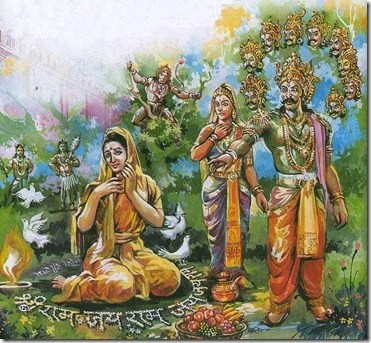
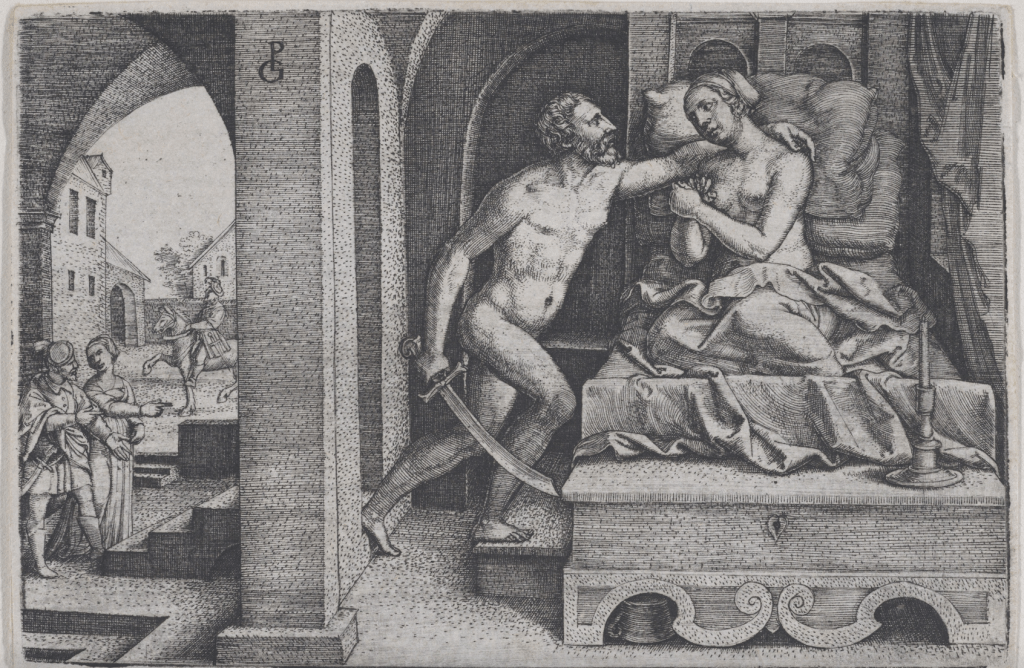
We like to believe that humanity evolves. That time softens our sharp edges, that society becomes more just, that we learn from history. But standing between the stories of Lucrece in ancient Rome, Sita in the Ramayana, and the experiences of women today, I can’t help but feel a strange heaviness: so much time has passed, and yet the patterns remain painfully familiar.

The Ancient Stories We Can’t Shake Off

In Shakespeare’s The Rape of Lucrece, a woman’s trauma becomes the spark that topples a monarchy and establishes the Roman Republic. In the Ramayana, Sita’s abduction launches a war that redefines notions of duty and dharma. Different cultures, different eras, different moral frameworks—but the same underlying script:

a woman’s pain becomes a political event
a woman’s body becomes a symbol
a woman’s voice becomes secondary to the men who act on her behalf

Both women were bound by ideas of purity and honor. Both were held responsible for violence inflicted upon them. Both became catalysts for the ambitions, decisions, or redemption arcs of men.

Behind every cultural veneer lies a stark truth: women have always paid the price for the moral failings of powerful men.

The Modern Echoes of Old Wounds

You would think thousands of years of progress—education, law, social movements, global awareness would transform these dynamics. But today, the forms have simply changed.

Victims still face disbelief.
Their character is still dissected.
Legal processes still retraumatize instead of heal.
Silence is still considered safer than speaking.
A woman’s body still becomes a battleground for politics and public opinion.

It’s Lucrece all over again.
It’s Sita, rewritten with modern vocabulary.
The same story, staged on a different platform.

Why Does This Keep Happening?

Because these patterns aren’t random—they’re structural.

They come from centuries of:

  1. patriarchal power systems
  2. cultures obsessed with purity
  3. societies that protect perpetrators
  4. communities that shame survivors
  5. institutions built by, and for, men

You cannot dismantle in a few generations what was cemented over millennia.

But There Is Change—Slow, Fragile, Real

And yet, it’s not all despair. The story may be old, but people are rewriting it every day.

Unlike Lucrece, women today don’t have to die to be believed. Unlike Sita, they aren’t required to prove their purity to justify survival. The silence that once suffocated entire generations is now broken—loudly, publicly, unapologetically.

Movements like #MeToo, reforms in consent laws, trauma-informed practices, survivor-led advocacy. They are all signs of a culture shifting, even if slowly. Violence may not disappear entirely. Human nature makes that unlikely. But the way we respond to it can change and that is where hope lives.

Will It Ever Stop?

Not completely.
But will the story remain the same forever? No.

Because today:

  1. women have language for their trauma
  2. societies are more accountable
  3. patriarchy is named, not accepted
  4. education challenges old scripts
  5. survivors are connecting, supporting, demanding
  6. younger generations refuse to inherit silence

Change is not dramatic; it’s cumulative. And we are living in the middle of that accumulation.

The Story Is Changing, Because We Are

Ultimately, the world doesn’t move forward because time passes.
It moves forward because people refuse to accept old stories as destiny.

The fact that we can draw a line from Lucrece to Sita to women today and see the pattern clearly means we are already breaking it.

Awareness is disruption.
Naming is resistance.
Questioning is transformation.

And every generation that refuses the script writes a new one.

Everything Looks the Same, But Everything Has Changed

Coming back home to India after so many years has been a strange, beautiful kind of déjà vu. I decided to visit all the places that once shaped me — the neighbourhoods I lived in, the corners that knew my secrets, and even my old school. Some of these places hold memories I’ve spent years trying to forget, yet there I was, walking those same streets, noticing the familiar tea stalls, the same old guard, the same smell of dust after rain.

I caught myself smiling. Smiling at places that once broke me.

Standing at the gates of my school, the same gates I walked through every single day, dreading what awaited inside, I felt something shift. I used to walk through them misunderstood, judged, overlooked. I carried so much fear then, though I couldn’t name it. No one could.

Little did that girl know she was struggling because she has AuDHD — navigating a world that wasn’t built for her kind of mind, punished for traits she didn’t choose, expected to “behave” like the others when her neurobiology was wired completely differently.

And yet, here I was, standing in the same spot, looking at the same building, even the same paint color — thinking:

“Everything looks exactly the same… but everything has changed.”

The school is the same. The streets are the same. The children rushing out at 6 PM, the familiar chaos, even the tone of the evening bell — unchanged.

But I am not.

That realization stopped me for a moment. Time doesn’t heal through erasure — it heals through evolution. The pain I once carried through those gates gave birth to the person I’ve become: aware, grounded, and finally at peace with her own wiring.

It’s almost poetic how the external world stays frozen in time, waiting for you to return, only for you to realize it was never the world that needed to change. It was always you. Revisiting these old places taught me something tender: healing is not about rewriting the past, it’s about outgrowing the version of you who lived it.

Seeing my school again didn’t bring back the old fear. It brought gratitude for the distance between who I was and who I’ve become.

The girl who once trembled walking through those gates couldn’t have imagined the woman returning to them years later — calm, confident, self-aware, and finally understanding the language of her own mind.

And maybe that’s the quiet magic of life: we return to the same places, but if we’ve done the work, we never return as the same person.