Today, I feel angry. Furious, even. At the world. At men. At how cruel life can be. There’s a part of me that wants it all to burn.
I was triggered several times yesterday, but one moment stood out. A friend, an ex-friend now, gave me a small birthday gift. A pack of hand lotion. On the surface, it should’ve been harmless. But I know where she was coming from, and that’s what made it cruel. It felt like a calculated gesture, subtle but sharp. A reminder that some people don’t hurt you directly. They just know where to poke. It’s the same darkness that lived in the man who hurt me when I was too small to fight back. That quiet decision to take advantage of someone because you know they’re fragile.
That’s what makes me angry. That people do these things knowing they can get away with it. That people let their darkness win.
Now that I’ve started to accept what happened to me, it’s like a dam has broken. I’m not just angry about the abuse. I’m angry about everything I’ve lost because of it. The decades I spent not knowing. Not remembering. Just feeling tired, confused, insecure, without knowing why.
Looking back, so many things make sense now. It’s like this memory was a ghost directing my life from behind a curtain. I couldn’t see it, but it was there, shaping everything. My relationships. My body. My trust. My exhaustion.
It made me wonder what kind of energy I’ve been carrying all these years. Have I been wearing this invisible cloak of trauma? Have I been attracting cruelty without even realizing it?
I’ve always wanted to be a good person. And I know that I am. I’ve never wished harm on anyone. Not truly. But now I’m beginning to see how much I’ve hurt myself. And sometimes others too. Especially because of how disconnected I’ve felt from my own body.
My body has always been a sore point. Not just how it looks, but how it feels. I’ve hated my body for as long as I can remember. It’s like it holds all the memories I couldn’t. Fat collecting in the places where trauma once lived. I’ve tried everything to change that. Exercise, food, fasting, overcompensating. But the real weight wasn’t physical.
I just want my body back. Not a thinner version. Not a prettier one. The version that was never touched like that. The version that never had to carry this. I’m trying to love the body I’m in now. I really am. After all, it stayed. It carried me. Even when I didn’t know what it was holding.
Today’s Truth:
Anger isn’t just fire. It’s grief in disguise. And when you finally know what you’ve been carrying, you’re allowed to burn what never belonged to you.
I didn’t feel like writing this morning. I’ve been up for a couple of hours, just circling the urge. Maybe it’s because I started feeling better yesterday, and I’m afraid that revisiting the memory will take me back to numbness.
Still, I tried. I revisited the memory to see if any tears would come. Nothing. But something’s shifting. I can feel it. Not in the form of tears, but in how so many other memories are resurfacing. Pieces I never understood before are suddenly making sense.
One that came up was from the time of a terrorist attack in Mumbai. The blast happened at a train station near my house. I was scared, alone, and couldn’t sleep. I remember lying in my aunt’s bed after she had moved out after living with us for a while after her divorce. That night, trying to soothe myself, I touched myself. I don’t know if it’s connected, but it came up now. Maybe because during the memory retraction process, I pictured her sitting on that same bed, even though she wasn’t there in the actual event that took place. My mind’s been stitching together things I hadn’t thought about in years.
More moments like that are surfacing. I remember a therapist once asked me how I perceive sex. I didn’t have a clear answer. I just knew it never felt pure. Never good. It always felt like something I had to hide. Something I wasn’t supposed to enjoy.
In college, it shifted a bit. I acted out more when I was drunk — not from freedom, but from rebellion. I even got a tramp stamp after I saw a girl getting too close to someone I had just started seeing. It wasn’t about betrayal. It was about control. It was about doing something because I wanted to and I could.
The pattern became clear: I could only get close to men when I wasn’t sober. When I was numb. When it didn’t feel real.
I once had a dream around the time I started therapy again. In the dream, there was a safe in my old college room. The safe was rumbling, vibrating. I was terrified to open it, sure that a ghost would jump out. I never had a safe in college. But I know what the dream was telling me now. That locked-up part of me was ready to shake open.
A lot of anger toward my mom has started to rise. I’m mad at her for letting this happen. But I also know, somewhere deep down, that she couldn’t have stopped it. These things don’t announce themselves. And the people who hurt you are rarely strangers. Still, I hope she did something when she found out — maybe during the divorce proceedings with my aunt. I hope she made him pay somehow. I don’t know.
I’ve been called so many things in my life — slut, loose, promiscuous — and none of it was ever true. I had only slept with one person until I was thirty. Yes, I got drunk. Yes, I made choices that may have looked messy from the outside. But I was trying to survive.
I’ve been blamed for leading men on and not following through. But all I’ve ever wanted was something simple. Something beautiful.
Even the fantasies, the kinks, the desires — they weren’t coming from freedom. They came from hurt. I never acted on most of them. They didn’t feel like me. They felt like something dirty. Something I’d regret. My mind might crave it, but my body never really wanted it. I remember one night when I got really drunk at a conference. When we got intimate, I physically couldn’t open up. I wasn’t safe. Not emotionally. Not physically. My body said no.
I’ve been remembering that too.
Yesterday, at a café, Marvin Gaye’s Let’s Get It On started playing. And something in me softened. I remembered seeing it in a movie once — a scene where two people are making love, tenderly, truly in love. It made me realize that’s what I want my sex song to be. Not like Sex on Fire by Kings of Leon — the one I used to think defined me. That song was all heat, chaos, and craving. This one is warmth, permission, connection. I don’t want desire fueled by rebellion anymore. I want something slow, sacred, and safe. I want softness, the kind that doesn’t have to scream to be heard.
Today’s Truth:
Some healing doesn’t come in tears. It comes in understanding why you’ve lived the way you have. And deciding you’re allowed to live differently now.
It’s been a while since I last wrote here. Not because I didn’t want to, but because I was writing something much bigger. A book. And now, I can say it out loud: I’m a published author.
It feels surreal. Not just because it’s a lifelong dream, but because this book feels like an extension of this space. If you’ve been reading my blog, you’ll find traces of it in every chapter: the same voice, the same questions, just with a deeper descent. Writing it was like peeling back the layers of who I thought I was, only to meet the parts of me I had tucked away in silence.
In the process, I uncovered corners of myself that were heavy with darkness. Some still are. There are parts I’m still trying to make peace with, wounds I didn’t even know were still bleeding. Writing this book was not cathartic in the usual sense. It was confronting. At times, it felt like drowning in memory, only to come up gasping for breath and wondering if I’d ever feel whole again.
But here’s the thing: these memories, these unresolved knots, don’t surface until we’re ready. And I was ready, even if I didn’t feel like it.
One memory in particular has stayed with me. A pattern, really. One I’ve repeated without even realising it: getting close to men who either needed to be saved, or who saw me as a threat. Relationships where being strong meant being emasculating. Where my shine felt like their shadow. And slowly, without realising it, I kept shrinking or contorting to make them feel okay, while dimming parts of myself in the process.
Not all men in my life have been like this. But the closest ones, my father and an ex have. My father was absent in the moments I needed protection. Worse, he was the one I needed protection from. Physical harm, emotional neglect, a silence so loud it shaped how I saw myself as a girl in the world. And then came the ex. Infidelity. Emotional immaturity. A strange dependency masked as love. The kind that chips away at you until you’re left wondering how you ever tolerated that version of “care.”
Looking back, I realise I was often forced into my masculine energy, always in survival mode. I forgot what it meant to feel soft. To feel held. To simply be a woman. My divine feminine self felt like a distant memory, something I only caught glimpses of in solitude.
Last night, I woke up with a storm in my chest. Anger. Pure, raw, old anger. And for the first time, I let it be. I didn’t rationalize it, or quiet it, or sugarcoat the story. I named it for what it was: injustice. I saw clearly the ways I had been harmed. Not just physically, but in spirit. And how for so long, I was the one making excuses on behalf of those who had no business being excused. No more.
This post isn’t a travel story. But in some ways, it is. Because travel has always been my escape route. I was either running from a version of masculinity that hurt me or toward one I thought would save me, only to find more hurt. My fight-or-flight response? It was literally booking flights.
But that energy, that fire in me, I’m finally learning to channel it into something different. Something sacred. I’m building a life that honours the feminine within me. The part that feels deeply, loves fully, and doesn’t apologise for softness, stillness, or depth. It’s not about rejecting the masculine, but letting it rise only when needed. Not to dominate, but to protect and support. The feminine in me is no longer something I mute to survive. It’s something I now choose to live by. Because that energy, gentle, intuitive, nurturing is powerful too. And it deserves to take up space.
There’s power in this balance. I used to think vulnerability made me weak. That grief, fear, or sadness were emotions to hide. But recently, in conversation, someone reframed it for me. “It’s not weakness. It’s vulnerability.” And vulnerability, I’ve come to see, is courage in its truest form. To feel everything and still choose to stay. To keep loving. To keep healing.
If you’ve ever been in that space—navigating the abyss—I see you. I honour your strength.
And as for me? I know I’m not done yet. There’s more shadow to meet. More stories to unearth. But now, I don’t fear it. This isn’t a war between the broken and the healed versions of me. This is a reunion. An invitation to bring love to the parts of myself that never received it.
Because that’s what true healing is: not fixing, but integrating. Not hardening, but softening. And remembering that every version of me—past, present, becoming—is worthy of love.
They say it’s not about the places—it’s about the people you meet along the way. I didn’t quite understand what that meant until now. Looking back over the years, I’ve come to see how deeply intertwined my path has been with the people I’ve crossed paths with. Somehow, every encounter felt pre-written, like puzzle pieces scattered across the world, only fitting together in hindsight.
I was recently reflecting on my first time leaving home, when I moved away for college. That initial separation from everything familiar was softened by the people I met—people who, without knowing it, mirrored the most intimate corners of my life.
There was a friend whose brother, like mine, carried the unbearable weight of living up to his father’s expectations. He passed away just a year ago. When I also lost my brother to suicide, I remembered our conversations—how we once whispered to each other that maybe our brothers gave up because they saw no point in trying to meet standards they never chose.
Another friend’s brother struggled with addiction. So did mine. We talked about rehab, resilience, and the silent burden of being both the caretaker and the one expected to bring pride to the family. She, like me, longed for the day we could be held by a healthy masculine energy—so we could finally allow ourselves to soften.
There was someone else who spent her entire life being compared to her older sister. I knew that story all too well. We shared quiet confessions about sibling rivalry stirred by parental expectations, and how—deep down—we still rooted for our sisters’ success, knowing it wouldn’t take away from our own.
One friend seemed to attract lightning—figuratively, of course. Tragedy after tragedy, yet she kept walking forward. No regrets. No questions. Just an acceptance that life is unpredictable, and the only way through is forward.
There was a friend, who lost her mother at birth. Another, who grew up in the cracks between two parents who couldn’t find peace but still managed to make peace with the situation.
“I remember it clearly—one quiet day, I realised something: I am running into all of the people I am running away from.”
Every country I’ve stepped into, every new adventure, Was I exploring or escaping? If I’m honest, most of the time I was in flight mode. But here’s the twist—while running, I kept bumping into the very stories I was trying to outrun. Life, as it turns out, doesn’t let you off the hook that easily.
And now? I’m tired of running. Not in a defeated way—more in a brave way. For the first time, I feel capable of staying still. Not to fight. Not to flee. Just to be.
Yes, thirty countries is a shiny number. But behind that number are moments of loneliness, learning, and longing. I don’t regret a thing. Sometimes I wish I had travelled with a different purpose—not away from something, but toward something.
People see my photos and think, “She’s living the dream.” And maybe I am. I’ve learned how to alchemize pain into purpose, to turn the mess into meaning. But the truth is, I’ve often been the observer. Close enough to feel the warmth, far enough to not get burned. It gave me perspective, sure—but not belonging.
And yet, I believe none of this was accidental. God—or the universe, or whatever you believe in—placed these people in my life like lanterns on a foggy path. We’ve shared a kind of quiet camaraderie, not always visible, but deeply felt. And for that, I’m grateful.
So, if you’ve been on the run too—emotionally, physically, metaphorically—I hope you know that even the flight has a purpose. Just don’t forget to pause once in a while. Because even when you’re running, you’re still being led. And when you finally stop, when you finally turn around, you might also notice the people who shaped you right there beside you.
My friends in Egypt taught me what drive and diligence truly look like. There was a fire in the way they lived—an energy that was quietly contagious. One conversation still stays with me. A friend asked, “Do you go to bed feeling the good kind of tired?’” The kind that comes from pouring yourself into something meaningful, from inching closer to your purpose. That question changed the way I looked at effort. Until then, I had mostly done things for approval—for the praise, the gold stars, the need to be a “good daughter”. But this was different. This was about doing something that fills you up, not just your report card.
My roommates during that time played a quiet, steady role in shaping who I was becoming. One of them—my Italian roommate—introduced me to eggplant parmigiana. Preparing it was a long, slow process, layered and intentional, but the results were unforgettable. She taught me that food isn’t just about feeding the body—it’s about nourishing the soul. I finally understood the “Eat” part of “Eat, Pray, Love”. Just like Julia Roberts found herself in the folds of pizza in Naples, I found something in that dish—comfort, care, and the joy of cooking without rush. Growing up, food had always been there, but I only ever ate to fuel myself. That year, I learned to eat to feel alive.
Another roommate had a quiet but lasting impact on me. We used to walk to work together every morning, always getting there ahead of time—her Germanness rubbed off on me faster than I expected. She carried herself with a kind of calm discipline that was both inspiring and grounding. What struck me most was how she stayed motivated and respectful, even while navigating the nuances of a new work culture. She led with quiet confidence and a deeply practical mindset, doing everything she could to reach her goals—never loud, never boastful, just steady and sure.
Over the years, I’ve come to meet people who have taught me some of the most important lessons of my life—how to live with intention, how to love with presence, how to rest without guilt, and how to keep going, even when the road feels impossibly long. These weren’t always grand lessons taught in classrooms or through books. Most came quietly, through conversations in kitchens, shared silences on park benches, and the gentle consistency of friendship in faraway places.
And now, I carry those lessons with me—not just as memories, but as reminders of what it means to truly live. Not just survive. Not just perform. But live, fully and wholly, in connection—with myself, and with others.
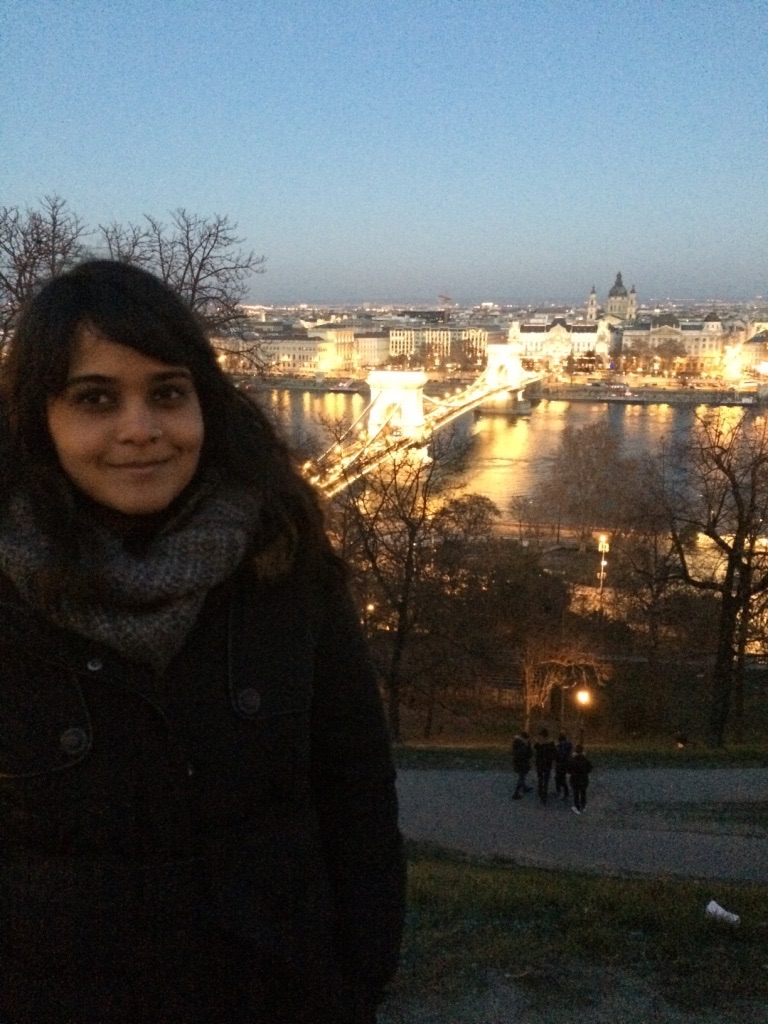
I was recently reminded of a walking tour in Budapest from a few years ago. The city, divided by the Danube River, is made up of two distinct halves: Buda and Pest. For centuries, they remained separate, each with its own identity, until the construction of the Chain Bridge in 1849. This bridge not only physically connected the two sides but also symbolized the merging of their contrasting personalities. The guide pointed out how this connection transformed the city’s architectural landscape, creating Budapest’s iconic eclectic style—a blend of influences from different cultures and periods. Buda, with its peaceful, upscale vibe, and Pest, bustling and full of life, each brought something unique to the city. Back then, they were distinct worlds, but today, they continue to coexist as separate yet complementary halves, each preserving its essence while contributing to the city’s dynamic whole.
My brain obviously went into reflection mode. There’s a famous saying: “Don’t burn your bridges.” It’s a reminder to leave situations and relationships in a way that preserves future possibilities. After all, bridges connect us, allowing for movement, exchange, and opportunity.
The bridge in Budapest is called the Chain Bridge for a reason, I guess. Chains symbolize strength and unity, holding things together even under pressure. Fleetwood Mac’s song The Chain encourages us to do just that. The song is a dark and desperate unity that reflects the band’s resilience. But the metaphor “break the chain” brings a different image to mind—liberating ourselves from cycles, constraints, or patterns that no longer serve us. This duality made me reflect on the concept of involution.
American sociologist Clifford Geertz described involution as stagnation — a loop of repeated behaviours that leads nowhere. In many ways, it reminded me of the famous Pink Floyd lyrics: “We’re just two lost souls swimming in a fishbowl, year after year.” This feeling of being trapped in a cycle, unable to break free or evolve, encapsulates involution perfectly. It’s like being in a situation that feels like you’re going nowhere, no matter how much effort you put in. In contrast, evolution propels us forward, toward growth and improvement. In-volution, quite literally, is the opposite of e-volution. Where evolution is expansion, involution is regression.
It’s true chains can be seen as both connectors and constraints, a symbol of unity and of being trapped. I guess if you feel like you’re heading toward involution, remember, you have the power to break the chain or avoid building bridges altogether. But if evolution is truly at play, natural selection will unavoidably take over and stop you from breaking any chains and push you to evolve — to build bridges and not burn them.
 fortuitouspurpose