Some years are meant to be survived. Others are meant to be understood only after they pass.
2025 was not loud. It did not demand proof. It did not ask me to become someone new by force. Instead, it arrived like a quiet alignment—where effort dissolved and intention finally caught up with action. Even in moments of uncertainty, I could feel it: every difficult season before this one was converging into something whole.
This year did not need explanation. It needed recognition.
Each morning, I woke up slightly altered. Not unrecognizable, just refined. The girl I have been, year after year, kept growing into a more powerful version of herself. Not through resistance. Not through struggle. But through inevitability.
There is something in me that keeps rising. I don’t know where it comes from, or how deep it runs. I only know that no amount of pain or sorrow has ever managed to keep me from standing back up. That force—quiet, relentless, unromantic—is my truest inheritance.
Maybe one day it will run out. Maybe that day will come when my work here is complete.
Until then, I don’t count life in years. I count it in selves.
How many versions of me are still waiting to live. How many lives remain folded inside this one.
Fortuitous Purpose was never about having answers. It was about trusting that meaning reveals itself through motion—through living honestly, choosing consciously, and letting truth surface when it’s ready.
This chapter closes not because the journey is over, but because I no longer need to explain why I walk forward.
We like to believe that humanity evolves. That time softens our sharp edges, that society becomes more just, that we learn from history. But standing between the stories of Lucrece in ancient Rome, Sita in the Ramayana, and the experiences of women today, I can’t help but feel a strange heaviness: so much time has passed, and yet the patterns remain painfully familiar.
The Ancient Stories We Can’t Shake Off
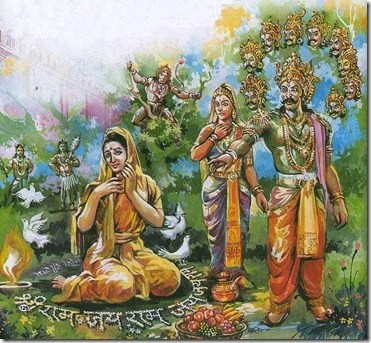
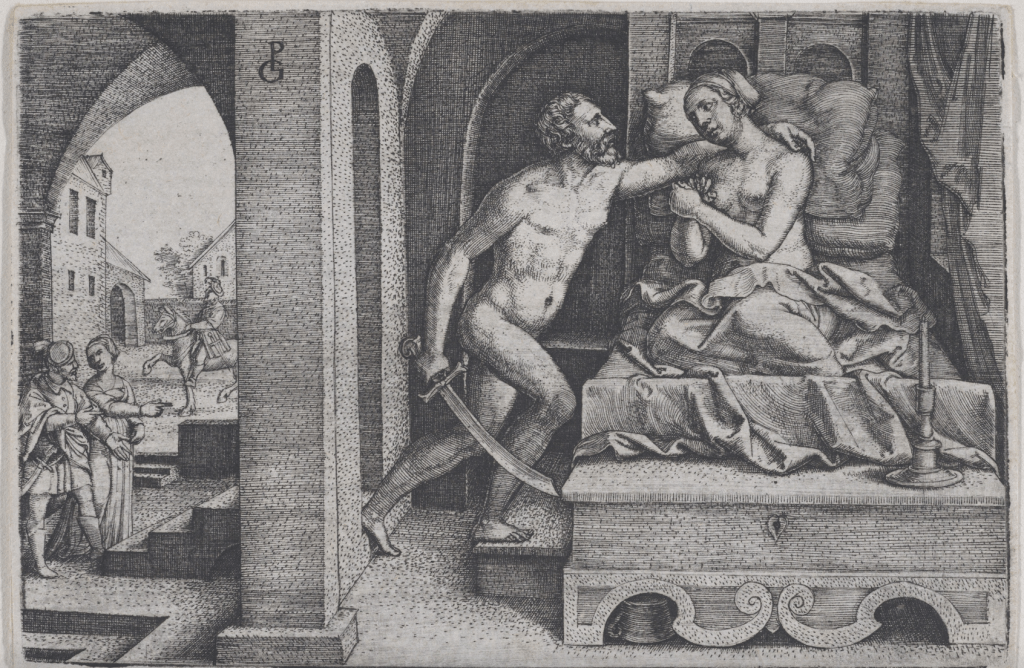
In Shakespeare’s The Rape of Lucrece, a woman’s trauma becomes the spark that topples a monarchy and establishes the Roman Republic. In the Ramayana, Sita’s abduction launches a war that redefines notions of duty and dharma. Different cultures, different eras, different moral frameworks—but the same underlying script:
a woman’s pain becomes a political event a woman’s body becomes a symbol a woman’s voice becomes secondary to the men who act on her behalf
Both women were bound by ideas of purity and honor. Both were held responsible for violence inflicted upon them. Both became catalysts for the ambitions, decisions, or redemption arcs of men.
Behind every cultural veneer lies a stark truth: women have always paid the price for the moral failings of powerful men.
The Modern Echoes of Old Wounds
You would think thousands of years of progress—education, law, social movements, global awareness would transform these dynamics. But today, the forms have simply changed.
Victims still face disbelief. Their character is still dissected. Legal processes still retraumatize instead of heal. Silence is still considered safer than speaking. A woman’s body still becomes a battleground for politics and public opinion.
It’s Lucrece all over again. It’s Sita, rewritten with modern vocabulary. The same story, staged on a different platform.
Why Does This Keep Happening?
Because these patterns aren’t random—they’re structural.
They come from centuries of:
patriarchal power systems
cultures obsessed with purity
societies that protect perpetrators
communities that shame survivors
institutions built by, and for, men
You cannot dismantle in a few generations what was cemented over millennia.
But There Is Change—Slow, Fragile, Real
And yet, it’s not all despair. The story may be old, but people are rewriting it every day.
Unlike Lucrece, women today don’t have to die to be believed. Unlike Sita, they aren’t required to prove their purity to justify survival. The silence that once suffocated entire generations is now broken—loudly, publicly, unapologetically.
Movements like #MeToo, reforms in consent laws, trauma-informed practices, survivor-led advocacy. They are all signs of a culture shifting, even if slowly. Violence may not disappear entirely. Human nature makes that unlikely. But the way we respond to it can change and that is where hope lives.
Will It Ever Stop?
Not completely. But will the story remain the same forever? No.
Because today:
women have language for their trauma
societies are more accountable
patriarchy is named, not accepted
education challenges old scripts
survivors are connecting, supporting, demanding
younger generations refuse to inherit silence
Change is not dramatic; it’s cumulative. And we are living in the middle of that accumulation.
The Story Is Changing, Because We Are
Ultimately, the world doesn’t move forward because time passes. It moves forward because people refuse to accept old stories as destiny.
The fact that we can draw a line from Lucrece to Sita to women today and see the pattern clearly means we are already breaking it.
Awareness is disruption. Naming is resistance. Questioning is transformation.
And every generation that refuses the script writes a new one.
Coming back home to India after so many years has been a strange, beautiful kind of déjà vu. I decided to visit all the places that once shaped me — the neighbourhoods I lived in, the corners that knew my secrets, and even my old school. Some of these places hold memories I’ve spent years trying to forget, yet there I was, walking those same streets, noticing the familiar tea stalls, the same old guard, the same smell of dust after rain.
I caught myself smiling. Smiling at places that once broke me.
Standing at the gates of my school, the same gates I walked through every single day, dreading what awaited inside, I felt something shift. I used to walk through them misunderstood, judged, overlooked. I carried so much fear then, though I couldn’t name it. No one could.
Little did that girl know she was struggling because she has AuDHD — navigating a world that wasn’t built for her kind of mind, punished for traits she didn’t choose, expected to “behave” like the others when her neurobiology was wired completely differently.
And yet, here I was, standing in the same spot, looking at the same building, even the same paint color — thinking:
“Everything looks exactly the same… but everything has changed.”
The school is the same. The streets are the same. The children rushing out at 6 PM, the familiar chaos, even the tone of the evening bell — unchanged.
But I am not.
That realization stopped me for a moment. Time doesn’t heal through erasure — it heals through evolution. The pain I once carried through those gates gave birth to the person I’ve become: aware, grounded, and finally at peace with her own wiring.
It’s almost poetic how the external world stays frozen in time, waiting for you to return, only for you to realize it was never the world that needed to change. It was always you. Revisiting these old places taught me something tender: healing is not about rewriting the past, it’s about outgrowing the version of you who lived it.
Seeing my school again didn’t bring back the old fear. It brought gratitude for the distance between who I was and who I’ve become.
The girl who once trembled walking through those gates couldn’t have imagined the woman returning to them years later — calm, confident, self-aware, and finally understanding the language of her own mind.
And maybe that’s the quiet magic of life: we return to the same places, but if we’ve done the work, we never return as the same person.
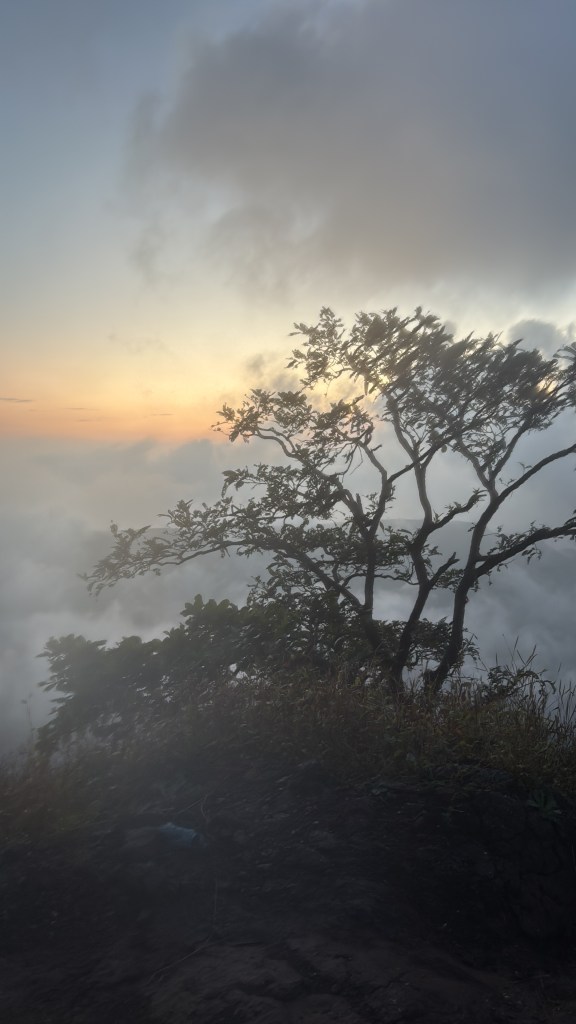
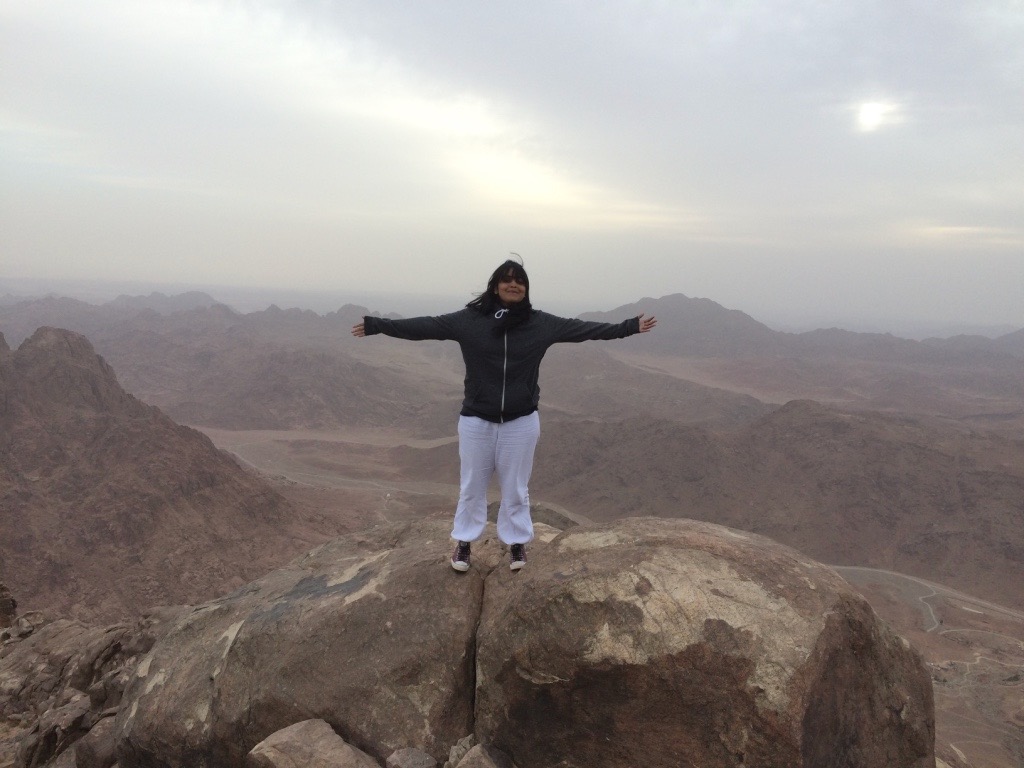
I was reminded of the book The Subtle Art Of Not Giving A Fuck by Mark Manson recently when I hiked up a mountain to catch the sunrise. The book ends with a chapter about him standing at the edge of the cliff, pulling himself back to the trail as the adrenaline rushing through his blood dissipates. A stranger sees him there, eyes wide, body still vibrating from the silence, the sheer nearness of death.
The stranger asks Mark:
“Is everything okay? How are you feeling?”
There is a pause. Mark responds:
“Alive,” he says. “Very alive.”
That part stayed with me. Not the philosophy. Not the optimism. Not the existential theory of life or death.
Just that moment: Alive. Very alive.
Because that feeling does not come from safety. It comes from standing at the threshold, where your mind quiets, your body trembles, and your soul steps forward to speak.
I think everyone needs to stand there once. Not necessarily on a cliff but at their edge. Whatever edge life has placed for them. Because when you strip everything away — the noise, the roles, the expectations — what remains is the truth of your life.
And here is my truth:
If today was my last day, I know I have lived. Fully. Chaotically. Messily. With every version of myself, even the broken ones, shining through. The choice to be alive was never half-hearted for me. Even my pain has been wholehearted. Even my joy has been loud.
Yes, I have unfinished dreams. But I have no unfinished living.
And maybe that is why, if I were on that cliff, I wouldn’t jump, not because I am afraid to die, but because I am not done living. The story is still happening. The threads are still weaving. The meaning is still unfolding.
The only tragedy, I think, is not death. It is reaching the end and realising you never really showed up. If you find yourself fifty years from now saying, “I could have lived more,” then the heartbreak is not in dying — it is in not having lived.
This is why the edge matters. Because the moment you look down, and everything goes silent, and your mind finally stops fighting, you will know exactly what remains.
Your truth. Your life. Your aliveness.
And stepping back from that edge, with breath still in your lungs, is the moment you return to the world very alive. Ready to live life to the fullest, because afterall, life is fragile. You never know when your last day on planet Earth will be.
Missing someone isn’t one emotion. It’s a spectrum — quiet, wild, and sometimes cruel. It shifts depending on what part of the past it clings to, what kind of love it remembers, and what kind of silence it leaves behind.
1. Missing the Memories
The most familiar kind. You think you miss your ex — the late-night calls, the shared experiences, inside jokes that once made ordinary days feel cinematic. You miss the relationship, however messy or imperfect it was, because it held a version of you that believed in love a certain way — wildly, recklessly, without knowing better.
And maybe that’s what you’re really missing — her, the old you. The one who kept showing up, even when things didn’t make sense. Loving that past version of yourself is necessary. Because as we grow, that part of us, the one that loved so fearlessly dies a little. What remains is her ghost, whispering reminders of who we once were.
So perhaps it isn’t the person or even the relationship you miss. It’s that echo inside you, the memory of your own innocence, the hope that once burned bright before it learned the art of self-protection.
2. Missing Someone “Just Because”
Then there’s the kind that arrives uninvited. No song, no photograph, no reason at all. You just find yourself thinking of your friends from when you were in college (young, wild and free), the ones who made you laugh until your stomach hurt, who held your secrets without judgment, who made you feel safe enough to simply be. With them, there was no need to edit yourself or explain your silences.
You don’t miss one particular moment; you miss the energy of belonging. It’s not sadness, it’s remembrance. A quiet gratitude for what was. Your heart still hums their frequency, the familiar vibration of genuineness, even if your lives have drifted apart or your cities no longer overlap.
3. Missing the Person
This one is quieter and deeper. It’s not about what you did together, it’s about who they were. The way they made you feel grounded, seen, alive. You could have every photograph, every message, and still feel the hollow of their absence. Because this isn’t nostalgia, it’s knowing that something irreplaceable once existed. It’s missing what no one else could ever be.
4. Missing Through Love
I once came across a quote:
“You cannot miss someone as much as you love them.”
The depth of your missing will never exceed the depth of your love. You feel it most when you think of family — your parents, your roots. You miss them even when they’re right there, sitting beside you. You miss the versions of them that existed when you were small, the safety of their presence before life’s complexities took over. This kind of missing isn’t about loss; it’s about continuity, love echoing through time, changing shape but never fading.
5. The Kind That Feels Like Longing
And then, there’s the rarest kind. The missing that refuses to fade. The kind that feels like longing — sacred, eternal. It’s what you feel for a true love, the one who touched your soul in ways you can’t unlearn. You move forward, you live your life, but something in you still turns toward them, like a flower bending to the light. You can’t explain it. You can’t quiet it. It doesn’t ask for reunion. It simply is.
It’s love without demand — pure, patient, infinite.
There are many ways to miss someone. Some are fleeting; others stay for years. Some ache; others heal. But maybe the truth is this, missing isn’t always pain. Sometimes it’s a quiet way of remembering love in all its forms.
“And if Time is anything akin to God, I suppose that Memory must be the Devil.” – Claire Fraser, Outlander
I’ve thought a lot about this line lately. It’s one of those quotes that stays with you, not because it’s dramatic, but because it’s true.
Time heals, they say. And maybe it does. It softens the edges, dulls the sting, lets you breathe again. But memory, memory doesn’t forget. Memory lingers. It plays its little tricks, sometimes like a ghost that refuses to rest.
Time may close the wound, but the scar stays.
And perhaps that’s what Claire meant, that time, like God, is merciful. It gives us distance, perspective, grace. But memory, the Devil, keeps pulling us back. It whispers, remember how that felt? Sometimes with warmth, other times with ache. The scar becomes a reminder, not just of what happened, but of what we still carry inside.
So what is time really healing? The pain, I suppose. The sharpness of it. But the memory, the scar, it stays, as it should. It reminds us of the work that’s still left to do.
There’s a song by David Guetta called Memories that puts it rather beautifully:
“All the crazy shit I did tonight Those will be the best memories I just wanna let it go for the night That would be the best therapy for me.”
That lyric “I just wanna let it go” is the missing piece. Time alone doesn’t heal. Letting go does.
And yet, I’ve struggled with that part — the letting go. Holding on feels easier sometimes, doesn’t it? We get used to the pain; it becomes familiar, almost comforting in its predictability. But pain was never meant to be a home. Eventually, it catches up with you, demanding to be felt, to be acknowledged, to be released.
That’s the divine magic of time, it confronts you with the memories exactly when you’re ready to face them. You feel the ache so deeply that there’s no choice left but to let it move through you. That’s when release becomes inevitable. After all, we were never meant to hold on to the weight of our wounds.
Healing isn’t about forgetting or staying far enough so you don’t feel its presence anymore. It’s about revisiting the pain long enough to understand it, to really feel it, and then to let it move through you instead of dodging it. That’s how time becomes divine. Because if time passes and the pain remains locked away, untouched, then memory will keep dragging you back to the same moment, again and again.
Time only heals what you allow yourself to feel.
Maybe that’s what it means to turn time into therapy. To sit with what hurts, to let the tears fall, to stop resisting the ache until, slowly, it begins to dissolve.
Feel the pain. Let it go. Heal.
And one day, when memory comes knocking again, it won’t hurt as much. You’ll trace the scar gently and smile, not because you’ve forgotten, but because you’ve finally made peace with remembering. Because that’s what true healing is: forgiving and remembering. Forgiving the past, yourself, and the people who became part of your pain. Not to erase what happened, but to set yourself free. Forgiveness is what transforms the scar from a mark of suffering into a symbol of survival.
And on the other side of all that feeling, after the tears, the release, the remembering comes peace. Not the fleeting kind that depends on circumstances or closure, but the quiet, grounded peace that settles in once you stop trying to control what was never meant to be. It’s a peace that doesn’t need answers. A peace that trusts that what left was never yours to hold, and what remains is exactly what’s meant to stay.
That’s when the memories soften, the body exhales, and the soul finally rests.
“Maybe peace isn’t the absence of pain, but the grace to remember without bleeding.“ – Namrata Adsul
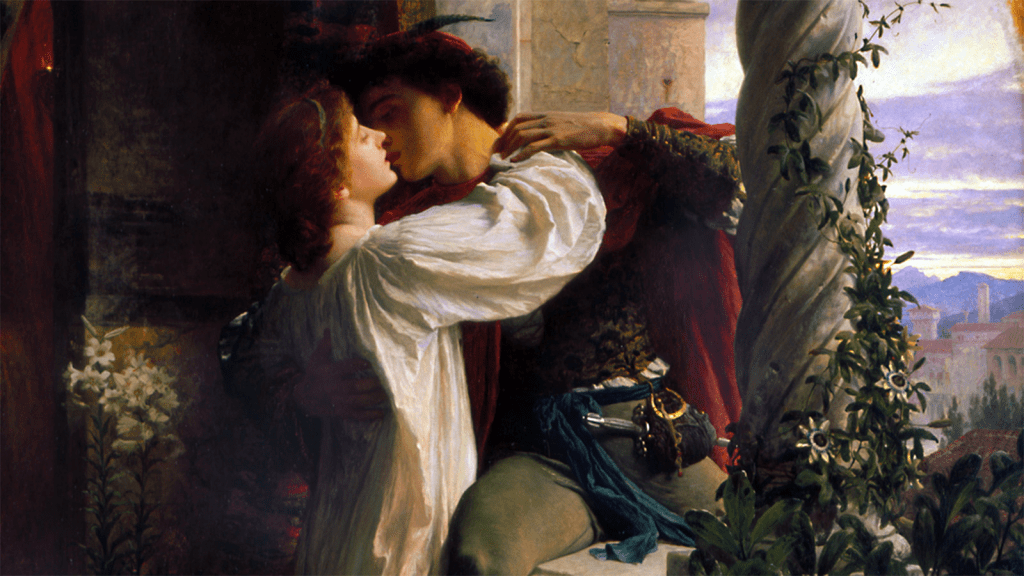
Shakespeare’s tragic love stories didn’t dress up love in roses. He treated love with a seriousness we often shy away from—messy, dangerous, transformative, and sometimes absurd. That’s why centuries later, we still see ourselves in his stories. He didn’t write love as fantasy. He wrote it as it is: contradictory, fragile, and fierce.
But then why does it feel like every great love story ends in death? Were Romeo and Juliet doomed from the start? Couldn’t they have fought harder, endured, found a way? Maybe. But Shakespeare makes their demise feel inevitable because their love wasn’t just affection. It was rebellion. It was defiance. It was lust, destiny, and devotion tangled together.
Their love itself wasn’t the failure though. What destroyed them was everything around it—family feuds, pride, society’s rigidity. Shakespeare understood something we still struggle with: love may be pure, but people, society, and circumstance corrode it.
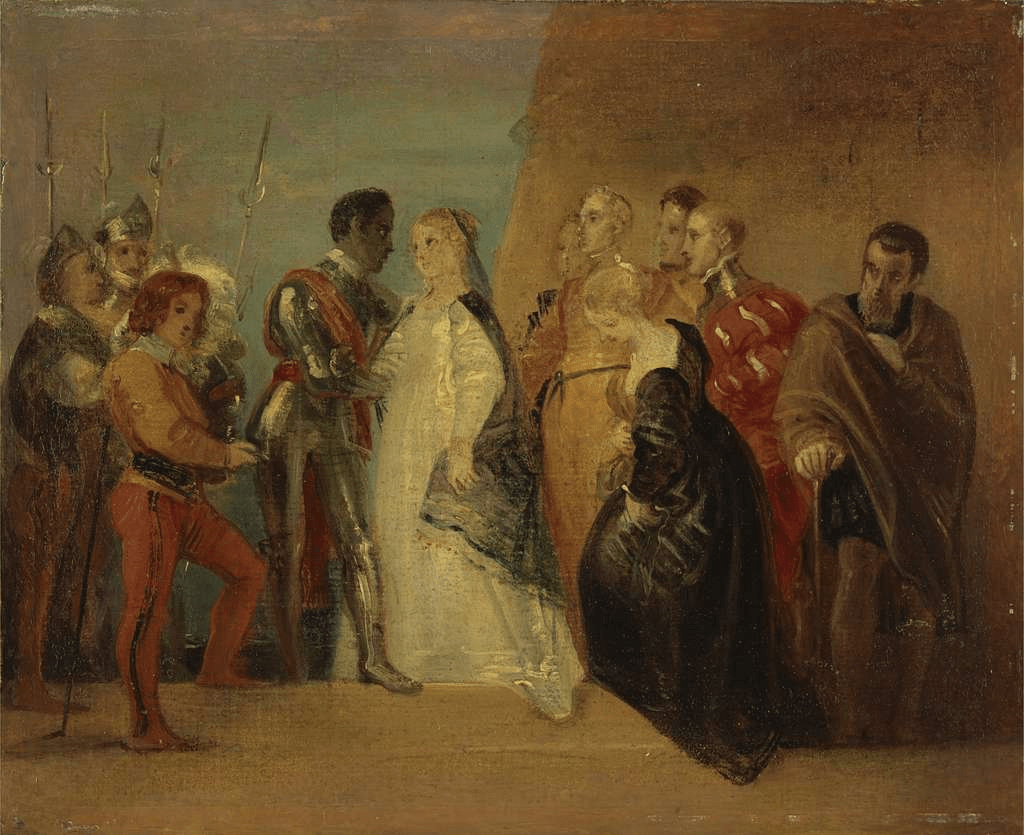
Look at Othello. He didn’t stumble into jealousy on his own. The seed was planted. Iago, with all his venom and cunning, represents the voice of society—the envious whispers, the jealous eyes, the forces that can’t stand to see love in its truest, most powerful form. Left to himself, Othello might never have believed Desdemona capable of betrayal. But once society’s hand reached into that sacred bond, twisting love into doubt, the poison spread too fast to stop.
Isn’t that what so many of Shakespeare’s tragic loves are really about? Romeo and Juliet undone by feuding families. Desdemona and Othello undone by Iago’s schemes. Love itself isn’t the flaw, it’s the world around it, with its pride, politics, and envy, that refuses to let love simply exist.
And this isn’t just a lesson for the 16th century. We still have our Iagos. They show up as gossip, as cultural expectations, as voices telling us who we should or shouldn’t love. The methods are different, but the effect is the same: outside forces planting seeds of doubt where trust should live.
That’s the caution Shakespeare leaves us with: it isn’t enough for love to be strong within two hearts. It must also be guarded fiercely against the noise of the world. Without that vigilance, even the most genuine love risks being undone, not by what’s inside it, but by everything trying to tear it apart.
How?
This is where the sacredness of love comes in. True love, the kind Shakespeare wrote as life and death, is not casual. It carries responsibility. If you are given the gift of such a bond, you don’t squander it on ego, lust, or convenience. You honor it as something rare, something that transcends lifetimes.
Shakespeare revered too much to take it lightly. He wrote its danger because he believed in its power. And maybe that’s the real question for us today: in a world that treats love as fleeting, are we still willing to carry it as something sacred?
And maybe that’s what he was showing us all along: love doesn’t always live in two people holding hands forever. That kind of love can break under pressure, or even die with them. But love itself outlives the lovers. It lingers as memory, transformation, legacy. Love endures, not always in the way we want, but in ways that ripple outward, changing everything it touches.
“You might belong in Gryffindor, where dwell the brave at heart. Their daring, nerve, and chivalry set Gryffindors apart.” — Sorting Hat
I’ve always known, deep in my bones, that I’m a true Gryffindor. Even when fear clung to my skin, I somehow managed to rise. Bravery didn’t always feel like a roar—more often, it arrived quietly, wrapped in trembling hands and uncertain steps. But I showed up. Again and again.
Still, there comes a time when being too brave, too often, leaves the pot of courage bone-dry. I remember those years when I lived on the edge. I flirted with risk, danced with chaos, and mistook recklessness for resilience. Every decision pushed a boundary. Every choice felt like I was testing the limits.
Until one day, the pot was empty. And I finally sat myself down. Body tired, heart heavier than I cared to admit. I realised how much I had been burning through myself just to prove I was brave.
That’s when the doubt crept in. Not all at once, but through quiet whispers of “what if” and a lingering fear of the unknown. That combination held me hostage. Kept me safe, but small. It made me wonder—was the pot truly empty, or did I convince myself it was? Maybe I was trying to protect myself from everything that felt too big, too fast, too uncertain.
In those moments, I lost her—the truest version of me. The one who once dared without second-guessing. I shrank into the shadows of hesitation, even when something inside me knew the unknown might be a good thing. But it wasn’t the world I was afraid of. It was the storm within.
So, I stayed. I didn’t run this time. I met the inner demons I had spent a lifetime avoiding. I didn’t fight them, I listened. And after many moons of letting the tides of memory and emotion crash over me, I found my footing again.
And now, when I speak of bravery, it’s not the loud, performative kind. It’s the kind that grows roots. The kind that allows space for softness. The kind that whispers—you’re safe now.
So yes, Sorting Hat, go ahead. Place me in Gryffindor. I no longer wear courage like a mask. I carry it quietly, but deeply. I feel brave from the inside. Brave at heart.
In the midst of remembering all that I’ve lived through, I’ve forgotten to actually live.
I recently turned 33. Growing older used to feel terrifying — not because of age, but because of how many years I felt I had already lost. I survived my childhood, endured my teenage years, and stumbled through early adulthood. I grew up too fast. I had to.
When I was talking to someone recently, I told them that this birthday feels different. I want it to be a rebirth. A reset. A conscious beginning.
For the first time, I’m starting to imagine beautiful things. Not just the life I escaped from, but the life I want to create. I’m not losing my youth. I’m growing into a version of myself that finally feels like home.
The best things in my life haven’t happened yet. There’s love to be discovered, the kind that grows deeper with time. There’s the possibility of becoming a mother, of raising children with awareness and tenderness. There’s meaningful work ahead, work that feels aligned with who I am.
Even thinking about these things brings tears to my eyes. Because for so long, I couldn’t. I didn’t dare to hope. It felt too risky. Too far away. Too unsafe.
But now, I do hope. I do dream.
Yes, I’ve lost a lot. Yes, trauma shaped my path. But it didn’t break me. I’ve lived. I’ve gathered stories and strength. And I know, deep down, that the version of me who walked through all that darkness has earned her joy. Not as a reward, but as a right.
I’m proud of myself. Truly proud. That’s something I haven’t said often enough.
Will I still get triggered? Yes. Will fear visit me again? Probably. These things don’t disappear overnight. They live in the body. They resurface. But now I know how to face them.
I used to hope I’d one day forget everything that happened. But I’ve learned that forgetting doesn’t free you. It only delays the return. So I’m done running. This happened. These are the cards I was dealt. And still, I’m here. And still, I get to live a beautiful life.
Today’s Truth:
I’m not healing to erase the past. I’m healing to remember the future I still get to have. This is my rebirth — not in spite of what I’ve lived through, but because I chose to keep living.
Today’s hesitation wasn’t about writing what happened to me. It was about writing what I’ve done because of it.
Yesterday, I wrote that there’s evil in me too. I stand by that. Trauma doesn’t just leave physical or emotional aftereffects. Sometimes, it creates patterns of behavior that are hard to admit — especially when they hurt other people.
This morning, I wanted to be honest with myself. Given how intense and extreme my experiences have been, I know there’s no way I’ve made it through without causing harm. I’m not a saint. I’ve had moments where the pain I didn’t want to feel found its way out as anger. As cruelty. As defensiveness. As superiority.
Sometimes it was unintentional. But other times, I knew.
I’ve justified it in the past. I didn’t say it out loud, but in my head, I thought, “This is what men have done to me. So what if I bring them down a little?” The truth is, some of the kindest men in my life have received the worst of me. I’ve belittled them, mocked them, hit where it hurt, all while telling myself they could handle it. That they were strong enough. That it didn’t matter.
But it did matter. They were good to me. And I hurt them anyway.
This is hard to admit. But I don’t want to be someone who blames my past forever. I’ve done that before. I’ve told myself that the reason I lash out is because of what I endured. But it’s not their fault. The people I’ve hurt didn’t abuse me. They didn’t leave me unprotected as a child.
They didn’t deserve my rage.
I think back to my ex. To a few close male friends. I see the way I pushed them away when they tried to help me. I see how my ego stepped in and said, “Don’t let them be right.” So I said something mean. Something cold. Something that cut deep.
I realize now, that was the same thing done to me. The men who hurt me — they were probably running from their own suffering. My father definitely was. He grew up with an alcoholic dad who beat him and then died young. I can imagine that pain. And I can see how he never learned to stop it from spreading.
That’s what I’m trying to do. I’m trying to stop the chain reaction.
I know some of the things I’ve done may seem small. But the timing of a word, the edge of a tone, can break someone who’s already on the edge. I don’t want to carry that weight anymore.
I want to alchemize this darkness. That’s what I said in my book. I called myself an alchemist. If I meant it, I can’t keep channeling my pain in ways that quietly hurt others. Even when it’s justified. Even when it’s subtle. Even when it feels easier.
Today’s Truth:
The pain I didn’t want to feel turned into a shadow I didn’t want to see. But seeing it is how I stop it from growing. I am not just what happened to me. I am what I choose to do with what it left behind.

 fortuitouspurpose