Pain and its Shadow

Pain creates a shadow. That much is undeniable. And with it comes an instinct—raw, immediate, human.

The urge to hurt someone because you were hurt is natural. It’s an afterthought. A reflex. The nervous system fires before wisdom arrives. That first dark impulse—the flash of retaliation, the desire to strike back—is not a moral failure. It’s biology. We are human, after all.

But instinct is not instruction.

Someone who has truly understood shadow work knows this difference intimately. They know that while the impulse is real, acting on it is foolish. Short-sighted. It might feel satisfying in the moment—like relief, like justice—but it always backfires. Always.

Here’s the paradox most people miss:
the shadow itself knows this.

The shadow is not reckless. It is intuitive. Its intelligence lies in discernment—in knowing which actions drain you instead of protect you. True shadow integration does not encourage explosion or revenge. It teaches restraint. It offers protection that is quiet, strategic, and enduring, not the kind that lashes outward for temporary relief, but the kind that preserves your integrity long after the moment has passed.

No foolish negative outward action here.
No outward action at all.

That is real control. Real control of your mind, your psyche, yourself.
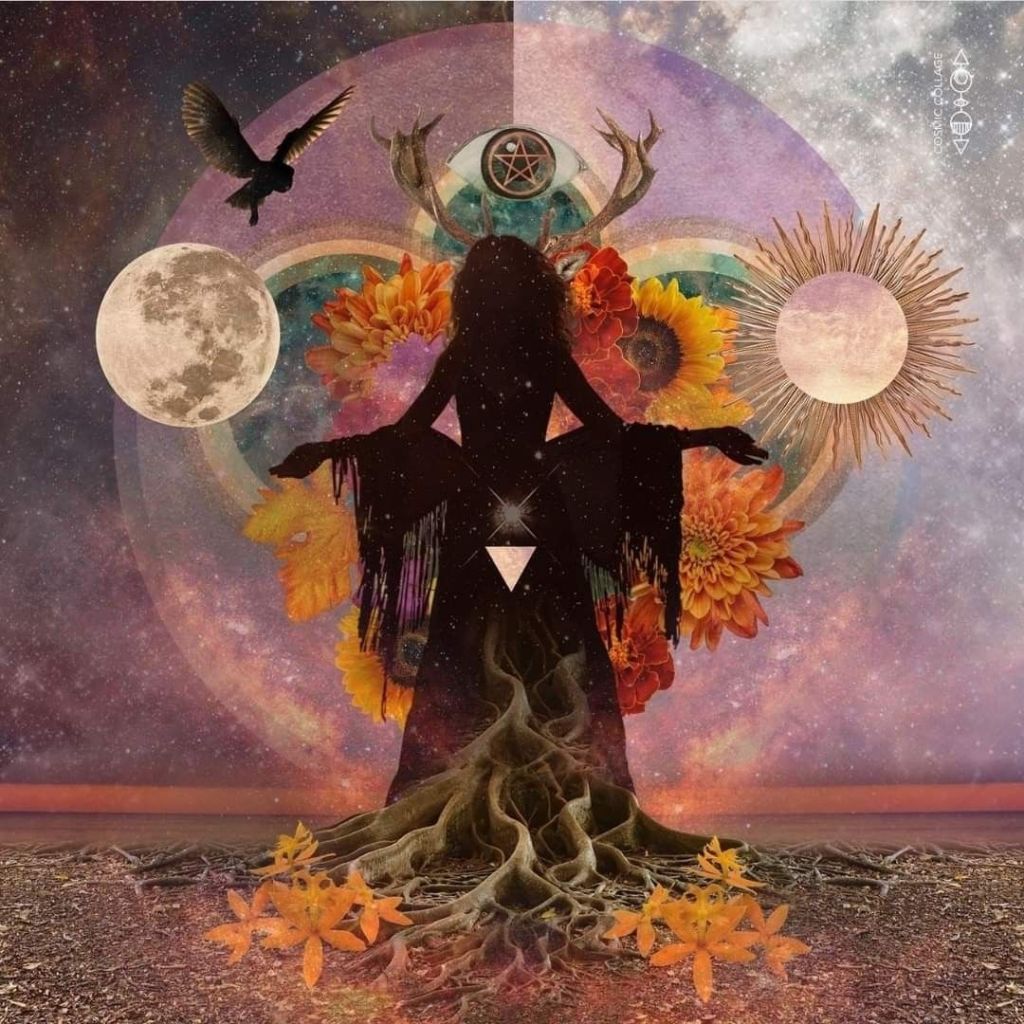
The Point of the Shadow Is Liberation

This is where healing becomes unmistakable.

You know you are not healed yet when you still feel the urge to use your shadow to attack something—to feel powerful, justified, or momentarily relieved of the pain you endured. That urge doesn’t mean you’re strong. It means you’re still inside the wound.

Healing reveals itself when that urge dissolves.

When hurting back no longer feels satisfying.
When retaliation feels heavy instead of empowering.
When you no longer need to prove what you survived.

That is not weakness. That is freedom.

When I did my shadow work, it wasn’t rebellious. It wasn’t loud. It wasn’t performative. There were no declarations, no theatrics, no enemies to conquer.

I sat with my pain (a.k.a. my shadow).

For hours, days, weeks, months, years…

Crying. Shivering. My body trembling as if every cell was finally allowed to speak. I felt it fully—without distraction, without escape—asking God to help me endure it.

That was it.

No revenge.
No outward action.
No destruction of anyone else.

That is why I say shadow work is a divine practice. Not because it glorifies darkness, but because it demands surrender. It asks you to sit in the uncomfortable truth long enough for it to transform you. It has nothing to do with rebellion and everything to do with reverence—for your pain, your body, and your capacity to endure without becoming what harmed you.

The shadow, when honoured correctly, does not make you darker.

It makes you free.

And Here Is the Part No One Talks About

When you stop reacting, something shifts.

When you refuse to act out your shadow through harm, your growth becomes the force. Quiet. Unavoidable. Surgical.

The person who tried to bring you down doesn’t get your anger.
They don’t get your retaliation.
They don’t even get your attention.

They get something far more destabilising:

They get left behind.

Your healing hits where no attack ever could.
Your alignment exposes what was never solid.
Your becoming does the work you never needed to do outwardly.

That is the real power of shadow work!

Not destruction.
Not revenge.
Not proving anything.

Just transformation so complete that the darkness that once threatened to consume you becomes the very thing that carries you forward.

Effortless.
Intuitive.
Untouchable.
Everything Looks the Same, But Everything Has Changed

Coming back home to India after so many years has been a strange, beautiful kind of déjà vu. I decided to visit all the places that once shaped me — the neighbourhoods I lived in, the corners that knew my secrets, and even my old school. Some of these places hold memories I’ve spent years trying to forget, yet there I was, walking those same streets, noticing the familiar tea stalls, the same old guard, the same smell of dust after rain.

I caught myself smiling. Smiling at places that once broke me.

Standing at the gates of my school, the same gates I walked through every single day, dreading what awaited inside, I felt something shift. I used to walk through them misunderstood, judged, overlooked. I carried so much fear then, though I couldn’t name it. No one could.

Little did that girl know she was struggling because she has AuDHD — navigating a world that wasn’t built for her kind of mind, punished for traits she didn’t choose, expected to “behave” like the others when her neurobiology was wired completely differently.

And yet, here I was, standing in the same spot, looking at the same building, even the same paint color — thinking:

“Everything looks exactly the same… but everything has changed.”

The school is the same. The streets are the same. The children rushing out at 6 PM, the familiar chaos, even the tone of the evening bell — unchanged.

But I am not.

That realization stopped me for a moment. Time doesn’t heal through erasure — it heals through evolution. The pain I once carried through those gates gave birth to the person I’ve become: aware, grounded, and finally at peace with her own wiring.

It’s almost poetic how the external world stays frozen in time, waiting for you to return, only for you to realize it was never the world that needed to change. It was always you. Revisiting these old places taught me something tender: healing is not about rewriting the past, it’s about outgrowing the version of you who lived it.

Seeing my school again didn’t bring back the old fear. It brought gratitude for the distance between who I was and who I’ve become.

The girl who once trembled walking through those gates couldn’t have imagined the woman returning to them years later — calm, confident, self-aware, and finally understanding the language of her own mind.

And maybe that’s the quiet magic of life: we return to the same places, but if we’ve done the work, we never return as the same person.

Time, Memory, and the Art of Letting Go

“And if Time is anything akin to God, I suppose that Memory must be the Devil.” – Claire Fraser, Outlander

I’ve thought a lot about this line lately. It’s one of those quotes that stays with you, not because it’s dramatic, but because it’s true.

Time heals, they say. And maybe it does. It softens the edges, dulls the sting, lets you breathe again. But memory, memory doesn’t forget. Memory lingers. It plays its little tricks, sometimes like a ghost that refuses to rest.

Time may close the wound, but the scar stays.

And perhaps that’s what Claire meant, that time, like God, is merciful. It gives us distance, perspective, grace. But memory, the Devil, keeps pulling us back. It whispers, remember how that felt? Sometimes with warmth, other times with ache. The scar becomes a reminder, not just of what happened, but of what we still carry inside.

So what is time really healing? The pain, I suppose. The sharpness of it. But the memory, the scar, it stays, as it should. It reminds us of the work that’s still left to do.

There’s a song by David Guetta called Memories that puts it rather beautifully:

“All the crazy shit I did tonight
Those will be the best memories
I just wanna let it go for the night
That would be the best therapy for me.”

That lyric “I just wanna let it go” is the missing piece.
Time alone doesn’t heal. Letting go does.

And yet, I’ve struggled with that part — the letting go. Holding on feels easier sometimes, doesn’t it? We get used to the pain; it becomes familiar, almost comforting in its predictability. But pain was never meant to be a home. Eventually, it catches up with you, demanding to be felt, to be acknowledged, to be released.

That’s the divine magic of time, it confronts you with the memories exactly when you’re ready to face them. You feel the ache so deeply that there’s no choice left but to let it move through you. That’s when release becomes inevitable. After all, we were never meant to hold on to the weight of our wounds.

Healing isn’t about forgetting or staying far enough so you don’t feel its presence anymore. It’s about revisiting the pain long enough to understand it, to really feel it, and then to let it move through you instead of dodging it. That’s how time becomes divine. Because if time passes and the pain remains locked away, untouched, then memory will keep dragging you back to the same moment, again and again.

Time only heals what you allow yourself to feel.

Maybe that’s what it means to turn time into therapy. To sit with what hurts, to let the tears fall, to stop resisting the ache until, slowly, it begins to dissolve.

Feel the pain.
Let it go.
Heal.

And one day, when memory comes knocking again, it won’t hurt as much. You’ll trace the scar gently and smile, not because you’ve forgotten, but because you’ve finally made peace with remembering. Because that’s what true healing is: forgiving and remembering. Forgiving the past, yourself, and the people who became part of your pain. Not to erase what happened, but to set yourself free. Forgiveness is what transforms the scar from a mark of suffering into a symbol of survival.

And on the other side of all that feeling, after the tears, the release, the remembering comes peace. Not the fleeting kind that depends on circumstances or closure, but the quiet, grounded peace that settles in once you stop trying to control what was never meant to be. It’s a peace that doesn’t need answers. A peace that trusts that what left was never yours to hold, and what remains is exactly what’s meant to stay.

That’s when the memories soften, the body exhales, and the soul finally rests.

Maybe peace isn’t the absence of pain, but the grace to remember without bleeding. – Namrata Adsul

Gryffindor

“You might belong in Gryffindor, where dwell the brave at heart. Their daring, nerve, and chivalry set Gryffindors apart.” — Sorting Hat

I’ve always known, deep in my bones, that I’m a true Gryffindor. Even when fear clung to my skin, I somehow managed to rise. Bravery didn’t always feel like a roar—more often, it arrived quietly, wrapped in trembling hands and uncertain steps. But I showed up. Again and again.

Still, there comes a time when being too brave, too often, leaves the pot of courage bone-dry. I remember those years when I lived on the edge. I flirted with risk, danced with chaos, and mistook recklessness for resilience. Every decision pushed a boundary. Every choice felt like I was testing the limits.

Until one day, the pot was empty. And I finally sat myself down. Body tired, heart heavier than I cared to admit. I realised how much I had been burning through myself just to prove I was brave.

That’s when the doubt crept in. Not all at once, but through quiet whispers of “what if” and a lingering fear of the unknown. That combination held me hostage. Kept me safe, but small. It made me wonder—was the pot truly empty, or did I convince myself it was? Maybe I was trying to protect myself from everything that felt too big, too fast, too uncertain.

In those moments, I lost her—the truest version of me. The one who once dared without second-guessing. I shrank into the shadows of hesitation, even when something inside me knew the unknown might be a good thing. But it wasn’t the world I was afraid of. It was the storm within.

So, I stayed. I didn’t run this time. I met the inner demons I had spent a lifetime avoiding. I didn’t fight them, I listened. And after many moons of letting the tides of memory and emotion crash over me, I found my footing again.

And now, when I speak of bravery, it’s not the loud, performative kind. It’s the kind that grows roots. The kind that allows space for softness. The kind that whispers—you’re safe now.

So yes, Sorting Hat, go ahead. Place me in Gryffindor. I no longer wear courage like a mask. I carry it quietly, but deeply. I feel brave from the inside. Brave at heart.

Diary Entry Day 7: Rebirth at 33

In the midst of remembering all that I’ve lived through, I’ve forgotten to actually live.

I recently turned 33. Growing older used to feel terrifying — not because of age, but because of how many years I felt I had already lost. I survived my childhood, endured my teenage years, and stumbled through early adulthood. I grew up too fast. I had to.

When I was talking to someone recently, I told them that this birthday feels different. I want it to be a rebirth. A reset. A conscious beginning.

For the first time, I’m starting to imagine beautiful things. Not just the life I escaped from, but the life I want to create. I’m not losing my youth. I’m growing into a version of myself that finally feels like home.

The best things in my life haven’t happened yet.
There’s love to be discovered, the kind that grows deeper with time.
There’s the possibility of becoming a mother, of raising children with awareness and tenderness.
There’s meaningful work ahead, work that feels aligned with who I am.

Even thinking about these things brings tears to my eyes. Because for so long, I couldn’t. I didn’t dare to hope. It felt too risky. Too far away. Too unsafe.

But now, I do hope. I do dream.

Yes, I’ve lost a lot. Yes, trauma shaped my path. But it didn’t break me. I’ve lived. I’ve gathered stories and strength. And I know, deep down, that the version of me who walked through all that darkness has earned her joy. Not as a reward, but as a right.

I’m proud of myself. Truly proud. That’s something I haven’t said often enough.

Will I still get triggered? Yes. Will fear visit me again? Probably. These things don’t disappear overnight. They live in the body. They resurface. But now I know how to face them.

I used to hope I’d one day forget everything that happened. But I’ve learned that forgetting doesn’t free you. It only delays the return. So I’m done running. This happened. These are the cards I was dealt. And still, I’m here. And still, I get to live a beautiful life.

Today’s Truth:

I’m not healing to erase the past.
I’m healing to remember the future I still get to have.
This is my rebirth — not in spite of what I’ve lived through, but because I chose to keep living.

Diary Entry Day 6: Reckoning with the Shadow

Today’s hesitation wasn’t about writing what happened to me. It was about writing what I’ve done because of it.

Yesterday, I wrote that there’s evil in me too. I stand by that. Trauma doesn’t just leave physical or emotional aftereffects. Sometimes, it creates patterns of behavior that are hard to admit — especially when they hurt other people.

This morning, I wanted to be honest with myself. Given how intense and extreme my experiences have been, I know there’s no way I’ve made it through without causing harm. I’m not a saint. I’ve had moments where the pain I didn’t want to feel found its way out as anger. As cruelty. As defensiveness. As superiority.

Sometimes it was unintentional. But other times, I knew.

I’ve justified it in the past. I didn’t say it out loud, but in my head, I thought, “This is what men have done to me. So what if I bring them down a little?” The truth is, some of the kindest men in my life have received the worst of me. I’ve belittled them, mocked them, hit where it hurt, all while telling myself they could handle it. That they were strong enough. That it didn’t matter.

But it did matter. They were good to me. And I hurt them anyway.

This is hard to admit. But I don’t want to be someone who blames my past forever. I’ve done that before. I’ve told myself that the reason I lash out is because of what I endured. But it’s not their fault. The people I’ve hurt didn’t abuse me. They didn’t leave me unprotected as a child.

They didn’t deserve my rage.

I think back to my ex. To a few close male friends. I see the way I pushed them away when they tried to help me. I see how my ego stepped in and said, “Don’t let them be right.” So I said something mean. Something cold. Something that cut deep.

I realize now, that was the same thing done to me. The men who hurt me — they were probably running from their own suffering. My father definitely was. He grew up with an alcoholic dad who beat him and then died young. I can imagine that pain. And I can see how he never learned to stop it from spreading.

That’s what I’m trying to do. I’m trying to stop the chain reaction.

I know some of the things I’ve done may seem small. But the timing of a word, the edge of a tone, can break someone who’s already on the edge. I don’t want to carry that weight anymore.

I want to alchemize this darkness. That’s what I said in my book. I called myself an alchemist. If I meant it, I can’t keep channeling my pain in ways that quietly hurt others. Even when it’s justified. Even when it’s subtle. Even when it feels easier.

Today’s Truth:

The pain I didn’t want to feel turned into a shadow I didn’t want to see.
But seeing it is how I stop it from growing.
I am not just what happened to me.
I am what I choose to do with what it left behind.

Diary Entry Day 4: Tears at Dawn

I didn’t feel like writing today.

This morning, I woke up around 7 a.m. with tears silently rolling down my face. They weren’t loud or dramatic. They came from somewhere deep inside. I was thinking about the book I recently published. A friend told me it inspired her to make a change in her life. That meant a lot. It made me think about how healing can happen if the people closest to me begin to show up differently than the people who surrounded me growing up. If that happens, maybe the little girl inside me will finally feel safe. Maybe she’ll stop bracing for the worst. I think those were her tears this morning.

That moment might also be why I avoided writing until nightfall. I’ve been pushing the memory from the therapy session further and further into the background. It still feels dark. I swam across a lake yesterday and tried to release it with every stroke. I felt lighter for a while. But today, the heaviness returned.

I guess it’s because most of it still lives in my body. It’s not even about how I look. It’s how I feel when I look at myself. I don’t hate my body, but I’ve never really loved it either. It feels like my body stored the pain in the form of fat in places it was once violated. Sometimes it feels like the fat is trying to protect me. Or maybe it’s grief that never left.

I’ve hurt myself and others because of how deeply that insecurity runs. I’ve done so much to try to get rid of it — workouts, diets, rituals — hoping I could let go of the weight and the shame. I know healing is more than physical. But sometimes I wish it were that simple. I don’t want more work. I want peace.

I can’t change the past. I know that. But sometimes I still wonder what life would have been like if none of it had happened. Maybe I’d feel freer in my own skin. Maybe I’d move through the world without thinking about my body every few minutes.

I’m want to show my body some love now. When I apply lotion, I imagine I’m rubbing care into it. I want to look in the mirror without criticism. I want to stop comparing myself to women on the street with perfect bodies. It’s a heavy mental load — all the time. And I know I’ve carried it for years. But I’m trying to meet it differently now. Because even with everything it’s been through, it is still my body.

Today’s Truth:

I can’t erase the past, but I can choose how I feel about the body that remembers it.

Diary Entry Day 3: The Weight of Anger

Today, I feel angry. Furious, even. At the world. At men. At how cruel life can be. There’s a part of me that wants it all to burn.

I was triggered several times yesterday, but one moment stood out. A friend, an ex-friend now, gave me a small birthday gift. A pack of hand lotion. On the surface, it should’ve been harmless. But I know where she was coming from, and that’s what made it cruel. It felt like a calculated gesture, subtle but sharp. A reminder that some people don’t hurt you directly. They just know where to poke. It’s the same darkness that lived in the man who hurt me when I was too small to fight back. That quiet decision to take advantage of someone because you know they’re fragile.

That’s what makes me angry. That people do these things knowing they can get away with it. That people let their darkness win.

Now that I’ve started to accept what happened to me, it’s like a dam has broken. I’m not just angry about the abuse. I’m angry about everything I’ve lost because of it. The decades I spent not knowing. Not remembering. Just feeling tired, confused, insecure, without knowing why.

Looking back, so many things make sense now. It’s like this memory was a ghost directing my life from behind a curtain. I couldn’t see it, but it was there, shaping everything. My relationships. My body. My trust. My exhaustion.

It made me wonder what kind of energy I’ve been carrying all these years. Have I been wearing this invisible cloak of trauma? Have I been attracting cruelty without even realizing it?

I’ve always wanted to be a good person. And I know that I am. I’ve never wished harm on anyone. Not truly. But now I’m beginning to see how much I’ve hurt myself. And sometimes others too. Especially because of how disconnected I’ve felt from my own body.

My body has always been a sore point. Not just how it looks, but how it feels. I’ve hated my body for as long as I can remember. It’s like it holds all the memories I couldn’t. Fat collecting in the places where trauma once lived. I’ve tried everything to change that. Exercise, food, fasting, overcompensating. But the real weight wasn’t physical.

I just want my body back. Not a thinner version. Not a prettier one. The version that was never touched like that. The version that never had to carry this. I’m trying to love the body I’m in now. I really am. After all, it stayed. It carried me. Even when I didn’t know what it was holding.

Today’s Truth:

Anger isn’t just fire. It’s grief in disguise. And when you finally know what you’ve been carrying, you’re allowed to burn what never belonged to you.

Fight or Flight

It’s been a while since I last wrote here. Not because I didn’t want to, but because I was writing something much bigger. A book. And now, I can say it out loud: I’m a published author.

It feels surreal. Not just because it’s a lifelong dream, but because this book feels like an extension of this space. If you’ve been reading my blog, you’ll find traces of it in every chapter: the same voice, the same questions, just with a deeper descent. Writing it was like peeling back the layers of who I thought I was, only to meet the parts of me I had tucked away in silence.

In the process, I uncovered corners of myself that were heavy with darkness. Some still are. There are parts I’m still trying to make peace with, wounds I didn’t even know were still bleeding. Writing this book was not cathartic in the usual sense. It was confronting. At times, it felt like drowning in memory, only to come up gasping for breath and wondering if I’d ever feel whole again.

But here’s the thing: these memories, these unresolved knots, don’t surface until we’re ready. And I was ready, even if I didn’t feel like it.

One memory in particular has stayed with me. A pattern, really. One I’ve repeated without even realising it: getting close to men who either needed to be saved, or who saw me as a threat. Relationships where being strong meant being emasculating. Where my shine felt like their shadow. And slowly, without realising it, I kept shrinking or contorting to make them feel okay, while dimming parts of myself in the process.

Not all men in my life have been like this. But the closest ones, my father and an ex have. My father was absent in the moments I needed protection. Worse, he was the one I needed protection from. Physical harm, emotional neglect, a silence so loud it shaped how I saw myself as a girl in the world. And then came the ex. Infidelity. Emotional immaturity. A strange dependency masked as love. The kind that chips away at you until you’re left wondering how you ever tolerated that version of “care.”

Looking back, I realise I was often forced into my masculine energy, always in survival mode. I forgot what it meant to feel soft. To feel held. To simply be a woman. My divine feminine self felt like a distant memory, something I only caught glimpses of in solitude.

Last night, I woke up with a storm in my chest. Anger. Pure, raw, old anger. And for the first time, I let it be. I didn’t rationalize it, or quiet it, or sugarcoat the story. I named it for what it was: injustice. I saw clearly the ways I had been harmed. Not just physically, but in spirit. And how for so long, I was the one making excuses on behalf of those who had no business being excused. No more.

This post isn’t a travel story. But in some ways, it is. Because travel has always been my escape route. I was either running from a version of masculinity that hurt me or toward one I thought would save me, only to find more hurt. My fight-or-flight response? It was literally booking flights.

But that energy, that fire in me, I’m finally learning to channel it into something different. Something sacred. I’m building a life that honours the feminine within me. The part that feels deeply, loves fully, and doesn’t apologise for softness, stillness, or depth. It’s not about rejecting the masculine, but letting it rise only when needed. Not to dominate, but to protect and support. The feminine in me is no longer something I mute to survive. It’s something I now choose to live by. Because that energy, gentle, intuitive, nurturing is powerful too. And it deserves to take up space.

There’s power in this balance. I used to think vulnerability made me weak. That grief, fear, or sadness were emotions to hide. But recently, in conversation, someone reframed it for me. “It’s not weakness. It’s vulnerability.” And vulnerability, I’ve come to see, is courage in its truest form. To feel everything and still choose to stay. To keep loving. To keep healing.

If you’ve ever been in that space—navigating the abyss—I see you. I honour your strength.

And as for me? I know I’m not done yet. There’s more shadow to meet. More stories to unearth. But now, I don’t fear it. This isn’t a war between the broken and the healed versions of me. This is a reunion. An invitation to bring love to the parts of myself that never received it.

Because that’s what true healing is: not fixing, but integrating. Not hardening, but softening. And remembering that every version of me—past, present, becoming—is worthy of love.