Alive. Very Alive.

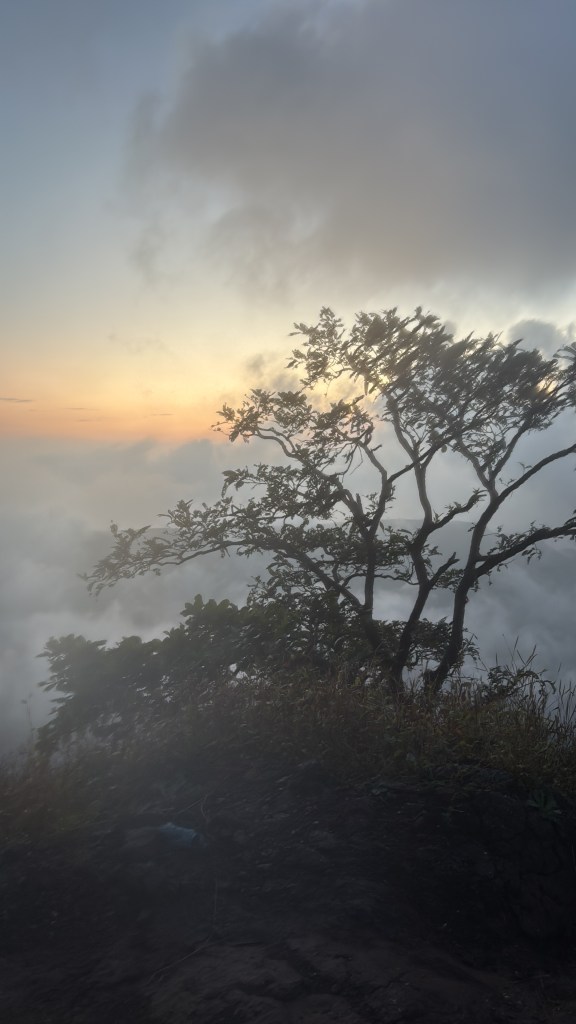
I was reminded of the book The Subtle Art Of Not Giving A Fuck by Mark Manson recently when I hiked up a mountain to catch the sunrise. The book ends with a chapter about him standing at the edge of the cliff, pulling himself back to the trail as the adrenaline rushing through his blood dissipates. A stranger sees him there, eyes wide, body still vibrating from the silence, the sheer nearness of death. 

The stranger asks Mark:

“Is everything okay? How are you feeling?”

There is a pause. Mark responds:

“Alive,” he says. “Very alive.”

That part stayed with me.
Not the philosophy. Not the optimism.
Not the existential theory of life or death.

Just that moment:
Alive. Very alive.

Because that feeling does not come from safety. It comes from standing at the threshold, where your mind quiets, your body trembles, and your soul steps forward to speak.

I think everyone needs to stand there once. Not necessarily on a cliff but at their edge. Whatever edge life has placed for them. Because when you strip everything away —
the noise, the roles, the expectations — what remains is the truth of your life.

And here is my truth:

If today was my last day, I know I have lived. Fully. Chaotically. Messily. With every version of myself, even the broken ones, shining through. The choice to be alive was never half-hearted for me. Even my pain has been wholehearted. Even my joy has been loud.

Yes, I have unfinished dreams. But I have no unfinished living.

And maybe that is why, if I were on that cliff, I wouldn’t jump, not because I am afraid to die, but because I am not done living. The story is still happening. The threads are still weaving. The meaning is still unfolding.

The only tragedy, I think, is not death. It is reaching the end and realising you never really showed up. If you find yourself fifty years from now saying, “I could have lived more,” then the heartbreak is not in dying — it is in not having lived.

This is why the edge matters. Because the moment you look down, and everything goes silent, and your mind finally stops fighting, you will know exactly what remains.

Your truth.
Your life.
Your aliveness.

And stepping back from that edge, with breath still in your lungs, is the moment you return to the world very alive. Ready to live life to the fullest, because afterall, life is fragile. You never know when your last day on planet Earth will be.
Meaning of life

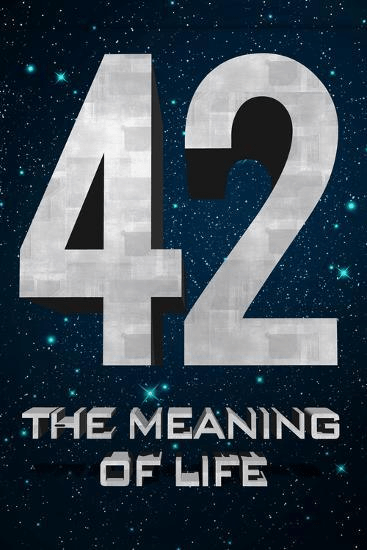
During my travels, I met some pretty fascinating people. Take Egypt, for example. A friend and I were chatting and something absurd about favorite numbers came up, and he casually mentioned his was 42. Now, most people pick something simple like 7 (mine is 7 only cause it’s the magical number, duh!) or 10—rounded. But 42? That caught my attention.

At the time, I had no clue about The Hitchhiker’s Guide to the Galaxy, where 42 is famously the answer to the “Ultimate Question of Life, the Universe, and Everything.” Naturally, I was intrigued and had to dig deeper. Now, I’m not much of a math person, so most of the geeky stuff about 42 went way over my head. But beyond the numbers, 42 has found its way into philosophy, religion, history—it’s got layers. Some fans say it explains everything. Yet, the author himself claims he randomly picked 42. But can something truly be random if it holds so much meaning across so many areas? Is it everything or nothing? Maybe it’s both.

You can see why this idea has stuck with me for over a decade. I’m someone who craves answers, explanations, and logic. I want to know how everything fits together, and I usually can piece it all into a neat, scientific explanation. So when I stumbled on this concept—the meaning of life is everything and nothing—it threw me. It bothered me. I kept thinking, how can these two opposing ideas coexist? Sure, “everything” can be measured, mapped, understood. But “nothing”? It’s intangible, it’s just felt, not seen. And in my world, if you can’t see it, it doesn’t exist.

Yet here I am, 32 years later, realizing there’s more to life. And maybe that “more” isn’t meant to be understood. Maybe it’s a feeling, something I’ll have to learn to trust. I’m not there yet, but I’m trying. Trusting in the unknown is terrifying—it’s messy, it makes me feel vulnerable—but what if that’s the point? What if the magic of life is in its mystery, in the things we can’t explain?

I guess I’ll have to take that leap. Trust in the nothingness, because, well, why not? Isn’t that what makes life beautiful? The mystery, the parts we can’t pin down or rationalize? Maybe that’s where the true meaning lies—not in the answers, but in the journey. After all, some things are just meant to be felt, not explained. And maybe it’s better that way.

What’s crystal clear to me is this—life is what we make of it. We can choose to let our heart believe in the magic of the unknown, the nothing, or let our ego take control and try to manage everything. Sure, you might find some answers along your ego’s journey, but chances are, you won’t like what you discover. It’s like when that supercomputer gave “42” as the answer to the meaning of life and left everyone disappointed. And they waited 7.5 million years for it! Honestly, I no longer have the patience to spend all my time trying to figure everything out. It’s exhausting. But, that doesn’t mean we should be naive and let our heart lead us into delusion either. It’s all about balance—a dance between trusting the mystery and staying grounded in reality.