Bridges and Chains

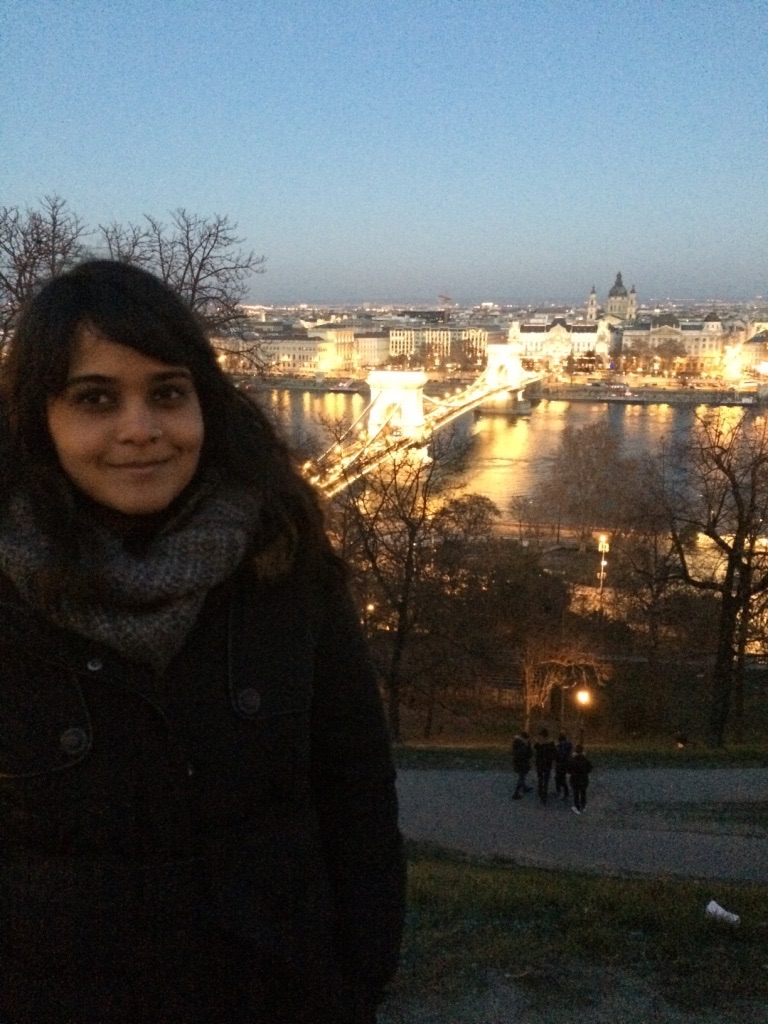
I was recently reminded of a walking tour in Budapest from a few years ago. The city, divided by the Danube River, is made up of two distinct halves: Buda and Pest. For centuries, they remained separate, each with its own identity, until the construction of the Chain Bridge in 1849. This bridge not only physically connected the two sides but also symbolized the merging of their contrasting personalities. The guide pointed out how this connection transformed the city’s architectural landscape, creating Budapest’s iconic eclectic style—a blend of influences from different cultures and periods. Buda, with its peaceful, upscale vibe, and Pest, bustling and full of life, each brought something unique to the city. Back then, they were distinct worlds, but today, they continue to coexist as separate yet complementary halves, each preserving its essence while contributing to the city’s dynamic whole.
My brain obviously went into reflection mode. There’s a famous saying: “Don’t burn your bridges.” It’s a reminder to leave situations and relationships in a way that preserves future possibilities. After all, bridges connect us, allowing for movement, exchange, and opportunity.

The bridge in Budapest is called the Chain Bridge for a reason, I guess. Chains symbolize strength and unity, holding things together even under pressure. Fleetwood Mac’s song The Chain encourages us to do just that. The song is a dark and desperate unity that reflects the band’s resilience. But the metaphor “break the chain” brings a different image to mind—liberating ourselves from cycles, constraints, or patterns that no longer serve us. This duality made me reflect on the concept of involution.

American sociologist Clifford Geertz described involution as stagnation — a loop of repeated behaviours that leads nowhere. In many ways, it reminded me of the famous Pink Floyd lyrics: “We’re just two lost souls swimming in a fishbowl, year after year.” This feeling of being trapped in a cycle, unable to break free or evolve, encapsulates involution perfectly. It’s like being in a situation that feels like you’re going nowhere, no matter how much effort you put in. In contrast, evolution propels us forward, toward growth and improvement. In-volution, quite literally, is the opposite of e-volution. Where evolution is expansion, involution is regression.

It’s true chains can be seen as both connectors and constraints, a symbol of unity and of being trapped. I guess if you feel like you’re heading toward involution, remember, you have the power to break the chain or avoid building bridges altogether. But if evolution is truly at play, natural selection will unavoidably take over and stop you from breaking any chains and push you to evolve — to build bridges and not burn them.
A Tale to Be Told

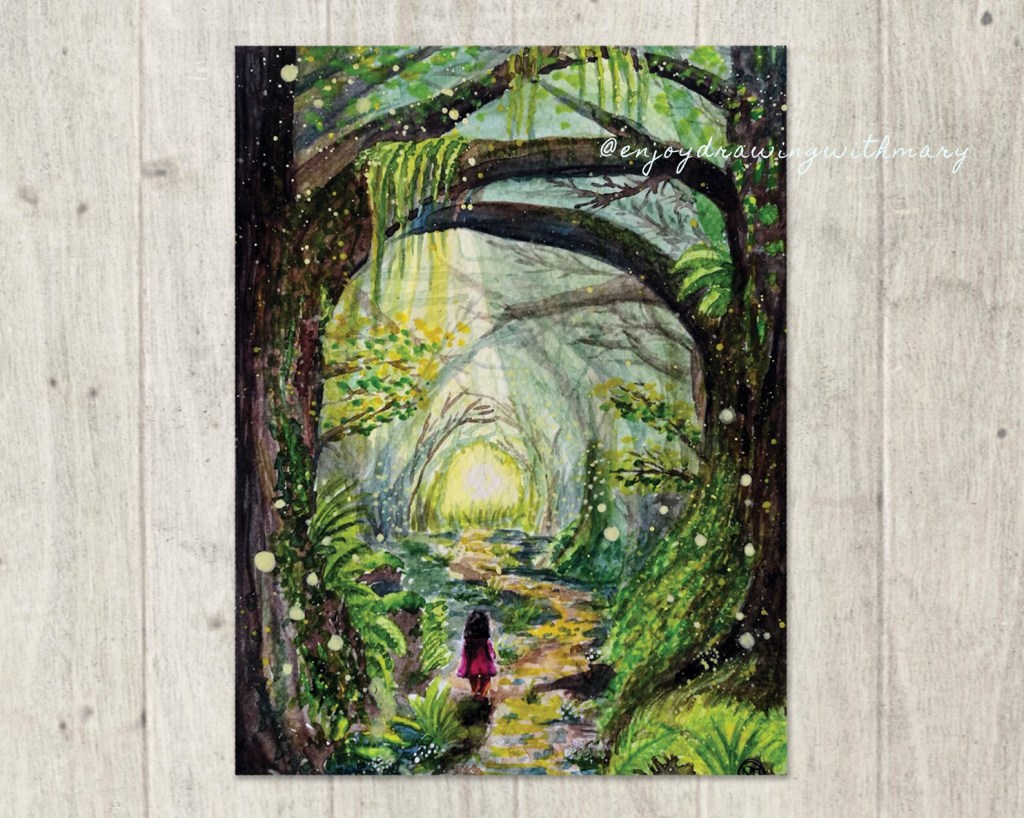
One day, I wandered into a forest—a vast, untamed wilderness alive with towering trees, curious animals, and lively birds. Not long after I entered, I stumbled upon a wise old tree. Its presence was commanding, and it spoke of a mountain hidden deep within the forest. At its peak, it said, there bloomed a Dandelion flower—a rare and magical bloom. I laughed off the idea. “Sure,” I thought. “Why would I bother climbing all the way up there when it’s so calm and peaceful down here?” The tree didn’t argue. It simply rolled its eyes and stretched taller, leaving me alone with my thoughts.

Days turned into weeks as I wandered, unsure why I had come to this forest in the first place. The charm of it began to wear thin. The green was overwhelming, the wind ceaseless, and the birds’ endless chirping grated on my nerves. Even the animals seemed caught up in their constant, exhausting hunts. The more I stayed, the darker the forest seemed to grow.

Then the rains arrived. At first, the drizzle was refreshing—an exciting change of pace. But soon, the skies unleashed a ferocious storm. The birds and animals retreated to their shelters, but their presence still lingered, watching over me as I remained exposed. I figured I’d be fine under a tree. How bad could it get? It turns out, worse than I could have imagined. The rain soaked me to the bone, the cold numbed me, and the unrelenting storm drove me to the ground. I lay there, hugging myself, shivering and utterly defeated, as the storm raged on.

I’m not sure how long I remained like that, but eventually, I felt a presence nearby. A wolf with shiny grey hair appeared, its movements deliberate yet unthreatening. It approached me, its piercing eyes locking onto mine. Then, it leaned in close and whispered something in my ear before silently walking away. The words it spoke lingered in my mind, their meaning unclear but oddly comforting. Somehow, they sparked a flicker of strength in me. Despite my exhaustion, I pushed myself to stand.

The birds, who had been silently watching from above, fluttered down to help me. Together, we built a small shelter to weather the rest of the storm. With their care and my newfound determination, I endured.

When the storm finally passed, I emerged changed. I was stronger, braver, and, for the first time, truly alive. The forest, which had once seemed overwhelming, now shimmered with purpose. The wind carried life, the endless green breathed vitality, and the animals and birds embodied resilience and connection. Everything I had dismissed before was now illuminated with meaning. Why settle for just surviving, I thought, when I could soar?

Now, I’m flying—on my way to that magical Dandelion. The storms and cyclones may try to pull me down, but I’m holding onto a guiding star, a light that keeps me steady. Reaching the top no longer feels impossible; it feels necessary. The forest, once a source of frustration, has become my greatest teacher, showing me that even the chaos and discomfort were shaping me for something greater.

As I reflect, I finally understand the wolf’s whispered words: “You are an alchemist.” Back then, I couldn’t grasp their meaning, but now it’s clear. An alchemist practices the art of transformation, turning challenges into growth, fears into strength, and doubts into liberation. The storms, struggles, and moments of stillness—all of it has been part of my journey, teaching me to embrace the unknown and rise stronger.

After all, it’s only those who have faced the depths can truly appreciate the joy and weight of soaring, for the sky isn’t always clear. Storms and cyclones will come, but if you hold onto the right star and trust in your ability to transform, you’ll always find your way forward.

Into the Unknown

When we’re young, the world is filled with thrilling mysteries and untold wonders, and we dive headfirst into the unknown. But as we age, something shifts. Suddenly, the familiar feels safe, and anything out of the ordinary seems downright terrifying. Funny how that works, right?

Take me, for example. I had this ambitious goal of visiting 33 countries before I turned 33. Now, with just six months left and three countries to go, I’ve realized it’s not a lack of money or time that’s holding me back. Nope—it’s fear. Somewhere along the way, I traded my adventurous spirit for the cozy comfort of predictability. After a series of chaotic or unpredictable experiences, it’s easy to crave the certainty of knowing exactly what’s ahead. I’ve even found myself avoiding new books, movies and TV shows, hesitant to dive into the emotional rollercoaster of not knowing what’s coming next. When did I become so cautious? I mean, seriously, I’d rather risk becoming a midnight snack for a known deep-sea predator like a shark than take a dip in Lake Lochmond, because…what if the mythical Loch Ness monster gets me?!

But recently, I decided I didn’t like the person I was becoming—the overly cautious, play-it-safe version of myself. I used to be the kind of person who did crazy, borderline reckless things, like trying snake meat in Indonesia while chasing it down with vodka mixed with its blood. Extreme? Impulsive? Sure. But at least I was living. So, in the spirit of Halloween and reclaiming that streak of madness, I decided to face the unknown in the most dramatic way possible: attending a Victorian séance.

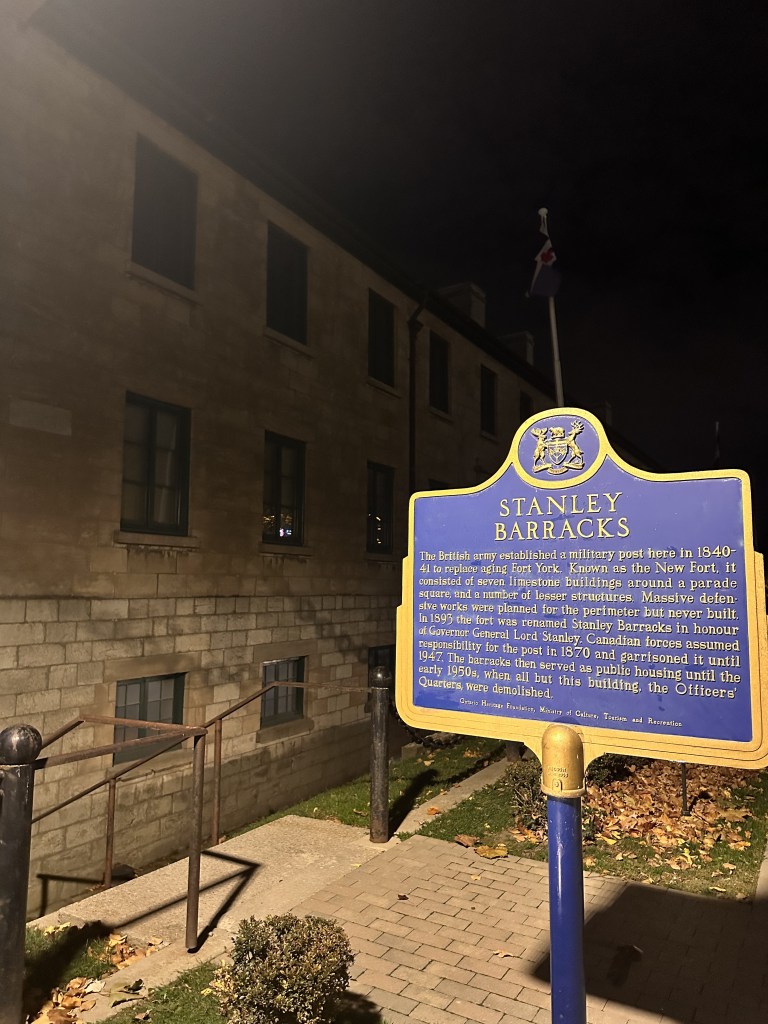
A séance, for the uninitiated, is like stepping into a whispered conversation with the afterlife—cryptic, unsettling, and impossible to ignore. This one took place at Stanley Barracks in Toronto, a building steeped in enough eerie history to send shivers down your spine. The strange part? It’s right in the heart of the city, next to a gleaming 5-star hotel. Haunted places are usually tucked away in remote locations, where desolate roads, overgrown trees, and creaky gates set the stage for whatever horrors lie within. It’s as if the ghosts have settled into the city itself, refusing to be forgotten.

Stanley Barracks is a notorious hotspot for paranormal activity, uncovered in a 13-month investigation by expert Richard Palmisano. Among the spirits he discovered is Jenny, a young girl tragically killed in a scarf accident, still searching for her lost cat. Then there’s a ghostly clown, communicating with bells and maracas, believed to have once performed at the nearby Canadian National Exhibition. The barracks, which also served as a dumping ground/hospital during a typhoid outbreak, is a graveyard for restless souls. This eerie site blends history, heartbreak, and unsettling hauntings.

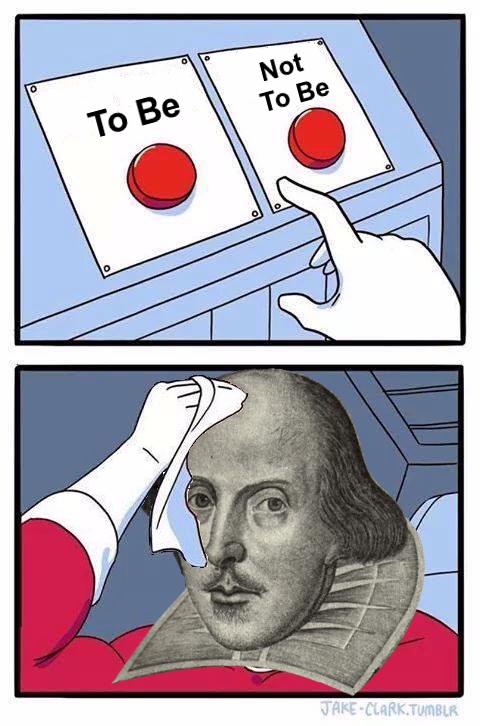
So, did anything unusual happen? Oh, absolutely. I saw things, heard things—things I can’t fully explain. But here’s the kicker: once I faced it, the unknown wasn’t nearly as scary as I’d built it up to be. Turns out, fear thrives on our imagination. The ghosts were unsettling, sure, but they also reminded me of something profound: the unknown only has power over us because we let it. Once we face it, it becomes… well, just a little less scary in the case of this séance. It definitely helped me bring back the brave me that I had let go during the ‘To be > Not to be > To be’ process (see previous post, more on this in the next one).

This experience also made me realize that the unknown is only scary because it’s unfamiliar—what’s on the other side doesn’t really matter. It could be something truly frightening, like a séance with actual ghosts, or something completely harmless. Either way, if it’s new, it feels unsettling. The fear comes from not knowing, not necessarily from the thing itself. Even a positive unknown can trigger a “WTF, WHY?” simply because it’s outside your frame of reference. And when fear takes over, it’s tempting to avoid it, no matter how irrational that avoidance might be.

So, here’s to being brave. To stepping into the unknown not because we’re fearless, but because staying stuck in the comforting familiar might be even worse. Maybe one day, even the ghosts of Stanley Barracks will take this advice and move on. Until then, I’ll try practising what I preach—snake blood vodka shot optional.

To Be, Or not to Be

To summarize Shakespeare’s famous soliloquy…

“To be or not to be” dives into the ultimate question: should we keep dragging ourselves through life’s mess, or just tap out? Hamlet wonders if it’s better to face life’s endless chaos or take “the easy way out.” But then, what if the afterlife is just as bad—or worse? That dreaded “what if” holds him (and let’s be honest, probably all of us) in place, too uncertain to make any decisions. So, we stick around, tolerating the absurdity, clinging to the hope that one day, maybe things will be different. Fun times.

As for me, each time I moved countries, a version of myself was left behind— a mini existential crisis with a side of evolution. When I left India for Egypt, it was the end of one phase and the start of another. I was a fresh college grad, ready to conquer the world. By the time I reached the UK, I was searching for meaning. When I left London, I was craving stability, which led me to Australia. Life, however, had other plans (read: I’m now in Canada). Now, the Australian me is just another ghost of my past, and here I am, striving for some semblance of establishment. Call it my own personal To Be > Not To Be > To Be… saga, with every new start requiring a part of me to “die.” Every leap forward requiring a tiny internal funeral.

Afterall, death is inevitable—whether it’s the literal kind or just saying goodbye to a former self. Of course, this transformation doesn’t always require a passport stamp. Life’s got plenty of curveballs lined up no matter where you are. At first, change is scary, full of resistance (and maybe a bit of bargaining). We resist it at first because, well, the unknown is basically a horror movie in our heads. This is what Hamlet feared most—the great unknown, that keeps us in limbo. But when I chose “not to be” my old self, and took that plunge, I faced the unfamiliar. Only then could the new me “be” once again, stronger and a little wiser after each leap.

Well, guess what? In the end, Hamlet does die—but not by his own hand. He spends a good chunk of time contemplating an exit strategy, only to be killed in a final act of revenge. The irony? Fate, not Hamlet, decides his end in a bloody duel. All that existential dread, and life takes the choice right out of his hands.

And that’s life: whether we like it or not, it’s happening, and yes, maybe it’s all serendipitous. Whether we willingly let go parts of ourselves or not, life inevitably steps in and does some editing. Sometimes, a catalyst nudges us toward surrender; other times, tragedy pushes us headlong. Either way, I’m learning to lean into it—because if life’s going to decide whether I should be or not be, I might as well sit back and savor the excruciating beauty called growth.

Yes, this is a Halloween Special!

Meaning of life

During my travels, I met some pretty fascinating people. Take Egypt, for example. A friend and I were chatting and something absurd about favorite numbers came up, and he casually mentioned his was 42. Now, most people pick something simple like 7 (mine is 7 only cause it’s the magical number, duh!) or 10—rounded. But 42? That caught my attention.

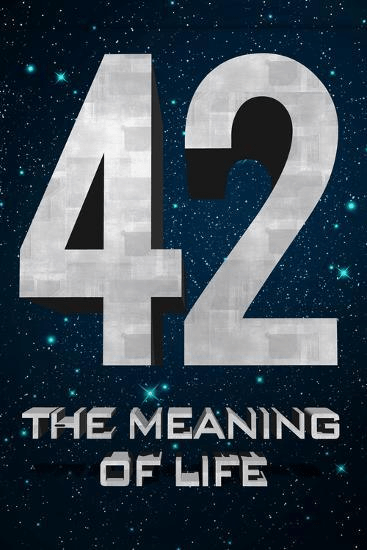
At the time, I had no clue about The Hitchhiker’s Guide to the Galaxy, where 42 is famously the answer to the “Ultimate Question of Life, the Universe, and Everything.” Naturally, I was intrigued and had to dig deeper. Now, I’m not much of a math person, so most of the geeky stuff about 42 went way over my head. But beyond the numbers, 42 has found its way into philosophy, religion, history—it’s got layers. Some fans say it explains everything. Yet, the author himself claims he randomly picked 42. But can something truly be random if it holds so much meaning across so many areas? Is it everything or nothing? Maybe it’s both.

You can see why this idea has stuck with me for over a decade. I’m someone who craves answers, explanations, and logic. I want to know how everything fits together, and I usually can piece it all into a neat, scientific explanation. So when I stumbled on this concept—the meaning of life is everything and nothing—it threw me. It bothered me. I kept thinking, how can these two opposing ideas coexist? Sure, “everything” can be measured, mapped, understood. But “nothing”? It’s intangible, it’s just felt, not seen. And in my world, if you can’t see it, it doesn’t exist.

Yet here I am, 32 years later, realizing there’s more to life. And maybe that “more” isn’t meant to be understood. Maybe it’s a feeling, something I’ll have to learn to trust. I’m not there yet, but I’m trying. Trusting in the unknown is terrifying—it’s messy, it makes me feel vulnerable—but what if that’s the point? What if the magic of life is in its mystery, in the things we can’t explain?

I guess I’ll have to take that leap. Trust in the nothingness, because, well, why not? Isn’t that what makes life beautiful? The mystery, the parts we can’t pin down or rationalize? Maybe that’s where the true meaning lies—not in the answers, but in the journey. After all, some things are just meant to be felt, not explained. And maybe it’s better that way.

What’s crystal clear to me is this—life is what we make of it. We can choose to let our heart believe in the magic of the unknown, the nothing, or let our ego take control and try to manage everything. Sure, you might find some answers along your ego’s journey, but chances are, you won’t like what you discover. It’s like when that supercomputer gave “42” as the answer to the meaning of life and left everyone disappointed. And they waited 7.5 million years for it! Honestly, I no longer have the patience to spend all my time trying to figure everything out. It’s exhausting. But, that doesn’t mean we should be naive and let our heart lead us into delusion either. It’s all about balance—a dance between trusting the mystery and staying grounded in reality.

Angel on a motorbike

“I don’t know how to get home. I don’t speak the language, it’s late, my phone’s dead, and all I’ve got is this address scribbled on a crumpled scrap of paper. People at work told me to carry it with me, but who am I even supposed to show it to? Asking the random guy across the street feels like a gamble I don’t want to take. Am I 15 minutes away or 5 hours? Who knows. And where on earth do I even begin walking?”

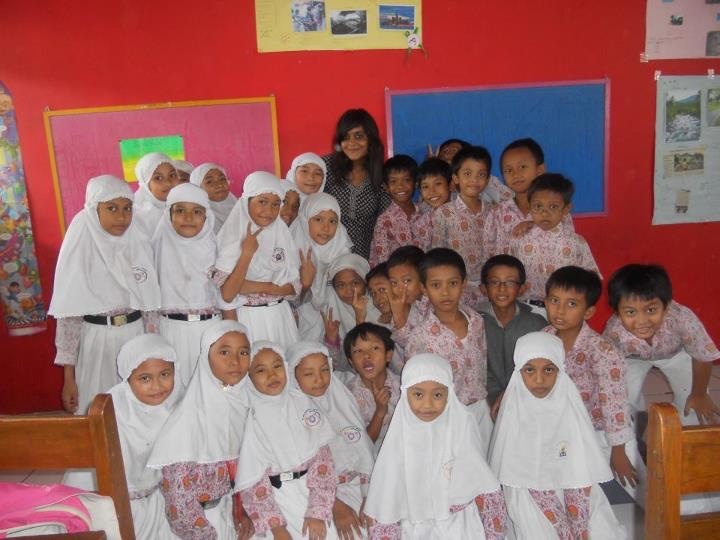
That was me—19 years old, lost in the middle of Surabaya, Indonesia. I had taken the wrong bus on my way back from the city, and by the time I figured it out, I was far from anywhere familiar. Oh, and that was right after I dodged a creepy cab driver making bizarre kissing gestures. To this day, I still have no idea how I slipped out of that situation!

So there I was, wandering with no plan, figuring I’d just keep walking until something—anything—clicked. Even if it took all night. Honestly, it seemed like the most logical plan at the time. Also, did I mention it was my first week in the country? And my first solo trip abroad? Talk about diving into the deep end.

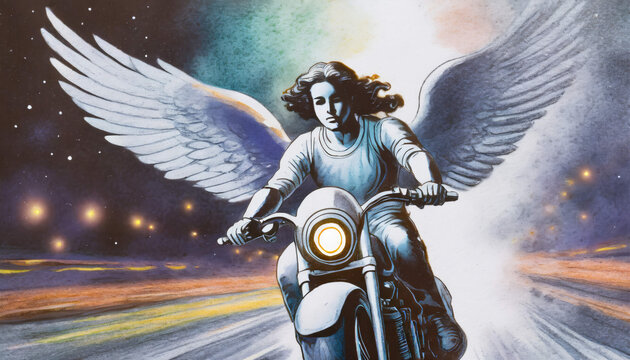
Then, out of nowhere, this woman on a bike appears like something out of a movie. She slows down, looks at me, and asks if I’m lost. And here’s the kicker—she spoke English! The odds of that? Practically zero. She had her little daughter riding on the back, and she told me she was out waiting for her husband to finish work. That’s the only reason she happened to ride by me. I showed her the address, and she took me all the way home.

When you’re completely lost, help just shows up, like it’s been waiting for you. You don’t see it coming, but it’s always there. Always.

A little snippet from my time in Indonesia!

Torture

This post is going to be a much deeper one, so brace yourselves!

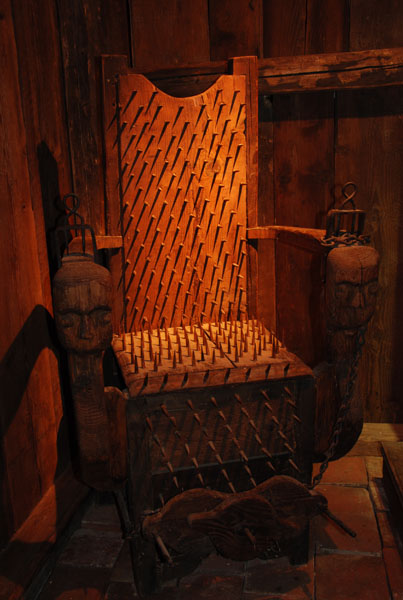
Many years ago, I was in Prague, and while strolling through the city, I stumbled upon something called the Museum of Torture. I had no idea such places existed. It was peculiar and intriguing, so naturally, I felt compelled to visit.

Inside, I saw artifacts specifically designed to inflict pain on humans. Did the people subjected to this torture deserve it? Perhaps. I can’t say for sure—I’d have to travel back in time to fully understand. But that’s not the point. The real question is: does anyone ever truly deserve to be tortured for their actions? And more importantly, do we torture ourselves for the mistakes we’ve made in the past? You’d be surprised at how many people willingly sit in that metaphorical chair of self-punishment. After all, self-torture often becomes a twisted form of self-defense.

Defense from our own thoughts—”How could I have done this?”; “I should have known better.”; “What was I thinking?”

We’ve all been there, myself included. Unresolved emotions compound over time and we become irrational, even self-destructive. Self-torture ends up pulling us out of alignment with our true needs.

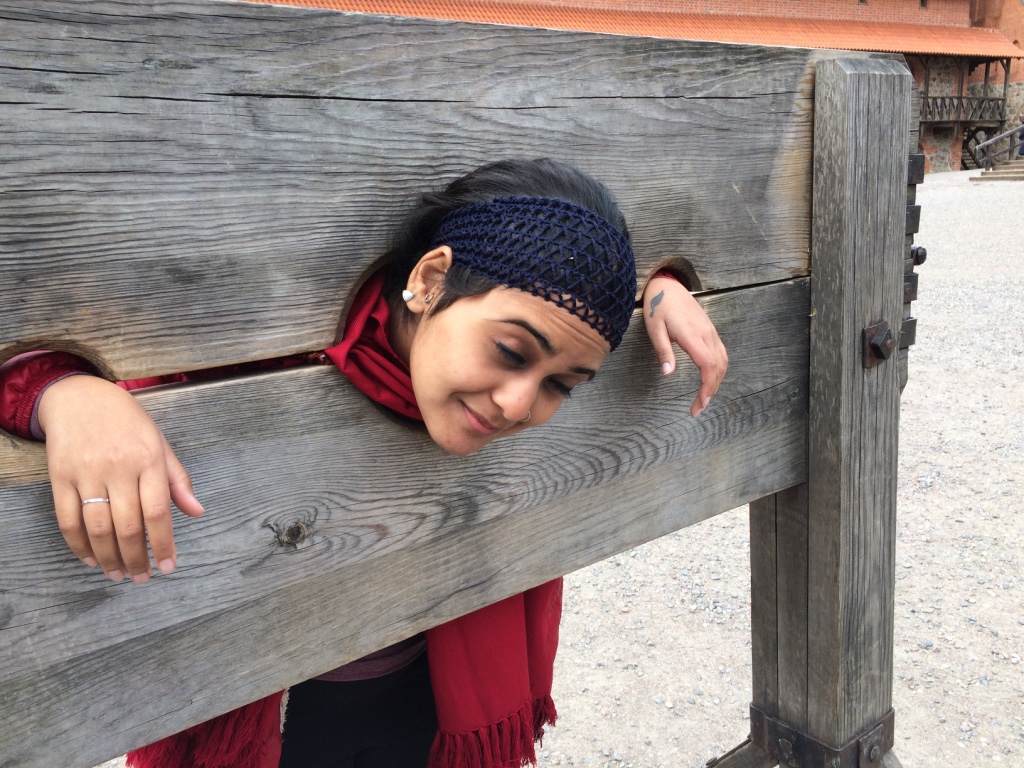
Me, torturing myself.

But does it actually help? Trust me, it doesn’t. It doesn’t change the past, and it certainly doesn’t make us feel any better. Yet we persist, walking this painful path, clinging to the hope that one day we’ll finally forgive ourselves. But how long will that take? A year? A decade? Some people don’t realize the weight of their self-inflicted suffering until it’s too late, until they’re on their deathbed. Wouldn’t it be better to extend ourselves a little empathy, to acknowledge our own humanity?

You can’t control your journey, but the best thing you can do—for yourself and for those around you—is to stop torturing yourself over past mistakes. Choose to live with integrity, one moment at a time. In doing so, you liberate yourself. And once you’re free, everything good follows.

So, the next time you’re tempted to sit in that metaphorical chair of self-torture, maybe choose something different. Practice self-compassion. Accept your humanity. And let that be enough.

Hey, if you ever feel like you truly deserve to be punished for your past mistakes, let someone else do the honours—just kidding. LOL! Seriously, enough things are torturing us on a daily basis anyways. So, don’t torture yourself. Never torture yourself.

Blood is thicker than water.

About ten years ago, I was in Laos for work when a delegate at the conference asked me about all the places I’d been and where I wanted to go next. I got really excited talking about my future travel plans, but then he hit me with something that stuck: “But you know, blood runs thicker than water.” It’s been so long, but those words have stayed with me.

I was supposed to head back to Egypt after this but then again, serendipitous circumstances (issues with my visa) brought me home to Mumbai, India. That visit taught me something important. Blood isn’t just thicker than water—it flows differently. It flows viscously, not quite a solid and not quite a liquid. As scientists would describe, it resists easy flow. It flows with a certain unpredictability too, reflecting the intricate and sometimes erratic nature of familial bonds.

While it is tempting to desire the freedom and fluidity of water, blood is the very essence of our being. It is what connects us to our origins, making us one with our source. A few years ago, I found out my blood has malaria antibodies, even though I’ve never had malaria. When I tried to donate blood, they told me I couldn’t because of the risk. Turns out, my mom had malaria when she was pregnant with me, so her blood quite literally runs through me. It made me realise there’s no real separation from our roots.

On a literal level, blood is indeed thicker than water due to its higher viscosity. This thickness is derived from its components—cells like red and white blood cells and platelets—suspended in plasma, which is about 90% water. So, if blood is the essence of our being, then plasma is the life-sustaining medium that nourishes, protects, and balances our vital functions. While blood connects us to our source, water is what sustains us and allows us to grow.

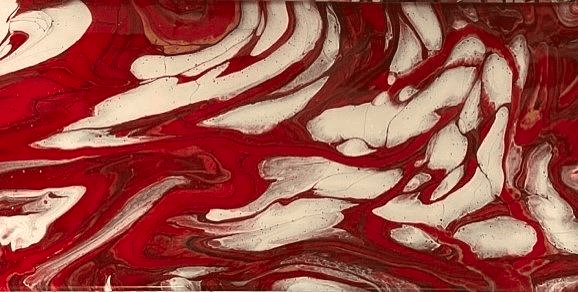
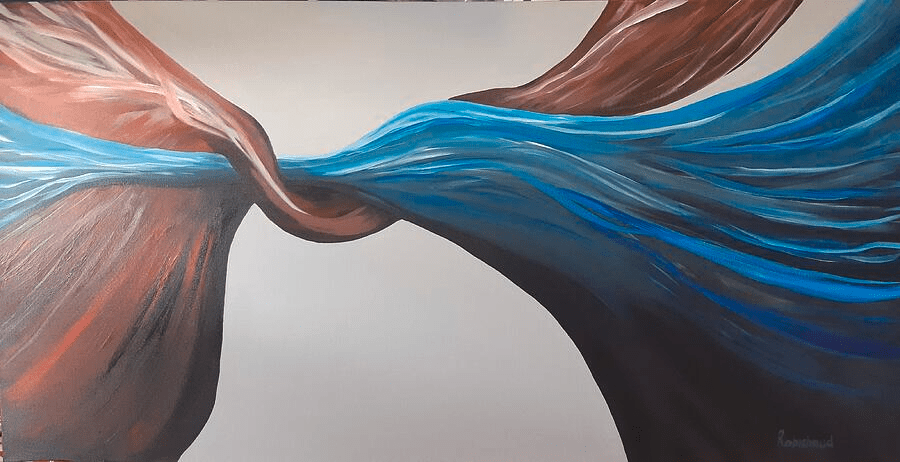
Blood and Water is a painting by Anne Robichaud Jordan

Our origin, our source, is in our blood, but water enables us to expand and evolve. Throughout history, across various philosophies and ancient cultures, water has symbolised life, purification, and hope—universal values that unite us and should be cherished. Let the flow of water guide you to your life partner, with whom you will create new blood ties. This new essence will be passed down to your children, perpetuating the cycle of life.

*Insert cliche title* New Beginnings

I’ve been away for quite some time now. It may sound cliché (again), but life got in the way. I’m back to share everything that’s happened over the past eight years. The last time I wrote, I was in Australia. It’s been just over a year since I moved to Canada, and it has been a wonderful new beginning.

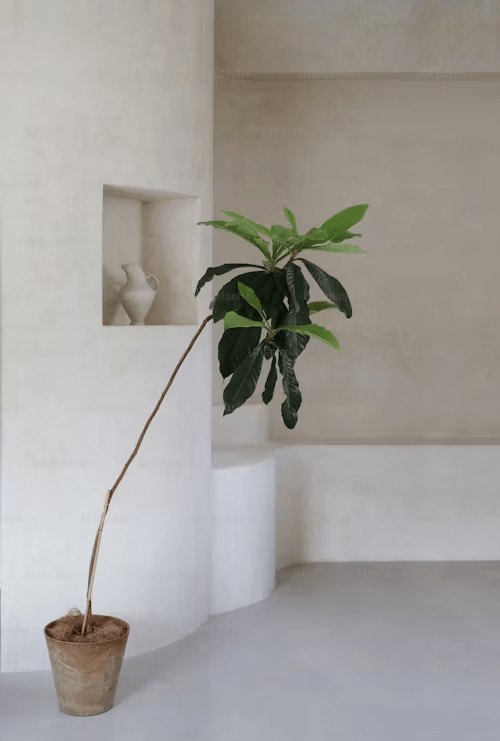
There is nothing quite as thrilling, yet intimidating, as moving to a new country. This was my second time doing it, so it didn’t feel as daunting. Uprooting myself from one place and settling into new soil came with its own set of challenges. Just as roots must adapt to the properties of new soil and weather conditions, I faced difficulties adjusting to my new environment. It was tough, but I kept reminding myself that my roots now have more room to grow. Previously, I felt confined in a pot where my growth had stagnated.

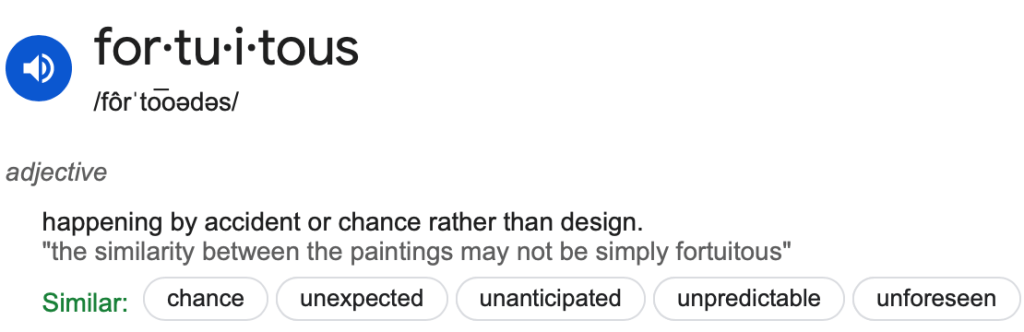
Naturally, this made me wonder why I needed to move to a new place to grow. I’m not entirely sure, but perhaps the name of my blog has something to do with it: Fortuitous Purpose. The term “fortuitous” refers to something happening by chance, and my blog name suggests it happens with a sense of purpose. At one point, I tried to control the outcome of my life, but fate always seemed to push me in a different direction. 

The term “mismatch conditions,” coined by evolutionary biologists, aptly describes my situation—like a tree trying to grow in a pot. It will survive, but its growth is stunted. Life continually threw me curveballs to push me out of that pot, and I kept surviving with the limited sunlight and water available to me. These mismatched conditions haven’t disappeared with my move here; in fact, they have persisted. However, mismatched conditions can be blessings in disguise. Evolution relies on this phenomenon to drive growth. What has changed is that I am no longer confined to a pot. My roots now have ample space to expand, offering me endless opportunities to flourish into the tallest tree. But transforming a mismatched condition into a well-matched one requires effort. The satisfaction and sense of peace you experience once you are on the other side makes me happy.

For me, true happiness comes from putting in the effort to overcome these challenges. It’s not the promotion at work that brings me joy, but the fact that I’ve learned to set boundaries for the first time in my life and that got me the promotion fills me with pure satisfaction. The “happiness” we often chase is superficial—it’s fleeting and never fully satisfies. We end up continually pursuing it throughout our lives only to be disappointed when it doesn’t last as long as we’d expect.

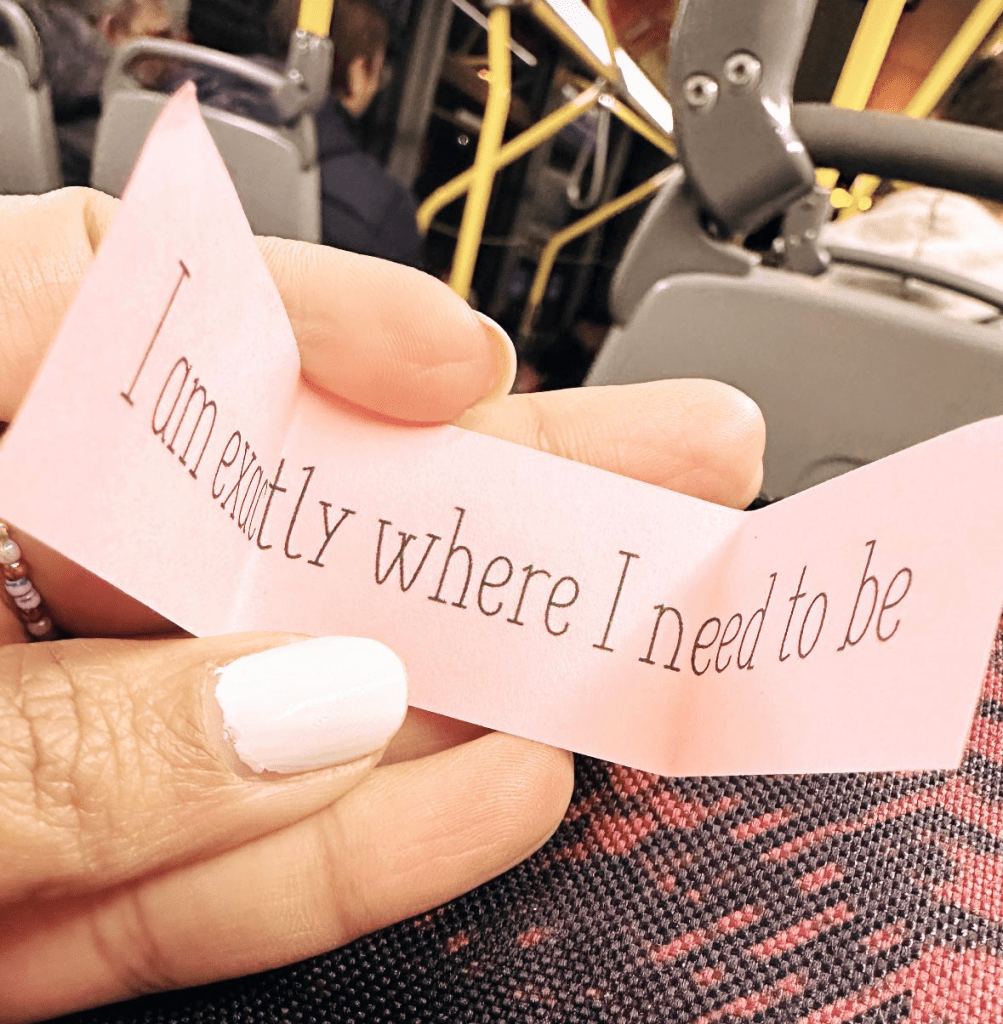
Yes, life has its share of problems, and that can be tough. But remember, there is some order in the chaos. Let the universe work its magic. I’m far from having my life perfectly on track, so I’m not here to preach. This is my way of reassuring myself that although things might seem to be falling apart right now, they are actually falling into place. Murphy’s Law states, “Anything that can go wrong, will go wrong.” It’s clear that the direction I am being pushed toward, while everything seems to be fucking up is exactly what I need to move forward. I don’t like it one bit, but “I am exactly where I need to be.”

Can you believe I randomly picked this note from a bowl of affirmations passed around at work?

Inter-connectedness.

As much as I try to write as often as possible, multi-tasking overwhelms me! The past two months have been extremely busy as I have been working on two very important essays. I am studying an Education-related Master’s course, which made it an enjoyable experience for me to research a topic so relevant to my daily struggles of comprehending the nature of the world we live in. Some might wonder how Education is related to our Society, but I have come to understand and firmly believe that Society becomes the Education it receives. As my Professor puts it, Education and Social Sciences are interconnected in a way that makes it easy to view them as two separate entities but very easy to ignore their interrelation. We tend to see them as separate when we consider the purpose of Education to be ‘transactional’ – get educated to get a job. Here, you are not directly contributing to the development of society but only the economy, often forgetting that the economic aspect is merely a measure of what those in society do. How good is the quality of their lives? No one cares. This is where the ‘easy-way-out path’ we have been opting to walk on for a long time now comes to the rescue – Ignorance! It does not exist if I can’t see it or it isn’t happening to me. Hence, viewing Education as a fundamental key to changing mindsets for the betterment of society is a connection difficult to make.

Hegemonic competition has led countries to compete against each other based on standardized test scores. Does it matter to anyone if a high-performing student is coping with several psychological illnesses due to family issues? Or if a low-performing student is so sick of disappointing his family and himself that living in denial for the rest of his life is his only option? Denial of his will, potential, and purpose of existence.

I agree that hardships make life worth living and help us grow, overcome challenges, and make us stronger, along with all those other one-lined meme quotes Facebook makes us believe in. But at what cost?

As you might have noticed, these essays have ignited a lot of passion in me. I want to let this fire charge my writing for the upcoming posts, which are not travel-related, but bear with me and let me take you on a journey of fixing our little world that exists in this vast universe consisting of billions of stars.

f2b257bcb823a140e91a43431ee4e84c