In the midst of remembering all that I’ve lived through, I’ve forgotten to actually live.
I recently turned 33. Growing older used to feel terrifying — not because of age, but because of how many years I felt I had already lost. I survived my childhood, endured my teenage years, and stumbled through early adulthood. I grew up too fast. I had to.
When I was talking to someone recently, I told them that this birthday feels different. I want it to be a rebirth. A reset. A conscious beginning.
For the first time, I’m starting to imagine beautiful things. Not just the life I escaped from, but the life I want to create. I’m not losing my youth. I’m growing into a version of myself that finally feels like home.
The best things in my life haven’t happened yet. There’s love to be discovered, the kind that grows deeper with time. There’s the possibility of becoming a mother, of raising children with awareness and tenderness. There’s meaningful work ahead, work that feels aligned with who I am.
Even thinking about these things brings tears to my eyes. Because for so long, I couldn’t. I didn’t dare to hope. It felt too risky. Too far away. Too unsafe.
But now, I do hope. I do dream.
Yes, I’ve lost a lot. Yes, trauma shaped my path. But it didn’t break me. I’ve lived. I’ve gathered stories and strength. And I know, deep down, that the version of me who walked through all that darkness has earned her joy. Not as a reward, but as a right.
I’m proud of myself. Truly proud. That’s something I haven’t said often enough.
Will I still get triggered? Yes. Will fear visit me again? Probably. These things don’t disappear overnight. They live in the body. They resurface. But now I know how to face them.
I used to hope I’d one day forget everything that happened. But I’ve learned that forgetting doesn’t free you. It only delays the return. So I’m done running. This happened. These are the cards I was dealt. And still, I’m here. And still, I get to live a beautiful life.
Today’s Truth:
I’m not healing to erase the past. I’m healing to remember the future I still get to have. This is my rebirth — not in spite of what I’ve lived through, but because I chose to keep living.
Today’s hesitation wasn’t about writing what happened to me. It was about writing what I’ve done because of it.
Yesterday, I wrote that there’s evil in me too. I stand by that. Trauma doesn’t just leave physical or emotional aftereffects. Sometimes, it creates patterns of behavior that are hard to admit — especially when they hurt other people.
This morning, I wanted to be honest with myself. Given how intense and extreme my experiences have been, I know there’s no way I’ve made it through without causing harm. I’m not a saint. I’ve had moments where the pain I didn’t want to feel found its way out as anger. As cruelty. As defensiveness. As superiority.
Sometimes it was unintentional. But other times, I knew.
I’ve justified it in the past. I didn’t say it out loud, but in my head, I thought, “This is what men have done to me. So what if I bring them down a little?” The truth is, some of the kindest men in my life have received the worst of me. I’ve belittled them, mocked them, hit where it hurt, all while telling myself they could handle it. That they were strong enough. That it didn’t matter.
But it did matter. They were good to me. And I hurt them anyway.
This is hard to admit. But I don’t want to be someone who blames my past forever. I’ve done that before. I’ve told myself that the reason I lash out is because of what I endured. But it’s not their fault. The people I’ve hurt didn’t abuse me. They didn’t leave me unprotected as a child.
They didn’t deserve my rage.
I think back to my ex. To a few close male friends. I see the way I pushed them away when they tried to help me. I see how my ego stepped in and said, “Don’t let them be right.” So I said something mean. Something cold. Something that cut deep.
I realize now, that was the same thing done to me. The men who hurt me — they were probably running from their own suffering. My father definitely was. He grew up with an alcoholic dad who beat him and then died young. I can imagine that pain. And I can see how he never learned to stop it from spreading.
That’s what I’m trying to do. I’m trying to stop the chain reaction.
I know some of the things I’ve done may seem small. But the timing of a word, the edge of a tone, can break someone who’s already on the edge. I don’t want to carry that weight anymore.
I want to alchemize this darkness. That’s what I said in my book. I called myself an alchemist. If I meant it, I can’t keep channeling my pain in ways that quietly hurt others. Even when it’s justified. Even when it’s subtle. Even when it feels easier.
Today’s Truth:
The pain I didn’t want to feel turned into a shadow I didn’t want to see. But seeing it is how I stop it from growing. I am not just what happened to me. I am what I choose to do with what it left behind.
I didn’t feel like writing first thing in the morning today. Again. I keep telling myself that one day I’ll reach a point where I’ll want to write as soon as I wake up. That’s how I’ll know I’m in a better place. A more grounded place.
This morning, as I was deciding what to wear, something clicked. I’ve always preferred soft cotton clothes, ones that cover me fully. Anything else feels itchy, too tight, or somehow unsafe. Looking back at old photos, I noticed how consistently I’ve dressed in a conservative way. Even as a child, when my cousins wore pretty dresses, I was in pyjamas. I probably wore the dress while we were out, then changed as soon as I got home.
There’s one set of childhood photos I keep returning to. I’m wearing a soft cotton dress, out with family and cousins. I’m smiling, perched on a tree in one, tossing pebbles in the water in another. I look free. I look beautiful. I want to remember myself like that — a child who was happy, not just hurt. I can’t erase the rest, but I can choose to hold onto the moments of light too.
Today, before leaving the house, I hesitated wearing a skirt. Yesterday, I wore something more masculine and comfortable. It felt safe, but I realized I was trying to hide. Trying not to look feminine. Because looking feminine, in my mind, invites the wrong kind of attention. And if people look, they’ll see me — and I don’t always feel ready to be seen. So I dress to disappear. It’s safer that way.
For a long time, I avoided it. I wanted to stay unnoticed, hidden behind comfort and layers. But that began to change in college. I was surrounded by women who made me feel safe in my own skin. I remember one evening when they all chose to wear loose T-shirts like mine so I wouldn’t feel out of place. That quiet act of solidarity stayed with me. It made me feel seen without being scrutinized. A few months later, I started wearing skirts and dresses — not because anyone expected it, but because I wanted to. I felt free enough to explore my femininity in my own way. But when I later found myself around women whose femininity felt performative or competitive, something in me shut down again. I started hiding, dressing to blend in instead of stand out. The softness I had once reclaimed felt threatened. So I put it away.
I’ve made a decision. I’m going to wear at least one feminine thing every day. Even if it’s something small — a piece of jewelry, a subtle ring. I have jewelry at home, but I often hesitate to wear it, thinking it’s “too much.” What I really want are pieces that feel like me. Not loud. Not flashy. Just quietly strong.
I’m not the kind of woman who needs to wear floral clothes or bright colours (respect to those who do feel their best in this style). I can feel just as powerful in a black dress with a slit or in simple leggings that contour my curves. My femininity doesn’t need to scream. It just needs to be mine.
So many women today dress for other women — to be validated, to fit in, or to compete. I’ve done that too. But now, I want to dress for myself. For most of my life, it’s been the masculine part of me leading the way, the part that learned to protect, to stay alert, to survive. I respect that part, but I don’t want it to overpower my life anymore.
This isn’t about feeling empowered by showing skin or proving anything to anyone. It’s not about my cellulite or how exposed I feel in certain clothes. Yes, I sometimes wish I could wear short skirts without feeling self-conscious. But even if I never do, I know I can still be feminine. I can still be powerful on my own terms.
Even if I attract the wrong kind of attention, I now know that evil exists. I’ve seen it. It hides in plain sight. But I also know that evil lives in all of us in some way. I just choose not to act on it. I choose kindness, every day. And I choose to protect that little girl who had no one to save her. I’m here now. And I will protect her at all costs.
Today’s Truth:
My femininity doesn’t need permission. It doesn’t need to perform, compete, or explain itself. It lives in how I carry myself, how I soften without fear, and how I choose to be seen — on my own terms.
This morning, I woke up around 7 a.m. with tears silently rolling down my face. They weren’t loud or dramatic. They came from somewhere deep inside. I was thinking about the book I recently published. A friend told me it inspired her to make a change in her life. That meant a lot. It made me think about how healing can happen if the people closest to me begin to show up differently than the people who surrounded me growing up. If that happens, maybe the little girl inside me will finally feel safe. Maybe she’ll stop bracing for the worst. I think those were her tears this morning.
That moment might also be why I avoided writing until nightfall. I’ve been pushing the memory from the therapy session further and further into the background. It still feels dark. I swam across a lake yesterday and tried to release it with every stroke. I felt lighter for a while. But today, the heaviness returned.
I guess it’s because most of it still lives in my body. It’s not even about how I look. It’s how I feel when I look at myself. I don’t hate my body, but I’ve never really loved it either. It feels like my body stored the pain in the form of fat in places it was once violated. Sometimes it feels like the fat is trying to protect me. Or maybe it’s grief that never left.
I’ve hurt myself and others because of how deeply that insecurity runs. I’ve done so much to try to get rid of it — workouts, diets, rituals — hoping I could let go of the weight and the shame. I know healing is more than physical. But sometimes I wish it were that simple. I don’t want more work. I want peace.
I can’t change the past. I know that. But sometimes I still wonder what life would have been like if none of it had happened. Maybe I’d feel freer in my own skin. Maybe I’d move through the world without thinking about my body every few minutes.
I’m want to show my body some love now. When I apply lotion, I imagine I’m rubbing care into it. I want to look in the mirror without criticism. I want to stop comparing myself to women on the street with perfect bodies. It’s a heavy mental load — all the time. And I know I’ve carried it for years. But I’m trying to meet it differently now. Because even with everything it’s been through, it is still my body.
Today’s Truth:
I can’t erase the past, but I can choose how I feel about the body that remembers it.
Today, I feel angry. Furious, even. At the world. At men. At how cruel life can be. There’s a part of me that wants it all to burn.
I was triggered several times yesterday, but one moment stood out. A friend, an ex-friend now, gave me a small birthday gift. A pack of hand lotion. On the surface, it should’ve been harmless. But I know where she was coming from, and that’s what made it cruel. It felt like a calculated gesture, subtle but sharp. A reminder that some people don’t hurt you directly. They just know where to poke. It’s the same darkness that lived in the man who hurt me when I was too small to fight back. That quiet decision to take advantage of someone because you know they’re fragile.
That’s what makes me angry. That people do these things knowing they can get away with it. That people let their darkness win.
Now that I’ve started to accept what happened to me, it’s like a dam has broken. I’m not just angry about the abuse. I’m angry about everything I’ve lost because of it. The decades I spent not knowing. Not remembering. Just feeling tired, confused, insecure, without knowing why.
Looking back, so many things make sense now. It’s like this memory was a ghost directing my life from behind a curtain. I couldn’t see it, but it was there, shaping everything. My relationships. My body. My trust. My exhaustion.
It made me wonder what kind of energy I’ve been carrying all these years. Have I been wearing this invisible cloak of trauma? Have I been attracting cruelty without even realizing it?
I’ve always wanted to be a good person. And I know that I am. I’ve never wished harm on anyone. Not truly. But now I’m beginning to see how much I’ve hurt myself. And sometimes others too. Especially because of how disconnected I’ve felt from my own body.
My body has always been a sore point. Not just how it looks, but how it feels. I’ve hated my body for as long as I can remember. It’s like it holds all the memories I couldn’t. Fat collecting in the places where trauma once lived. I’ve tried everything to change that. Exercise, food, fasting, overcompensating. But the real weight wasn’t physical.
I just want my body back. Not a thinner version. Not a prettier one. The version that was never touched like that. The version that never had to carry this. I’m trying to love the body I’m in now. I really am. After all, it stayed. It carried me. Even when I didn’t know what it was holding.
Today’s Truth:
Anger isn’t just fire. It’s grief in disguise. And when you finally know what you’ve been carrying, you’re allowed to burn what never belonged to you.
I didn’t feel like writing this morning. I’ve been up for a couple of hours, just circling the urge. Maybe it’s because I started feeling better yesterday, and I’m afraid that revisiting the memory will take me back to numbness.
Still, I tried. I revisited the memory to see if any tears would come. Nothing. But something’s shifting. I can feel it. Not in the form of tears, but in how so many other memories are resurfacing. Pieces I never understood before are suddenly making sense.
One that came up was from the time of a terrorist attack in Mumbai. The blast happened at a train station near my house. I was scared, alone, and couldn’t sleep. I remember lying in my aunt’s bed after she had moved out after living with us for a while after her divorce. That night, trying to soothe myself, I touched myself. I don’t know if it’s connected, but it came up now. Maybe because during the memory retraction process, I pictured her sitting on that same bed, even though she wasn’t there in the actual event that took place. My mind’s been stitching together things I hadn’t thought about in years.
More moments like that are surfacing. I remember a therapist once asked me how I perceive sex. I didn’t have a clear answer. I just knew it never felt pure. Never good. It always felt like something I had to hide. Something I wasn’t supposed to enjoy.
In college, it shifted a bit. I acted out more when I was drunk — not from freedom, but from rebellion. I even got a tramp stamp after I saw a girl getting too close to someone I had just started seeing. It wasn’t about betrayal. It was about control. It was about doing something because I wanted to and I could.
The pattern became clear: I could only get close to men when I wasn’t sober. When I was numb. When it didn’t feel real.
I once had a dream around the time I started therapy again. In the dream, there was a safe in my old college room. The safe was rumbling, vibrating. I was terrified to open it, sure that a ghost would jump out. I never had a safe in college. But I know what the dream was telling me now. That locked-up part of me was ready to shake open.
A lot of anger toward my mom has started to rise. I’m mad at her for letting this happen. But I also know, somewhere deep down, that she couldn’t have stopped it. These things don’t announce themselves. And the people who hurt you are rarely strangers. Still, I hope she did something when she found out — maybe during the divorce proceedings with my aunt. I hope she made him pay somehow. I don’t know.
I’ve been called so many things in my life — slut, loose, promiscuous — and none of it was ever true. I had only slept with one person until I was thirty. Yes, I got drunk. Yes, I made choices that may have looked messy from the outside. But I was trying to survive.
I’ve been blamed for leading men on and not following through. But all I’ve ever wanted was something simple. Something beautiful.
Even the fantasies, the kinks, the desires — they weren’t coming from freedom. They came from hurt. I never acted on most of them. They didn’t feel like me. They felt like something dirty. Something I’d regret. My mind might crave it, but my body never really wanted it. I remember one night when I got really drunk at a conference. When we got intimate, I physically couldn’t open up. I wasn’t safe. Not emotionally. Not physically. My body said no.
I’ve been remembering that too.
Yesterday, at a café, Marvin Gaye’s Let’s Get It On started playing. And something in me softened. I remembered seeing it in a movie once — a scene where two people are making love, tenderly, truly in love. It made me realize that’s what I want my sex song to be. Not like Sex on Fire by Kings of Leon — the one I used to think defined me. That song was all heat, chaos, and craving. This one is warmth, permission, connection. I don’t want desire fueled by rebellion anymore. I want something slow, sacred, and safe. I want softness, the kind that doesn’t have to scream to be heard.
Today’s Truth:
Some healing doesn’t come in tears. It comes in understanding why you’ve lived the way you have. And deciding you’re allowed to live differently now.
Something surfaced recently during a session with my therapist — not just a memory, but something my mind had blocked away for decades because it was too painful to carry. It pointed to an incident of sexual abuse I experienced when I was just two years old, involving someone who had once been part of my extended family. Though my conscious mind had no access to it until now, my body seems to have held onto the truth all these years, quietly storing what I wasn’t yet ready to face.
This morning I woke up wondering if it was real. My mind kept circling the same question — could something like that really have happened? A part of me is still trying to find ways to make it untrue. But another part brings up moments I had long forgotten. The night I spent at my aunt’s home with her ex-husband. How I felt around them. Details I had tucked away, surfacing now like pieces of a puzzle I never knew I was holding.
There’s been a quiet tug-of-war happening inside me.
Last night, I felt tired before going to bed. I reached out to soothe myself by placing my hand near my belly button — something I often do for comfort — but this time, I flinched. It felt wrong. Earlier in the evening, rubbing my belly over my clothes had helped. But when it came to touching my skin directly, I hesitated. My body pulled away. It remembered something I didn’t.
I’m in a kind of shock. If what came up in that session is true, I don’t quite know how to feel. I’m not angry, not yet. I just keep wondering — how could something like this have happened and stayed hidden from me for so long?
I looked at some old photos from around that time. There’s something in my expression, something in my eyes that now makes me pause. A part of me wants to dismiss it, while another part keeps saying, “Look again.”
I keep thinking about my grandfather. He used to do reiki on me when I was little. I never really understood what it was, just that his energy made me feel safe. My mother, too, used to rub my belly gently or place castor oil in my navel when I had stomach aches. It helped. It soothed. And maybe, on some level, those acts of care were helping a wound I didn’t have words for.
Last night in the shower, I tried something my somatic therapist taught me — a muscle test, a way of letting the body speak when the mind is unsure. I asked myself if that uncle had touched me in a way that crossed a boundary. Each time, my body leaned forward. Every single time.
Then another memory came up. Years ago, at the start of a past relationship, there was a night where I was touched while I was asleep. I was too tired to keep my eyes open. When I stirred, he said, “Keep sleeping.” I did. And the next day, I remember writing in my journal about how that moment had made me feel wanted. I saw it as romantic, not realizing then what I understand now.
It’s uncomfortable to write about. But I’m not pushing it away.
I don’t have all the answers. Just fragments. But I’m letting them surface, one at a time. Listening to what my body is trying to tell me.
Today’s truth: The body remembers, even when the mind cannot. And maybe now, for the first time, I am ready to hear it.
It’s been a while since I last wrote here. Not because I didn’t want to, but because I was writing something much bigger. A book. And now, I can say it out loud: I’m a published author.
It feels surreal. Not just because it’s a lifelong dream, but because this book feels like an extension of this space. If you’ve been reading my blog, you’ll find traces of it in every chapter: the same voice, the same questions, just with a deeper descent. Writing it was like peeling back the layers of who I thought I was, only to meet the parts of me I had tucked away in silence.
In the process, I uncovered corners of myself that were heavy with darkness. Some still are. There are parts I’m still trying to make peace with, wounds I didn’t even know were still bleeding. Writing this book was not cathartic in the usual sense. It was confronting. At times, it felt like drowning in memory, only to come up gasping for breath and wondering if I’d ever feel whole again.
But here’s the thing: these memories, these unresolved knots, don’t surface until we’re ready. And I was ready, even if I didn’t feel like it.
One memory in particular has stayed with me. A pattern, really. One I’ve repeated without even realising it: getting close to men who either needed to be saved, or who saw me as a threat. Relationships where being strong meant being emasculating. Where my shine felt like their shadow. And slowly, without realising it, I kept shrinking or contorting to make them feel okay, while dimming parts of myself in the process.
Not all men in my life have been like this. But the closest ones, my father and an ex have. My father was absent in the moments I needed protection. Worse, he was the one I needed protection from. Physical harm, emotional neglect, a silence so loud it shaped how I saw myself as a girl in the world. And then came the ex. Infidelity. Emotional immaturity. A strange dependency masked as love. The kind that chips away at you until you’re left wondering how you ever tolerated that version of “care.”
Looking back, I realise I was often forced into my masculine energy, always in survival mode. I forgot what it meant to feel soft. To feel held. To simply be a woman. My divine feminine self felt like a distant memory, something I only caught glimpses of in solitude.
Last night, I woke up with a storm in my chest. Anger. Pure, raw, old anger. And for the first time, I let it be. I didn’t rationalize it, or quiet it, or sugarcoat the story. I named it for what it was: injustice. I saw clearly the ways I had been harmed. Not just physically, but in spirit. And how for so long, I was the one making excuses on behalf of those who had no business being excused. No more.
This post isn’t a travel story. But in some ways, it is. Because travel has always been my escape route. I was either running from a version of masculinity that hurt me or toward one I thought would save me, only to find more hurt. My fight-or-flight response? It was literally booking flights.
But that energy, that fire in me, I’m finally learning to channel it into something different. Something sacred. I’m building a life that honours the feminine within me. The part that feels deeply, loves fully, and doesn’t apologise for softness, stillness, or depth. It’s not about rejecting the masculine, but letting it rise only when needed. Not to dominate, but to protect and support. The feminine in me is no longer something I mute to survive. It’s something I now choose to live by. Because that energy, gentle, intuitive, nurturing is powerful too. And it deserves to take up space.
There’s power in this balance. I used to think vulnerability made me weak. That grief, fear, or sadness were emotions to hide. But recently, in conversation, someone reframed it for me. “It’s not weakness. It’s vulnerability.” And vulnerability, I’ve come to see, is courage in its truest form. To feel everything and still choose to stay. To keep loving. To keep healing.
If you’ve ever been in that space—navigating the abyss—I see you. I honour your strength.
And as for me? I know I’m not done yet. There’s more shadow to meet. More stories to unearth. But now, I don’t fear it. This isn’t a war between the broken and the healed versions of me. This is a reunion. An invitation to bring love to the parts of myself that never received it.
Because that’s what true healing is: not fixing, but integrating. Not hardening, but softening. And remembering that every version of me—past, present, becoming—is worthy of love.
They say it’s not about the places—it’s about the people you meet along the way. I didn’t quite understand what that meant until now. Looking back over the years, I’ve come to see how deeply intertwined my path has been with the people I’ve crossed paths with. Somehow, every encounter felt pre-written, like puzzle pieces scattered across the world, only fitting together in hindsight.
I was recently reflecting on my first time leaving home, when I moved away for college. That initial separation from everything familiar was softened by the people I met—people who, without knowing it, mirrored the most intimate corners of my life.
There was a friend whose brother, like mine, carried the unbearable weight of living up to his father’s expectations. He passed away just a year ago. When I also lost my brother to suicide, I remembered our conversations—how we once whispered to each other that maybe our brothers gave up because they saw no point in trying to meet standards they never chose.
Another friend’s brother struggled with addiction. So did mine. We talked about rehab, resilience, and the silent burden of being both the caretaker and the one expected to bring pride to the family. She, like me, longed for the day we could be held by a healthy masculine energy—so we could finally allow ourselves to soften.
There was someone else who spent her entire life being compared to her older sister. I knew that story all too well. We shared quiet confessions about sibling rivalry stirred by parental expectations, and how—deep down—we still rooted for our sisters’ success, knowing it wouldn’t take away from our own.
One friend seemed to attract lightning—figuratively, of course. Tragedy after tragedy, yet she kept walking forward. No regrets. No questions. Just an acceptance that life is unpredictable, and the only way through is forward.
There was a friend, who lost her mother at birth. Another, who grew up in the cracks between two parents who couldn’t find peace but still managed to make peace with the situation.
“I remember it clearly—one quiet day, I realised something: I am running into all of the people I am running away from.”
Every country I’ve stepped into, every new adventure, Was I exploring or escaping? If I’m honest, most of the time I was in flight mode. But here’s the twist—while running, I kept bumping into the very stories I was trying to outrun. Life, as it turns out, doesn’t let you off the hook that easily.
And now? I’m tired of running. Not in a defeated way—more in a brave way. For the first time, I feel capable of staying still. Not to fight. Not to flee. Just to be.
Yes, thirty countries is a shiny number. But behind that number are moments of loneliness, learning, and longing. I don’t regret a thing. Sometimes I wish I had travelled with a different purpose—not away from something, but toward something.
People see my photos and think, “She’s living the dream.” And maybe I am. I’ve learned how to alchemize pain into purpose, to turn the mess into meaning. But the truth is, I’ve often been the observer. Close enough to feel the warmth, far enough to not get burned. It gave me perspective, sure—but not belonging.
And yet, I believe none of this was accidental. God—or the universe, or whatever you believe in—placed these people in my life like lanterns on a foggy path. We’ve shared a kind of quiet camaraderie, not always visible, but deeply felt. And for that, I’m grateful.
So, if you’ve been on the run too—emotionally, physically, metaphorically—I hope you know that even the flight has a purpose. Just don’t forget to pause once in a while. Because even when you’re running, you’re still being led. And when you finally stop, when you finally turn around, you might also notice the people who shaped you right there beside you.
My friends in Egypt taught me what drive and diligence truly look like. There was a fire in the way they lived—an energy that was quietly contagious. One conversation still stays with me. A friend asked, “Do you go to bed feeling the good kind of tired?’” The kind that comes from pouring yourself into something meaningful, from inching closer to your purpose. That question changed the way I looked at effort. Until then, I had mostly done things for approval—for the praise, the gold stars, the need to be a “good daughter”. But this was different. This was about doing something that fills you up, not just your report card.
My roommates during that time played a quiet, steady role in shaping who I was becoming. One of them—my Italian roommate—introduced me to eggplant parmigiana. Preparing it was a long, slow process, layered and intentional, but the results were unforgettable. She taught me that food isn’t just about feeding the body—it’s about nourishing the soul. I finally understood the “Eat” part of “Eat, Pray, Love”. Just like Julia Roberts found herself in the folds of pizza in Naples, I found something in that dish—comfort, care, and the joy of cooking without rush. Growing up, food had always been there, but I only ever ate to fuel myself. That year, I learned to eat to feel alive.
Another roommate had a quiet but lasting impact on me. We used to walk to work together every morning, always getting there ahead of time—her Germanness rubbed off on me faster than I expected. She carried herself with a kind of calm discipline that was both inspiring and grounding. What struck me most was how she stayed motivated and respectful, even while navigating the nuances of a new work culture. She led with quiet confidence and a deeply practical mindset, doing everything she could to reach her goals—never loud, never boastful, just steady and sure.
Over the years, I’ve come to meet people who have taught me some of the most important lessons of my life—how to live with intention, how to love with presence, how to rest without guilt, and how to keep going, even when the road feels impossibly long. These weren’t always grand lessons taught in classrooms or through books. Most came quietly, through conversations in kitchens, shared silences on park benches, and the gentle consistency of friendship in faraway places.
And now, I carry those lessons with me—not just as memories, but as reminders of what it means to truly live. Not just survive. Not just perform. But live, fully and wholly, in connection—with myself, and with others.
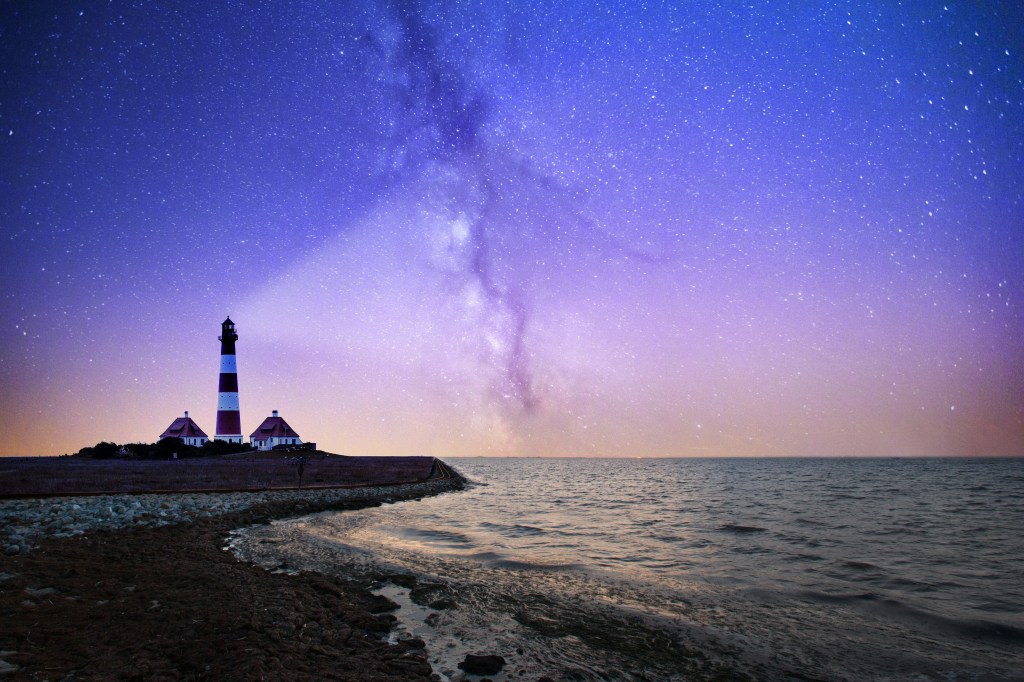
You’ve probably seen a lighthouse before—a tall, solitary tower standing against the sea, its beacon cutting through the darkness. Once an essential guide for sailors navigating treacherous waters, most lighthouses now stand as relics of the past, their purpose fading into history, repurposed as tourist attractions. But once upon a time, they were lifelines—warning ships of hidden dangers, guiding them safely through perilous shallows and rocky shores, ensuring they found their way home.
Of course, in keeping with my tendency to explore duality, there’s another side to this story. Lighthouses, while symbols of safety, have also been at the mercy of violent storms, crushing waves, and shifting ice. Some, ironically, became the very obstacles they were meant to prevent, with ships crashing into them in heavy fog. The lighthouse keepers, isolated from the world, braved relentless weather, exhaustion, and wartime attacks, sometimes risking their own lives to rescue those lost at sea. And then there was the slow, creeping madness—the loneliness of a job that required them to keep the light burning even when no one was watching. Many keepers succumbed to isolation, some to tragedy, others to insanity.
A lighthouse’s beam, magnified by mirrors and lenses, can stretch up to 20 nautical miles (37 km), its reach extending far beyond what the eye can see. But what good is a lighthouse if its light goes out?
I suppose some of us are lighthouses for the beloved ships in our lives—standing steadfast, illuminating their way, ensuring they find safe passage through the storms. We watch from a distance, unwavering, asking for nothing in return. But even lighthouses have limits. A beacon can only shine for so long before the flame flickers, before the isolation erodes the foundation.
Perhaps, just perhaps, some ships were never meant to keep sailing. Maybe they, too, long for a place to rest—for a shore to call home. Because even a lighthouse, for all its strength, was never meant to stand alone. And maybe, just maybe, the light shines brightest when it’s not just guiding others but warming something within itself.
So if you are a lighthouse—and let’s be honest, we all are in some way—take care of yourself. Keep your light steady, not just for those who seek it, but for yourself, so when the storms come, you’re still standing, still shining, ready to guide the ones who need you most.

 fortuitouspurpose