Missing Someone

Missing someone isn’t one emotion. It’s a spectrum — quiet, wild, and sometimes cruel. It shifts depending on what part of the past it clings to, what kind of love it remembers, and what kind of silence it leaves behind.

1. Missing the Memories

The most familiar kind. You think you miss your ex — the late-night calls, the shared experiences, inside jokes that once made ordinary days feel cinematic. You miss the relationship, however messy or imperfect it was, because it held a version of you that believed in love a certain way — wildly, recklessly, without knowing better.

And maybe that’s what you’re really missing — her, the old you. The one who kept showing up, even when things didn’t make sense. Loving that past version of yourself is necessary. Because as we grow, that part of us, the one that loved so fearlessly dies a little. What remains is her ghost, whispering reminders of who we once were.

So perhaps it isn’t the person or even the relationship you miss. It’s that echo inside you, the memory of your own innocence, the hope that once burned bright before it learned the art of self-protection.

2. Missing Someone “Just Because”

Then there’s the kind that arrives uninvited. No song, no photograph, no reason at all. You just find yourself thinking of your friends from when you were in college (young, wild and free), the ones who made you laugh until your stomach hurt, who held your secrets without judgment, who made you feel safe enough to simply be. With them, there was no need to edit yourself or explain your silences.

You don’t miss one particular moment; you miss the energy of belonging. It’s not sadness, it’s remembrance. A quiet gratitude for what was. Your heart still hums their frequency, the familiar vibration of genuineness, even if your lives have drifted apart or your cities no longer overlap.

3. Missing the Person

This one is quieter and deeper. It’s not about what you did together, it’s about who they were. The way they made you feel grounded, seen, alive. You could have every photograph, every message, and still feel the hollow of their absence. Because this isn’t nostalgia, it’s knowing that something irreplaceable once existed. It’s missing what no one else could ever be.

4. Missing Through Love

I once came across a quote:

“You cannot miss someone as much as you love them.”

The depth of your missing will never exceed the depth of your love. You feel it most when you think of family — your parents, your roots. You miss them even when they’re right there, sitting beside you. You miss the versions of them that existed when you were small, the safety of their presence before life’s complexities took over. This kind of missing isn’t about loss; it’s about continuity, love echoing through time, changing shape but never fading.

5. The Kind That Feels Like Longing

And then, there’s the rarest kind. The missing that refuses to fade. The kind that feels like longing — sacred, eternal. It’s what you feel for a true love, the one who touched your soul in ways you can’t unlearn. You move forward, you live your life, but something in you still turns toward them, like a flower bending to the light. You can’t explain it. You can’t quiet it. It doesn’t ask for reunion. It simply is.

It’s love without demand — pure, patient, infinite.

There are many ways to miss someone. Some are fleeting; others stay for years. Some ache; others heal. But maybe the truth is this, missing isn’t always pain. Sometimes it’s a quiet way of remembering love in all its forms.

Because sometimes, the missing is the love.

Time, Memory, and the Art of Letting Go

“And if Time is anything akin to God, I suppose that Memory must be the Devil.” – Claire Fraser, Outlander

I’ve thought a lot about this line lately. It’s one of those quotes that stays with you, not because it’s dramatic, but because it’s true.

Time heals, they say. And maybe it does. It softens the edges, dulls the sting, lets you breathe again. But memory, memory doesn’t forget. Memory lingers. It plays its little tricks, sometimes like a ghost that refuses to rest.

Time may close the wound, but the scar stays.

And perhaps that’s what Claire meant, that time, like God, is merciful. It gives us distance, perspective, grace. But memory, the Devil, keeps pulling us back. It whispers, remember how that felt? Sometimes with warmth, other times with ache. The scar becomes a reminder, not just of what happened, but of what we still carry inside.

So what is time really healing? The pain, I suppose. The sharpness of it. But the memory, the scar, it stays, as it should. It reminds us of the work that’s still left to do.

There’s a song by David Guetta called Memories that puts it rather beautifully:

“All the crazy shit I did tonight
Those will be the best memories
I just wanna let it go for the night
That would be the best therapy for me.”

That lyric “I just wanna let it go” is the missing piece.
Time alone doesn’t heal. Letting go does.

And yet, I’ve struggled with that part — the letting go. Holding on feels easier sometimes, doesn’t it? We get used to the pain; it becomes familiar, almost comforting in its predictability. But pain was never meant to be a home. Eventually, it catches up with you, demanding to be felt, to be acknowledged, to be released.

That’s the divine magic of time, it confronts you with the memories exactly when you’re ready to face them. You feel the ache so deeply that there’s no choice left but to let it move through you. That’s when release becomes inevitable. After all, we were never meant to hold on to the weight of our wounds.

Healing isn’t about forgetting or staying far enough so you don’t feel its presence anymore. It’s about revisiting the pain long enough to understand it, to really feel it, and then to let it move through you instead of dodging it. That’s how time becomes divine. Because if time passes and the pain remains locked away, untouched, then memory will keep dragging you back to the same moment, again and again.

Time only heals what you allow yourself to feel.

Maybe that’s what it means to turn time into therapy. To sit with what hurts, to let the tears fall, to stop resisting the ache until, slowly, it begins to dissolve.

Feel the pain.
Let it go.
Heal.

And one day, when memory comes knocking again, it won’t hurt as much. You’ll trace the scar gently and smile, not because you’ve forgotten, but because you’ve finally made peace with remembering. Because that’s what true healing is: forgiving and remembering. Forgiving the past, yourself, and the people who became part of your pain. Not to erase what happened, but to set yourself free. Forgiveness is what transforms the scar from a mark of suffering into a symbol of survival.

And on the other side of all that feeling, after the tears, the release, the remembering comes peace. Not the fleeting kind that depends on circumstances or closure, but the quiet, grounded peace that settles in once you stop trying to control what was never meant to be. It’s a peace that doesn’t need answers. A peace that trusts that what left was never yours to hold, and what remains is exactly what’s meant to stay.

That’s when the memories soften, the body exhales, and the soul finally rests.

Maybe peace isn’t the absence of pain, but the grace to remember without bleeding. – Namrata Adsul

When the mind quiets, the soul begins to hum

We’ve all heard the phrase “mind over matter.” It’s one of those mantras we cling to when life tests us — push harder, think stronger, keep going. And for a while, it works. The mind is powerful; it bends reality, rationalizes pain, and convinces us we can make it through anything.

For years, I wore this kind of resilience like armour.
Every challenge was a battlefield, and I fought with mental strength alone. Mind over matter was my survival tool until the mind itself became the battlefield.

That’s when I realised:
The mind is not the final frontier of strength. It is just the first.

There is something deeper beneath it — the soul. It doesn’t argue or demand. It doesn’t need logic or proof. It simply knows.

The mind pushes. The soul guides.
The mind analyzes. The soul accepts.
The mind tries to control reality. The soul understands there isn’t one — that everyone’s reality is uniquely shaped by their experiences. At the level of the soul, matter doesn’t even exist, only energy, intuition, and truth.

So maybe it’s not mind over matter anymore. It’s soul over mind.

Because when the mind falters, the soul doesn’t swoop in to fix it — it simply reminds us that we were never broken in the first place.

The mind survives the world. The soul transcends it.

And one day, when you find your way out of the heaviness, you’ll notice a different kind of peace waiting for you. Not the temporary kind that depends on circumstances or certainty, but a grounded calm that comes from releasing control over what was never meant to be yours. A peace that doesn’t need answers. A peace that trusts that what left was never meant to stay, and what remains is exactly what’s aligned.

Someone once told me, at a moment when I had completely given up, that maybe the way through wasn’t to fight the darkness, but to give in to it. To stop resisting the fall long enough to actually land because only when you’ve met the ground can you find the strength to rise again.

He said, “There’s a long way ahead, full of bright green pastures of possibility. It feels dark now, overwhelming even, but if you get back up… you’ll get to live the life that’s already unfolding for you.”

Maybe soul over mind isn’t esoteric at all.
Maybe it’s the part of us that survives the fall.
Not the polished resilience the world praises, but the raw, scraped-knee, tear-stained kind you only earn at the bottom.
The kind that whispers:

Not like this. Get up. One more time.

The mind helps us function.
The soul — that inner fire — helps us rise.

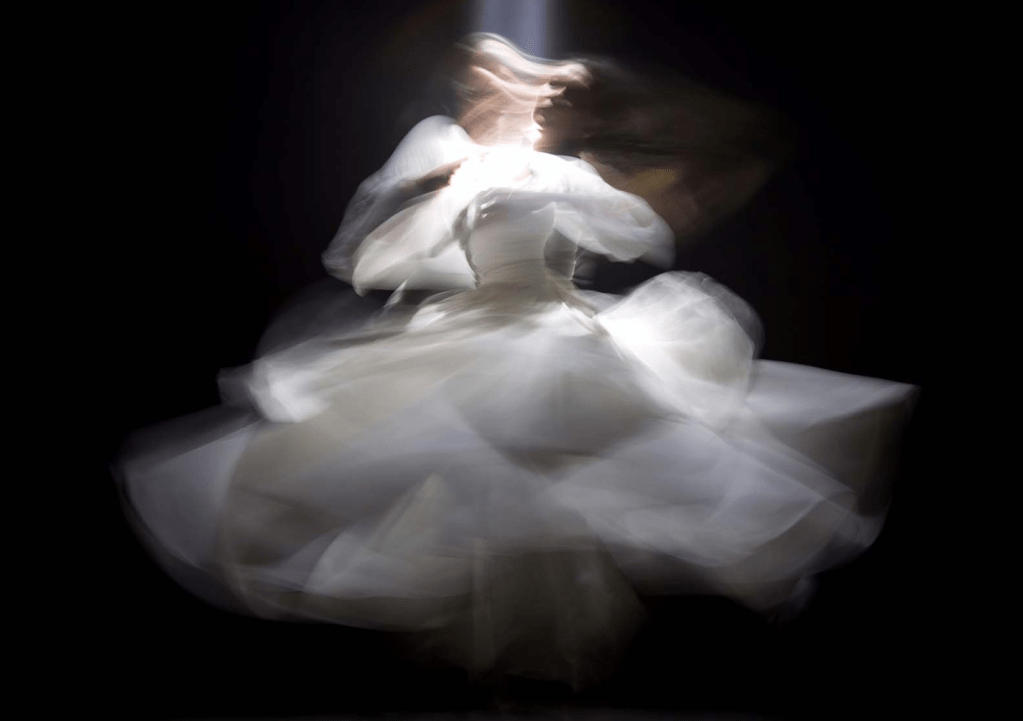
Photo artist unknown.

Dreams

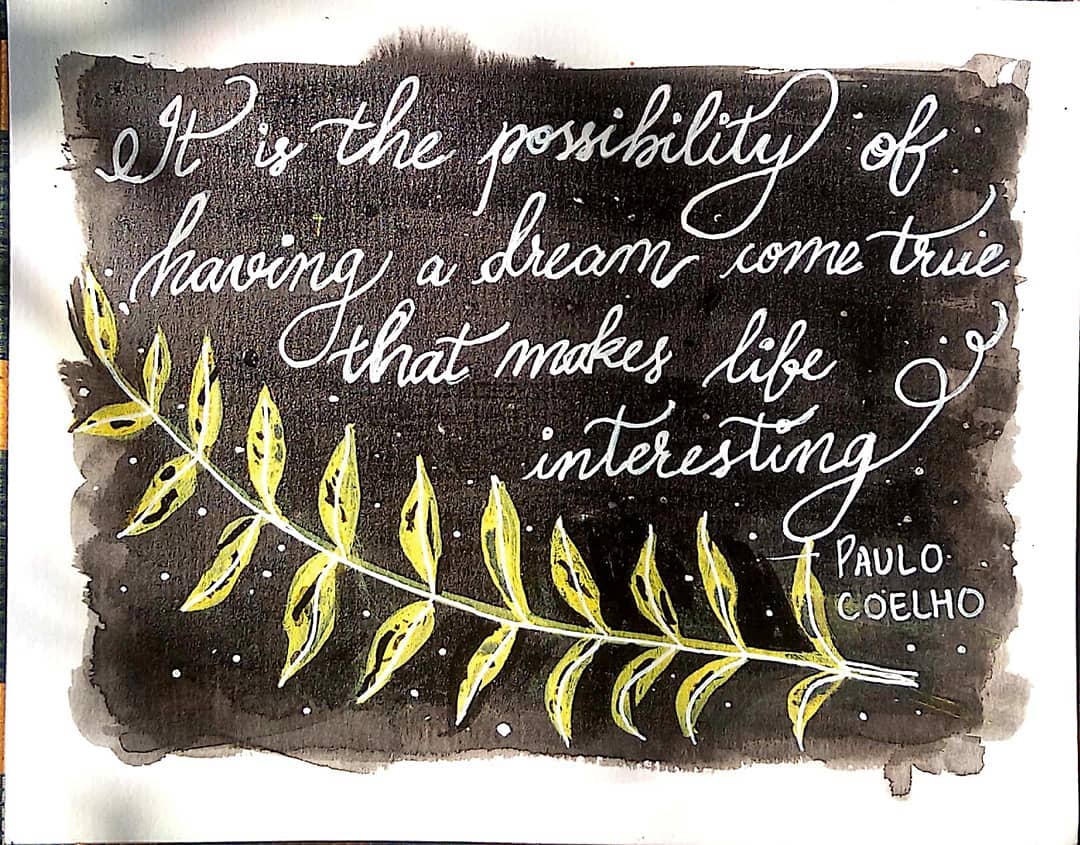
Someone very close to me recently shared a handmade poster with a quote by Paulo Coelho on it:

I stared at it longer than I expected to.

Because for me, having a dream come true has always felt like living in a fantasy. Unreal. Almost miraculous. As if something extraordinary had to happen for it to even be possible. So somewhere along the way, I stopped dreaming.

It wasn’t a conscious decision, more like quiet self-preservation. I let life, or the universe, decide what happened next. Personally, professionally, spiritually. It was safer that way. Safer not to want too much. Safer not to picture something beautiful and risk watching it crumble.

Having a vision used to terrify me. Because what if it didn’t happen? What if no matter how hard I tried, it all still fell apart? I couldn’t bear the thought of failing myself, let alone the shame of failing in my family’s eyes. So, I learned to live inside my head. In that world, everything worked out. It was peaceful there. Predictable. Dreams could unfold without fear of disappointment, because they weren’t real.

But the irony is when you stop dreaming to avoid pain, you also stop feeling alive. You mistake numbness for peace. You start mistaking control for safety.

I’m realizing now that dreams aren’t promises, they’re invitations. Not all of them come true, but each one teaches you something about who you are and what you’re capable of. Maybe Coelho was right. Maybe it’s not the dream coming true that makes life interesting, but the possibility—the movement, the hope, the pulse it gives to an otherwise monotonous existence.

Lately, I’ve also been thinking that maybe not having one dream isn’t such a bad thing after all. For the longest time, I felt guilty for not knowing what I wanted. I thought I was supposed to have that one big vision—the kind that gives your life direction and makes everything else fall into place. But what if that kind of singular focus also blinds you to everything else that’s waiting to unfold?

I used to think my uncertainty meant I was lost. But maybe I was just open.

Not having one fixed dream has allowed me to stay receptive to the unexpected, the unimaginable, the bigger and better things that I couldn’t have possibly planned for. Because when you attach yourself to just one outcome, you close the door on everything else the universe might be trying to send your way.

Imagination and possibility aren’t flaws. They’re freedom.

I’ve been in a kind of decision paralysis for almost two years now, unsure what direction to take professionally since leaving teaching. But when I look back, I don’t see wasted time. I see exploration. I see curiosity. I see faith.

I’ve dabbled across roles, industries, and identities. Some fit for a while; others didn’t. But all of them were necessary detours leading me closer to alignment, closer to my highest self.

So no, maybe I haven’t been wrong. Maybe I’ve just been patient.

I’ve always believed that whatever happens next will unfold in divine timing, in alignment with who I’m becoming. Maybe that’s what it means to dream differently—not by holding on tightly to one vision, but by trusting that the right one will find you when you’re ready to receive it.

Because sometimes, life isn’t about chasing the dream. It’s about becoming the person who can hold it.

Shakespearean Love

Shakespeare’s tragic love stories didn’t dress up love in roses. He treated love with a seriousness we often shy away from—messy, dangerous, transformative, and sometimes absurd. That’s why centuries later, we still see ourselves in his stories. He didn’t write love as fantasy. He wrote it as it is: contradictory, fragile, and fierce.

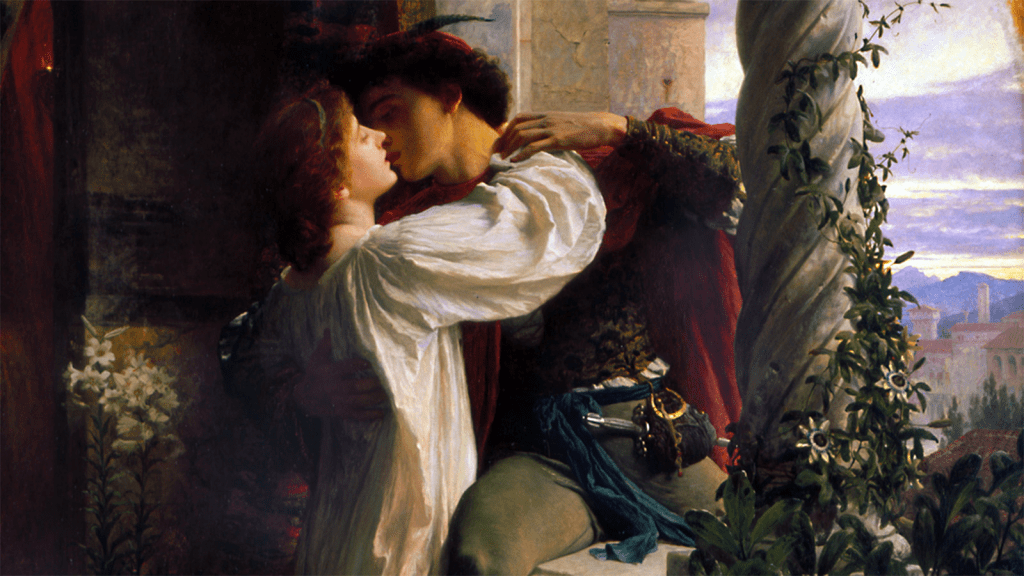
But then why does it feel like every great love story ends in death? Were Romeo and Juliet doomed from the start? Couldn’t they have fought harder, endured, found a way? Maybe. But Shakespeare makes their demise feel inevitable because their love wasn’t just affection. It was rebellion. It was defiance. It was lust, destiny, and devotion tangled together.

Their love itself wasn’t the failure though. What destroyed them was everything around it—family feuds, pride, society’s rigidity. Shakespeare understood something we still struggle with: love may be pure, but people, society, and circumstance corrode it.

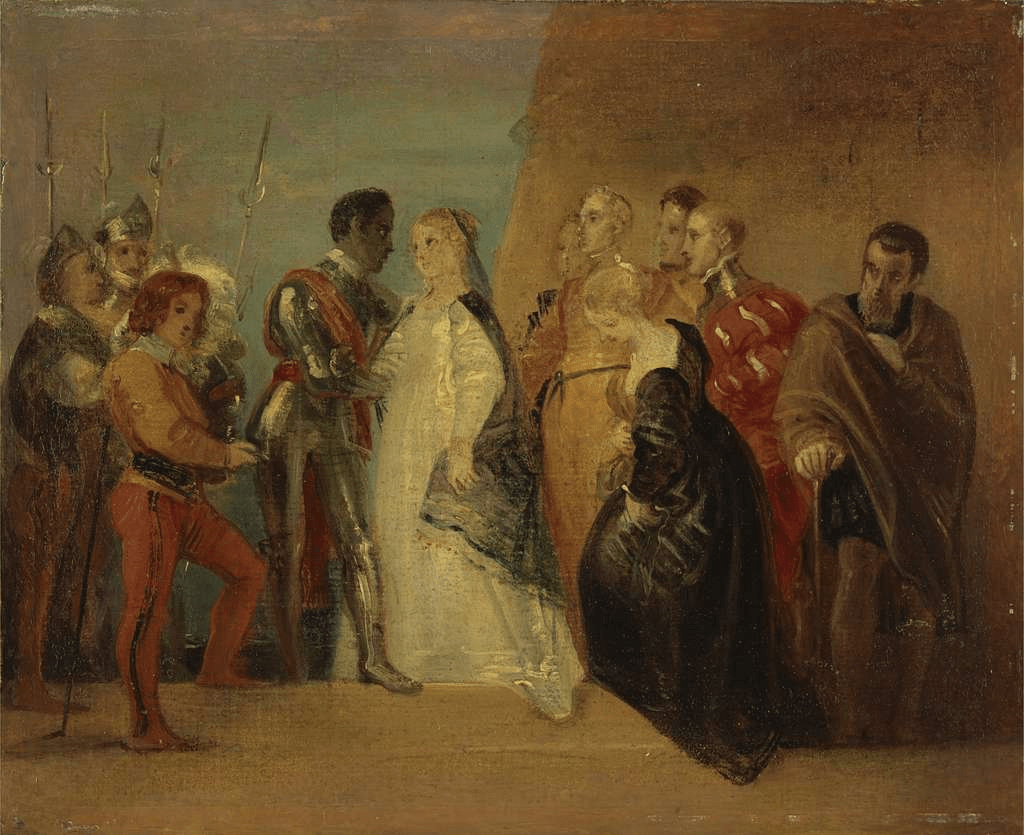
Look at Othello. He didn’t stumble into jealousy on his own. The seed was planted. Iago, with all his venom and cunning, represents the voice of society—the envious whispers, the jealous eyes, the forces that can’t stand to see love in its truest, most powerful form. Left to himself, Othello might never have believed Desdemona capable of betrayal. But once society’s hand reached into that sacred bond, twisting love into doubt, the poison spread too fast to stop.

Isn’t that what so many of Shakespeare’s tragic loves are really about? Romeo and Juliet undone by feuding families. Desdemona and Othello undone by Iago’s schemes. Love itself isn’t the flaw, it’s the world around it, with its pride, politics, and envy, that refuses to let love simply exist.

And this isn’t just a lesson for the 16th century. We still have our Iagos. They show up as gossip, as cultural expectations, as voices telling us who we should or shouldn’t love. The methods are different, but the effect is the same: outside forces planting seeds of doubt where trust should live.

That’s the caution Shakespeare leaves us with: it isn’t enough for love to be strong within two hearts. It must also be guarded fiercely against the noise of the world. Without that vigilance, even the most genuine love risks being undone, not by what’s inside it, but by everything trying to tear it apart.

How?

This is where the sacredness of love comes in. True love, the kind Shakespeare wrote as life and death, is not casual. It carries responsibility. If you are given the gift of such a bond, you don’t squander it on ego, lust, or convenience. You honor it as something rare, something that transcends lifetimes.

Shakespeare revered too much to take it lightly. He wrote its danger because he believed in its power. And maybe that’s the real question for us today: in a world that treats love as fleeting, are we still willing to carry it as something sacred?

And maybe that’s what he was showing us all along: love doesn’t always live in two people holding hands forever. That kind of love can break under pressure, or even die with them. But love itself outlives the lovers. It lingers as memory, transformation, legacy. Love endures, not always in the way we want, but in ways that ripple outward, changing everything it touches.

Seven Days, One Journey

It started with anger. Not the fleeting kind, but the slow-burning fire that rises from years of being misunderstood. From people looking at my life from the outside and thinking, She’s so lucky. They see the travel, the “success,” the help I receive (which I’m not always open to receive), and assume it’s all effortless. Sometimes they accuse me, silently or outright, of asking for too much, of playing needy to avoid hard work.

To those people, I’ve often thought: Take it. Take the money, the attention, the so-called “privilege.” But take the rest too. Take the premature birth, the uncle who molested me as a child — not once, but multiple times. The strange man in my home who crossed a boundary when I was twelve. The father who beat me, the mother who couldn’t care for me. The ten-year relationship with a narcissist. Take the way emotional and physical trauma numbed my body so completely that, at 33, I am just now teaching it how to function properly for the first time.

During a session with my personal trainer, I activated my core and balanced myself in a way I never had before. It hurt, a deep, almost alien ache, as muscles long dormant came online. Pain radiated from my pinky toes up my legs. Every workout drags me back to the memory of what shut my body down in the first place. People see the privilege of affording a trainer; they don’t see the ghosts I fight in every rep.

The physical pain is just one part. The aftershocks of my past ripple through every system in my body — PCOS, ADHD, mild autism, gut issues, body dysmorphia, social anxiety, addiction, and more. I’ve stayed quiet about much of it because I don’t want sympathy. I don’t want to be treated like I’m fragile. Just treat me like a human being.

And yet, some people have used these wounds against me — knowingly. Those people no longer exist in my world. I’ve finally reached the point where I can feel anger without drowning in shame for it. The little versions of me didn’t have the space to stand up for themselves. I do now.

I could choose to live in the narrative that life has been unfair, and some days, I still go there. But more and more, I choose to look at what all of this has given me.

It’s given me a deep love for movement — dancing, skiing, hiking, crossfit, kickboxing, yoga. It’s given me friendships that became lifelines. It’s given me opportunities: AIESEC in college, working in Egypt, studying English in London, working with children and leaders shaping education policy in Australia, landing in the tech industry in Canada. It’s given me the resilience to navigate cultures and continents, to build a global circle of friends who would open their homes to me in a heartbeat.

The narcissistic relationship? It taught me financial independence, self-reliance, and skills I never would have learned if I’d followed the script handed to women in my culture. ADHD, autism, and anxiety? They led me to music — a constant, grounding presence. Health issues? They taught me more about nutrition and the body than I could have imagined.

Gratitude doesn’t erase the pain, but it reframes it.

I now find myself craving genuine connection. The kind where people take time to understand me instead of jumping to conclusions. Where they can sit with me through the layers, listen without judgement. My mind likes to peel everything apart, to overprepare, to make sure no detail is missed. But maybe, just maybe, I don’t always need to pull every thread.

I’m reminded how beautiful life is in its chaos. Years can feel wasted, aimless, only to reveal themselves later as part of a bigger pattern. Like that poster I once saw: You think you’re wasting your life… but then comes the turning point, and you realise you knew what you were doing all along. I started my inner work journey 5 years ago. It’s been difficult dealing with the monsters in my head, but I’d go back in time and do it again if it leads me to where I am right now.

By the end of the week, something had shifted. I finally understood non-duality — not just as a concept, but as a way of being. Triggers still come. I still feel fear, anger, grief. But now I can let them be what they are, without clinging or pushing them away. It’s not nothing, it’s just what it is.

I’ve lived most of my life in duality — stuck in the past, anxious about the future, rarely present. Now, I know how to stand here.

Here, in this moment.
Here, with both the heaviness and the gratitude.
Here, as I continue to heal and unfold.

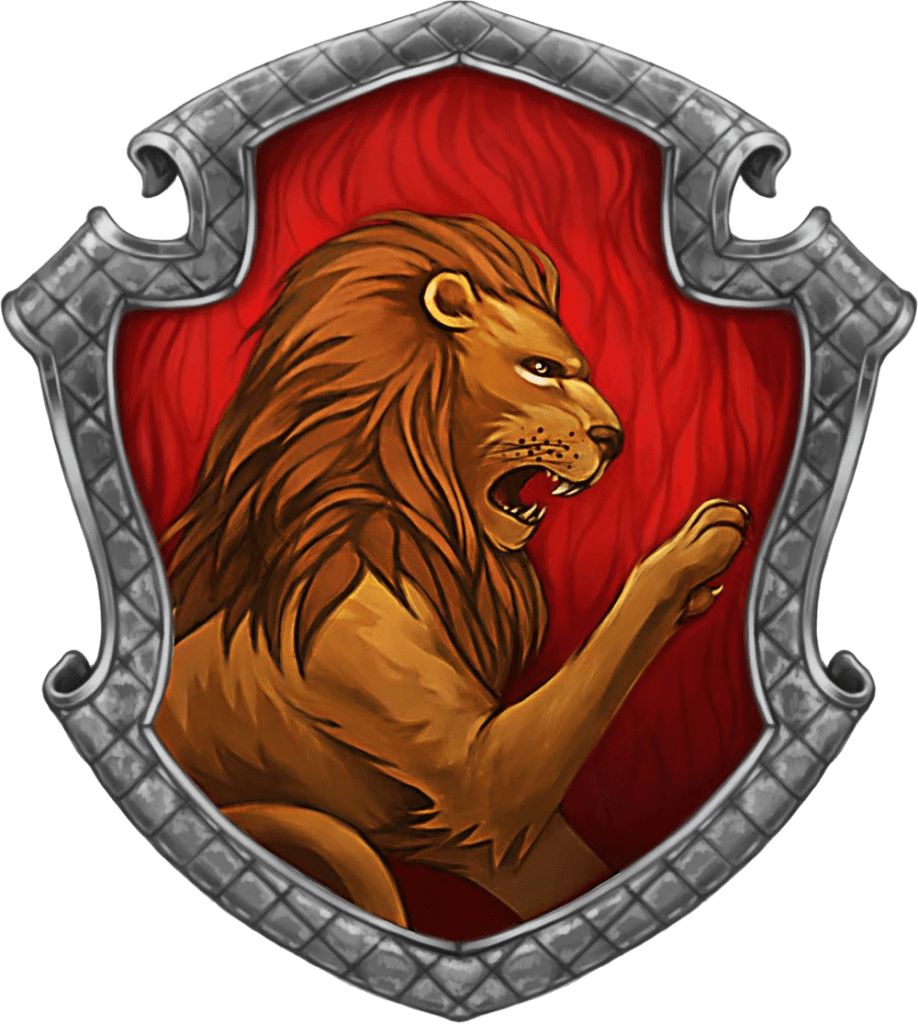
Gryffindor

“You might belong in Gryffindor, where dwell the brave at heart. Their daring, nerve, and chivalry set Gryffindors apart.” — Sorting Hat

I’ve always known, deep in my bones, that I’m a true Gryffindor. Even when fear clung to my skin, I somehow managed to rise. Bravery didn’t always feel like a roar—more often, it arrived quietly, wrapped in trembling hands and uncertain steps. But I showed up. Again and again.

Still, there comes a time when being too brave, too often, leaves the pot of courage bone-dry. I remember those years when I lived on the edge. I flirted with risk, danced with chaos, and mistook recklessness for resilience. Every decision pushed a boundary. Every choice felt like I was testing the limits.

Until one day, the pot was empty. And I finally sat myself down. Body tired, heart heavier than I cared to admit. I realised how much I had been burning through myself just to prove I was brave.

That’s when the doubt crept in. Not all at once, but through quiet whispers of “what if” and a lingering fear of the unknown. That combination held me hostage. Kept me safe, but small. It made me wonder—was the pot truly empty, or did I convince myself it was? Maybe I was trying to protect myself from everything that felt too big, too fast, too uncertain.

In those moments, I lost her—the truest version of me. The one who once dared without second-guessing. I shrank into the shadows of hesitation, even when something inside me knew the unknown might be a good thing. But it wasn’t the world I was afraid of. It was the storm within.

So, I stayed. I didn’t run this time. I met the inner demons I had spent a lifetime avoiding. I didn’t fight them, I listened. And after many moons of letting the tides of memory and emotion crash over me, I found my footing again.

And now, when I speak of bravery, it’s not the loud, performative kind. It’s the kind that grows roots. The kind that allows space for softness. The kind that whispers—you’re safe now.

So yes, Sorting Hat, go ahead. Place me in Gryffindor. I no longer wear courage like a mask. I carry it quietly, but deeply. I feel brave from the inside. Brave at heart.

Starting Over

I wrote about rebirth at 33. And it sounds beautiful, doesn’t it? Like a phoenix rising. But the truth is, starting over feels more like being reborn into a world where you don’t speak the language, don’t know the rules, and have to teach your nervous system how to feel safe again. It’s like I’m a newborn trying to build brand-new neural pathways, except I’m doing it with the weary bones of someone who’s already lived several lives.

Everything I once believed about the world, about myself, about how life should unfold, it’s all dissolving. The older version of me birthed this new version, sure, but she’s also standing there, blinking, lost, asking, “Now what?” Neither of us really knows what a healthy psyche feels like. I’ve read the theory, highlighted the books, nodded along in therapy. But living it? Walking around with this open heart and no blueprint? That’s a whole different thing.

No one talks about what happens after the awakening. The earthquake comes, the illusions fall, but then what? How do you build something real on a land that still trembles? Everything is clear now, terrifyingly clear. And after seeing the depths—your own, others’, the world’s, how are you supposed to just… grocery shop? Go on dates? Plan a five-year career trajectory?

That’s why lately, I’ve been oscillating between “What’s the point?” and “What if something terrible happens again?” Which, intellectually, I know is normal. Trauma loops are persuasive bastards. They whisper that safety lies in staying small, staying still, staying stuck. That’s the loop. But I also know the only way out is action—messy, imperfect, “I-have-no-idea-if-this-will-work” kind of action.

And let’s be honest, starting over in your 30s is terrifying. The older you get, the scarier it feels. You’re not as naïvely bold as you were at 23. You’re more tired, more cautious, more aware of just how high the stakes are. You feel like life should’ve looked a certain way by now. Married. Kids. Career locked and loaded. And what hurts most is that it’s not like I’ve been slacking off. I’ve been working hard. Really. So where’s my reward?

But if I really got what I thought I wanted back then, I’d be married to someone emotionally unavailable. I’d have kids with a man who wouldn’t have been able to make space for my softness. I’d be successful in a career that rewarded burnout and martyrdom. I loved teaching, but being an empath in that world nearly broke me. I couldn’t separate their pain from mine.

So yeah, I’m grateful for all the failed timelines. Every single one. Because now I get to start again on my terms. It’s not too late. In fact, maybe this is exactly the right time. I’m no longer building a house of cards that collapses at the first gust of fear, pressure, or pain. I’ve lived through enough big, bad wolves to know better. No more straw, no more sticks—I’m laying bricks now. Solid. Intentional. Storm-tested. I’m building a life with deeper foundations, with pillars strong enough to hold the weight of all that I am and gentle enough to make space for all that I feel.

Diary Entry Day 7: Rebirth at 33

In the midst of remembering all that I’ve lived through, I’ve forgotten to actually live.

I recently turned 33. Growing older used to feel terrifying — not because of age, but because of how many years I felt I had already lost. I survived my childhood, endured my teenage years, and stumbled through early adulthood. I grew up too fast. I had to.

When I was talking to someone recently, I told them that this birthday feels different. I want it to be a rebirth. A reset. A conscious beginning.

For the first time, I’m starting to imagine beautiful things. Not just the life I escaped from, but the life I want to create. I’m not losing my youth. I’m growing into a version of myself that finally feels like home.

The best things in my life haven’t happened yet.
There’s love to be discovered, the kind that grows deeper with time.
There’s the possibility of becoming a mother, of raising children with awareness and tenderness.
There’s meaningful work ahead, work that feels aligned with who I am.

Even thinking about these things brings tears to my eyes. Because for so long, I couldn’t. I didn’t dare to hope. It felt too risky. Too far away. Too unsafe.

But now, I do hope. I do dream.

Yes, I’ve lost a lot. Yes, trauma shaped my path. But it didn’t break me. I’ve lived. I’ve gathered stories and strength. And I know, deep down, that the version of me who walked through all that darkness has earned her joy. Not as a reward, but as a right.

I’m proud of myself. Truly proud. That’s something I haven’t said often enough.

Will I still get triggered? Yes. Will fear visit me again? Probably. These things don’t disappear overnight. They live in the body. They resurface. But now I know how to face them.

I used to hope I’d one day forget everything that happened. But I’ve learned that forgetting doesn’t free you. It only delays the return. So I’m done running. This happened. These are the cards I was dealt. And still, I’m here. And still, I get to live a beautiful life.

Today’s Truth:

I’m not healing to erase the past.
I’m healing to remember the future I still get to have.
This is my rebirth — not in spite of what I’ve lived through, but because I chose to keep living.

Diary Entry Day 6: Reckoning with the Shadow

Today’s hesitation wasn’t about writing what happened to me. It was about writing what I’ve done because of it.

Yesterday, I wrote that there’s evil in me too. I stand by that. Trauma doesn’t just leave physical or emotional aftereffects. Sometimes, it creates patterns of behavior that are hard to admit — especially when they hurt other people.

This morning, I wanted to be honest with myself. Given how intense and extreme my experiences have been, I know there’s no way I’ve made it through without causing harm. I’m not a saint. I’ve had moments where the pain I didn’t want to feel found its way out as anger. As cruelty. As defensiveness. As superiority.

Sometimes it was unintentional. But other times, I knew.

I’ve justified it in the past. I didn’t say it out loud, but in my head, I thought, “This is what men have done to me. So what if I bring them down a little?” The truth is, some of the kindest men in my life have received the worst of me. I’ve belittled them, mocked them, hit where it hurt, all while telling myself they could handle it. That they were strong enough. That it didn’t matter.

But it did matter. They were good to me. And I hurt them anyway.

This is hard to admit. But I don’t want to be someone who blames my past forever. I’ve done that before. I’ve told myself that the reason I lash out is because of what I endured. But it’s not their fault. The people I’ve hurt didn’t abuse me. They didn’t leave me unprotected as a child.

They didn’t deserve my rage.

I think back to my ex. To a few close male friends. I see the way I pushed them away when they tried to help me. I see how my ego stepped in and said, “Don’t let them be right.” So I said something mean. Something cold. Something that cut deep.

I realize now, that was the same thing done to me. The men who hurt me — they were probably running from their own suffering. My father definitely was. He grew up with an alcoholic dad who beat him and then died young. I can imagine that pain. And I can see how he never learned to stop it from spreading.

That’s what I’m trying to do. I’m trying to stop the chain reaction.

I know some of the things I’ve done may seem small. But the timing of a word, the edge of a tone, can break someone who’s already on the edge. I don’t want to carry that weight anymore.

I want to alchemize this darkness. That’s what I said in my book. I called myself an alchemist. If I meant it, I can’t keep channeling my pain in ways that quietly hurt others. Even when it’s justified. Even when it’s subtle. Even when it feels easier.

Today’s Truth:

The pain I didn’t want to feel turned into a shadow I didn’t want to see.
But seeing it is how I stop it from growing.
I am not just what happened to me.
I am what I choose to do with what it left behind.