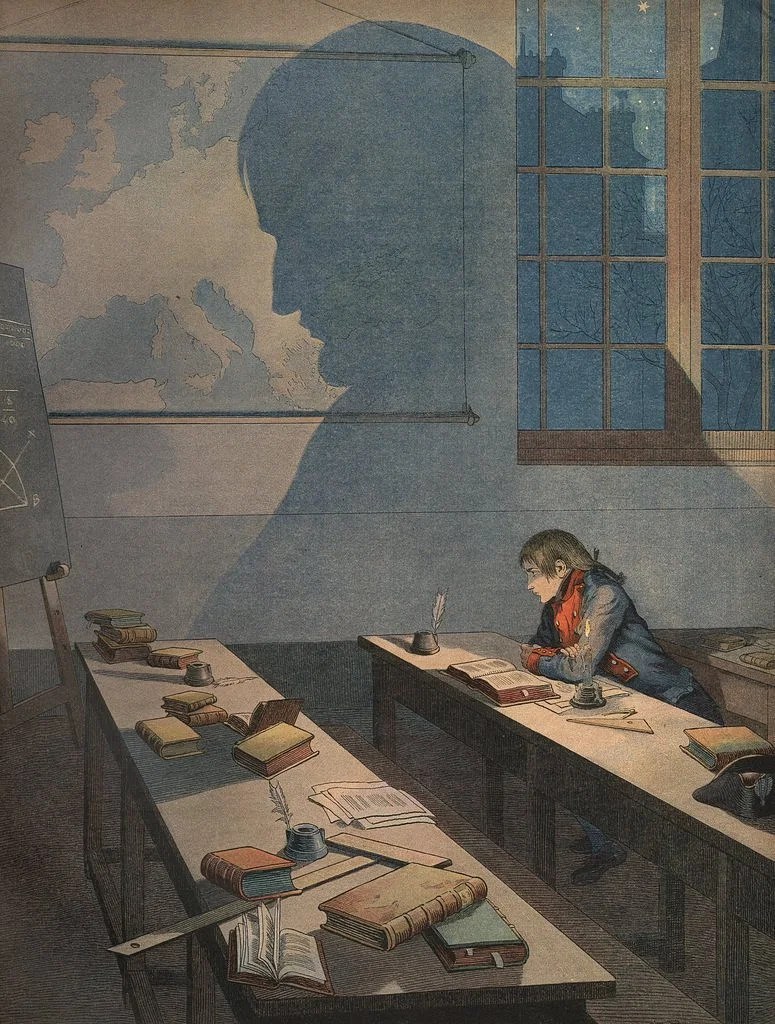
My Truth

I believe truth begins within, not above me.
I do not seek permission to think, feel, or question.
What I live by is what has revealed itself through experience, not inheritance.

I believe pain is not a moral test, nor a punishment.
It is information.
What matters is not that it happened, but what I choose to become because of it.

I believe free will is sacred — including the free will of those who choose differently from me.
I do not need to control others to feel safe.
Restraint, when chosen consciously, is strength — not weakness.

I believe growth does not require domination, correction, or righteousness.
If my values cannot coexist with another’s freedom, they are not values — they are fear.

I believe wisdom is not reserved for the pure, the ordained, or the powerful.
It emerges wherever honesty meets responsibility.
Anyone can access it. No title required.

I believe healing does not make me superior.
It makes me accountable — for my actions, my impact, and my silence.

This is what I believe now.
If experience teaches me otherwise, I will listen.
If my understanding evolves, I will evolve with it.

This creed is not a rule for others.
It is a mirror for myself.

Pain and its Shadow

Pain creates a shadow. That much is undeniable. And with it comes an instinct—raw, immediate, human.

The urge to hurt someone because you were hurt is natural. It’s an afterthought. A reflex. The nervous system fires before wisdom arrives. That first dark impulse—the flash of retaliation, the desire to strike back—is not a moral failure. It’s biology. We are human, after all.

But instinct is not instruction.

Someone who has truly understood shadow work knows this difference intimately. They know that while the impulse is real, acting on it is foolish. Short-sighted. It might feel satisfying in the moment—like relief, like justice—but it always backfires. Always.

Here’s the paradox most people miss:
the shadow itself knows this.

The shadow is not reckless. It is intuitive. Its intelligence lies in discernment—in knowing which actions drain you instead of protect you. True shadow integration does not encourage explosion or revenge. It teaches restraint. It offers protection that is quiet, strategic, and enduring, not the kind that lashes outward for temporary relief, but the kind that preserves your integrity long after the moment has passed.

No foolish negative outward action here.
No outward action at all.

That is real control. Real control of your mind, your psyche, yourself.

The Point of the Shadow Is Liberation

This is where healing becomes unmistakable.

You know you are not healed yet when you still feel the urge to use your shadow to attack something—to feel powerful, justified, or momentarily relieved of the pain you endured. That urge doesn’t mean you’re strong. It means you’re still inside the wound.

Healing reveals itself when that urge dissolves.

When hurting back no longer feels satisfying.
When retaliation feels heavy instead of empowering.
When you no longer need to prove what you survived.

That is not weakness. That is freedom.

When I did my shadow work, it wasn’t rebellious. It wasn’t loud. It wasn’t performative. There were no declarations, no theatrics, no enemies to conquer.

I sat with my pain (a.k.a. my shadow).

For hours, days, weeks, months, years…

Crying. Shivering. My body trembling as if every cell was finally allowed to speak. I felt it fully—without distraction, without escape—asking God to help me endure it.

That was it.

No revenge.
No outward action.
No destruction of anyone else.

That is why I say shadow work is a divine practice. Not because it glorifies darkness, but because it demands surrender. It asks you to sit in the uncomfortable truth long enough for it to transform you. It has nothing to do with rebellion and everything to do with reverence—for your pain, your body, and your capacity to endure without becoming what harmed you.

The shadow, when honoured correctly, does not make you darker.

It makes you free.

And Here Is the Part No One Talks About

When you stop reacting, something shifts.

When you refuse to act out your shadow through harm, your growth becomes the force. Quiet. Unavoidable. Surgical.

The person who tried to bring you down doesn’t get your anger.
They don’t get your retaliation.
They don’t even get your attention.

They get something far more destabilising:

They get left behind.

Your healing hits where no attack ever could.
Your alignment exposes what was never solid.
Your becoming does the work you never needed to do outwardly.

That is the real power of shadow work!

Not destruction.
Not revenge.
Not proving anything.

Just transformation so complete that the darkness that once threatened to consume you becomes the very thing that carries you forward.

Effortless.
Intuitive.
Untouchable.

The Art of Un-Reading: Why We Must Question the History We Inherited

Paulo Freire once nailed it: true literacy isn’t just about reading the word, but reading the world. That means looking beyond the text and into the systems, the power plays, and the hidden agendas that manufactured that text in the first place.

And let’s be honest, this kind of intellectual excavation is most urgently required when we crack open the accounts we lazily call “history.”

The Lies We All Agreed Upon

Napoleon Bonaparte famously declared, “History is a set of lies agreed upon.”

It sounds like a cynical, high-level tweet. But the more you sit with it, the more ominous it becomes. Because when the folks with power write history, they aren’t writing a mirror for you to learn from. They’re writing a memoir—a meticulously edited, self-flattering, career-justifying memoir.

Napoleon proved this point on St. Helena, where he spent his final years mythologizing himself as a tragic hero, a visionary crushed by global fear. And the world? We just shrugged and accepted it. His version became the nation’s framework, and his self-portrait was adopted as their identity.

This is where Freire’s warning hits hardest.

When we inherit a compromised story, the lie becomes the foundation. We stop seeing history as a record and start treating it like a ghost map—a map drawn by the conqueror that shows only the boundaries they want you to respect, not the messy reality of the land itself.

The Problem With Hand-Me-Down Propaganda

The real punch in Napoleon’s quote isn’t that he lied, but that we collectively agreed to call it the truth.

History filtered through the powerful is a subtle, pervasive tool for control. When people—especially those historically marginalized—inherit the tales written by their oppressors, they unconsciously absorb the worldview that justifies their own limited position. They grow up unable to tell the difference between objective patriotism and high-budget propaganda.

If the history we start with is distorted, the lesson we pull from it is corrupted. And if the lesson is corrupted, the future we build is structurally flawed. This is precisely why entire societies keep repeating the same spectacular failures, just in trendier outfits. When the story is broken, the cycle is inevitable.

My own obsession with memory and truth comes from this very tension. Memory is always edited. Identity is always curated. History is always a negotiation. A nation remembers what makes it look good and conveniently forgets what makes it accountable. And wherever collective memory has a blind spot, future generations are left carrying inherited delusions as if they were established facts.

We Owe Honesty to the Future

Freire argued that liberation starts with critical consciousness—the willingness to question every tale, to unlearn every inherited illusion, and to “read the world” beneath the tidy surface. If we don’t do this work, we aren’t remembering history; we’re just running the script again.

The main imperative, then, isn’t to track down the elusive, perfect historical truth—that ship probably sailed—but to rigorously commit to the truth right here, in the present moment.

We don’t owe perfect clarity to the past. We owe honesty to the future.

If our children are going to build a smarter world, they can’t use our myths as blueprints. They deserve analytical clarity, not heroic self-narratives. They deserve a history that isn’t afraid to name its own shortcomings.

To “read the word and the world” is to hold both warnings at once: the stories we agree upon shape our societies, and only a commitment to truth keeps us from reliving the cycles we pretend we’ve outgrown.

Let’s commit to leaving behind fewer lies than we inherited. Only then will the next generation read the world not as it was edited for them, but as it actually is.

Feminism, Polarity & The Myth We Accidentally Broke

There’s a question I’ve been sitting with for a while now — not as a feminist, not as a woman, but as a human being trying to understand our collective psychology:

What happens when feminism forgets the feminine?
And masculinity forgets the masculine?

Because lately, the conversations I overhear — in cafés, on group chats, over wine nights — don’t sound like empowerment anymore. They sound like a war cry.

Not against patriarchy.
Against men.

A frustration so sharp it’s starting to look like hatred.

And somewhere in all of this, I can hear Carl Jung whispering:

“What you resist, persists.
What you fight externally is usually what you have not reconciled internally.”

We didn’t break the patriarchy.
We internalised it.
Then we flipped it.
And now some women are wielding that same masculine shadow with pride — domination, dismissal, superiority masked as empowerment.

But that’s not feminism.
That’s just patriarchy in drag.

The Forgotten Polarity

Jung spoke of animus (the masculine within women) and anima (the feminine within men).
A healthy psyche holds both — but in balance.

When the feminine rejects its own softness, intuition, empathy, and receptivity, and instead elevates aggression, dominance, and emotional rigidity, it becomes the very thing it was trying to dismantle:
a distorted masculine archetype.

And when the masculine rejects its own strength, direction, courage, and containment in fear of being “toxic,” it collapses into passivity, shame, and confusion — a distorted feminine archetype.

We are not meeting each other.
We are trading shadows.

And so the polarity collapses.

Where there was once magnetism, we now have resistance.
Where there was once attraction, we now have fear.
Where there was once mutual respect, we now have competition.

This is not evolution.
This is fragmentation.

Feminism Was Never Meant to Erase Differences

I believe in feminism — with my whole chest.
But I believe in a version that honours polarity, not erases it.

Strength is not exclusively masculine.
Softness is not exclusively feminine.
But the archetypal energies exist for a reason.

Men and women were never meant to be identical.
They were meant to be complementary — yin and yang, form and flow, structure and intuition.

When we stop honouring these polarities, we don’t become equal.
We become disconnected.

Disconnected from ourselves
and from each other.

The System Is the Problem — Not Most Men

Here’s the truth:

Most men are not sitting in dark rooms plotting how to keep us down.
Most men are not deciding promotions, pay gaps, or reproductive laws.

The system — built by generations of unconscious masculine energy — is what we’re fighting.

Not the average man sitting next to us at dinner.
Not the friend who is trying.
Not the man who is learning to be better.

But we treat them the same anyway.

And ironically, that is how toxic masculinity operates:
“Group them all together. Punish them all.”

The shadow is the same.
Only the costume changed.

Men Are Not the Enemy. Women Are Not the Victims.

There are things men are naturally wired for that women can’t touch.
There are things women are naturally wired for that men can’t reach.

This is not inequality.
This is polarity.

A tree grows tall because the roots grow deep — not because the branches declare war on them.

And yet here we are, hacking at each other’s roots.

Here’s What I Believe:

A healed woman does not hate men.
A healed man does not fear strong women.
A healed society knows how to hold both energies without forcing them into battle.

Feminism was never about conquering men.
It was about conscious partnership.

Masculine and feminine — in both men and women — meeting in the middle, not overpowering each other.

When we weaponise feminism, we don’t free anyone.
We just recreate oppression with different branding.

The real revolution is internal:
Women reclaiming their feminine without shame.
Men reclaiming their masculine without fear.
All of us integrating the parts of ourselves we’ve disowned.

This is how patriarchy actually breaks.
Not through war —
but through wholeness.