Missing Someone

Missing someone isn’t one emotion. It’s a spectrum — quiet, wild, and sometimes cruel. It shifts depending on what part of the past it clings to, what kind of love it remembers, and what kind of silence it leaves behind.
1. Missing the Memories

The most familiar kind. You think you miss your ex — the late-night calls, the shared experiences, inside jokes that once made ordinary days feel cinematic. You miss the relationship, however messy or imperfect it was, because it held a version of you that believed in love a certain way — wildly, recklessly, without knowing better.

And maybe that’s what you’re really missing — her, the old you. The one who kept showing up, even when things didn’t make sense. Loving that past version of yourself is necessary. Because as we grow, that part of us, the one that loved so fearlessly dies a little. What remains is her ghost, whispering reminders of who we once were.

So perhaps it isn’t the person or even the relationship you miss. It’s that echo inside you, the memory of your own innocence, the hope that once burned bright before it learned the art of self-protection.

2. Missing Someone “Just Because”

Then there’s the kind that arrives uninvited. No song, no photograph, no reason at all. You just find yourself thinking of your friends from when you were in college (young, wild and free), the ones who made you laugh until your stomach hurt, who held your secrets without judgment, who made you feel safe enough to simply be. With them, there was no need to edit yourself or explain your silences.

You don’t miss one particular moment; you miss the energy of belonging. It’s not sadness, it’s remembrance. A quiet gratitude for what was. Your heart still hums their frequency, the familiar vibration of genuineness, even if your lives have drifted apart or your cities no longer overlap.

3. Missing the Person

This one is quieter and deeper. It’s not about what you did together, it’s about who they were. The way they made you feel grounded, seen, alive. You could have every photograph, every message, and still feel the hollow of their absence. Because this isn’t nostalgia, it’s knowing that something irreplaceable once existed. It’s missing what no one else could ever be.

4. Missing Through Love

I once came across a quote:

“You cannot miss someone as much as you love them.”

The depth of your missing will never exceed the depth of your love. You feel it most when you think of family — your parents, your roots. You miss them even when they’re right there, sitting beside you. You miss the versions of them that existed when you were small, the safety of their presence before life’s complexities took over. This kind of missing isn’t about loss; it’s about continuity, love echoing through time, changing shape but never fading.

5. The Kind That Feels Like Longing

And then, there’s the rarest kind. The missing that refuses to fade. The kind that feels like longing — sacred, eternal. It’s what you feel for a true love, the one who touched your soul in ways you can’t unlearn. You move forward, you live your life, but something in you still turns toward them, like a flower bending to the light. You can’t explain it. You can’t quiet it. It doesn’t ask for reunion. It simply is.

It’s love without demand — pure, patient, infinite.

There are many ways to miss someone. Some are fleeting; others stay for years. Some ache; others heal. But maybe the truth is this, missing isn’t always pain. Sometimes it’s a quiet way of remembering love in all its forms.

Because sometimes, the missing is the love.

Time, Memory, and the Art of Letting Go

“And if Time is anything akin to God, I suppose that Memory must be the Devil.” – Claire Fraser, Outlander

I’ve thought a lot about this line lately. It’s one of those quotes that stays with you, not because it’s dramatic, but because it’s true.

Time heals, they say. And maybe it does. It softens the edges, dulls the sting, lets you breathe again. But memory, memory doesn’t forget. Memory lingers. It plays its little tricks, sometimes like a ghost that refuses to rest.

Time may close the wound, but the scar stays.

And perhaps that’s what Claire meant, that time, like God, is merciful. It gives us distance, perspective, grace. But memory, the Devil, keeps pulling us back. It whispers, remember how that felt? Sometimes with warmth, other times with ache. The scar becomes a reminder, not just of what happened, but of what we still carry inside.

So what is time really healing? The pain, I suppose. The sharpness of it. But the memory, the scar, it stays, as it should. It reminds us of the work that’s still left to do.

There’s a song by David Guetta called Memories that puts it rather beautifully:

“All the crazy shit I did tonight
Those will be the best memories
I just wanna let it go for the night
That would be the best therapy for me.”

That lyric “I just wanna let it go” is the missing piece.
Time alone doesn’t heal. Letting go does.

And yet, I’ve struggled with that part — the letting go. Holding on feels easier sometimes, doesn’t it? We get used to the pain; it becomes familiar, almost comforting in its predictability. But pain was never meant to be a home. Eventually, it catches up with you, demanding to be felt, to be acknowledged, to be released.

That’s the divine magic of time, it confronts you with the memories exactly when you’re ready to face them. You feel the ache so deeply that there’s no choice left but to let it move through you. That’s when release becomes inevitable. After all, we were never meant to hold on to the weight of our wounds.

Healing isn’t about forgetting or staying far enough so you don’t feel its presence anymore. It’s about revisiting the pain long enough to understand it, to really feel it, and then to let it move through you instead of dodging it. That’s how time becomes divine. Because if time passes and the pain remains locked away, untouched, then memory will keep dragging you back to the same moment, again and again.

Time only heals what you allow yourself to feel.

Maybe that’s what it means to turn time into therapy. To sit with what hurts, to let the tears fall, to stop resisting the ache until, slowly, it begins to dissolve.

Feel the pain.
Let it go.
Heal.

And one day, when memory comes knocking again, it won’t hurt as much. You’ll trace the scar gently and smile, not because you’ve forgotten, but because you’ve finally made peace with remembering. Because that’s what true healing is: forgiving and remembering. Forgiving the past, yourself, and the people who became part of your pain. Not to erase what happened, but to set yourself free. Forgiveness is what transforms the scar from a mark of suffering into a symbol of survival.

And on the other side of all that feeling, after the tears, the release, the remembering comes peace. Not the fleeting kind that depends on circumstances or closure, but the quiet, grounded peace that settles in once you stop trying to control what was never meant to be. It’s a peace that doesn’t need answers. A peace that trusts that what left was never yours to hold, and what remains is exactly what’s meant to stay.

That’s when the memories soften, the body exhales, and the soul finally rests.

Maybe peace isn’t the absence of pain, but the grace to remember without bleeding. – Namrata Adsul

When the mind quiets, the soul begins to hum

We’ve all heard the phrase “mind over matter.” It’s one of those mantras we cling to when life tests us — push harder, think stronger, keep going. And for a while, it works. The mind is powerful; it bends reality, rationalizes pain, and convinces us we can make it through anything.

For years, I wore this kind of resilience like armour.
Every challenge was a battlefield, and I fought with mental strength alone. Mind over matter was my survival tool until the mind itself became the battlefield.

That’s when I realised:
The mind is not the final frontier of strength. It is just the first.

There is something deeper beneath it — the soul. It doesn’t argue or demand. It doesn’t need logic or proof. It simply knows.

The mind pushes. The soul guides.
The mind analyzes. The soul accepts.
The mind tries to control reality. The soul understands there isn’t one — that everyone’s reality is uniquely shaped by their experiences. At the level of the soul, matter doesn’t even exist, only energy, intuition, and truth.

So maybe it’s not mind over matter anymore. It’s soul over mind.

Because when the mind falters, the soul doesn’t swoop in to fix it — it simply reminds us that we were never broken in the first place.

The mind survives the world. The soul transcends it.

And one day, when you find your way out of the heaviness, you’ll notice a different kind of peace waiting for you. Not the temporary kind that depends on circumstances or certainty, but a grounded calm that comes from releasing control over what was never meant to be yours. A peace that doesn’t need answers. A peace that trusts that what left was never meant to stay, and what remains is exactly what’s aligned.

Someone once told me, at a moment when I had completely given up, that maybe the way through wasn’t to fight the darkness, but to give in to it. To stop resisting the fall long enough to actually land because only when you’ve met the ground can you find the strength to rise again.

He said, “There’s a long way ahead, full of bright green pastures of possibility. It feels dark now, overwhelming even, but if you get back up… you’ll get to live the life that’s already unfolding for you.”

Maybe soul over mind isn’t esoteric at all.
Maybe it’s the part of us that survives the fall.
Not the polished resilience the world praises, but the raw, scraped-knee, tear-stained kind you only earn at the bottom.
The kind that whispers:

Not like this. Get up. One more time.

The mind helps us function.
The soul — that inner fire — helps us rise.

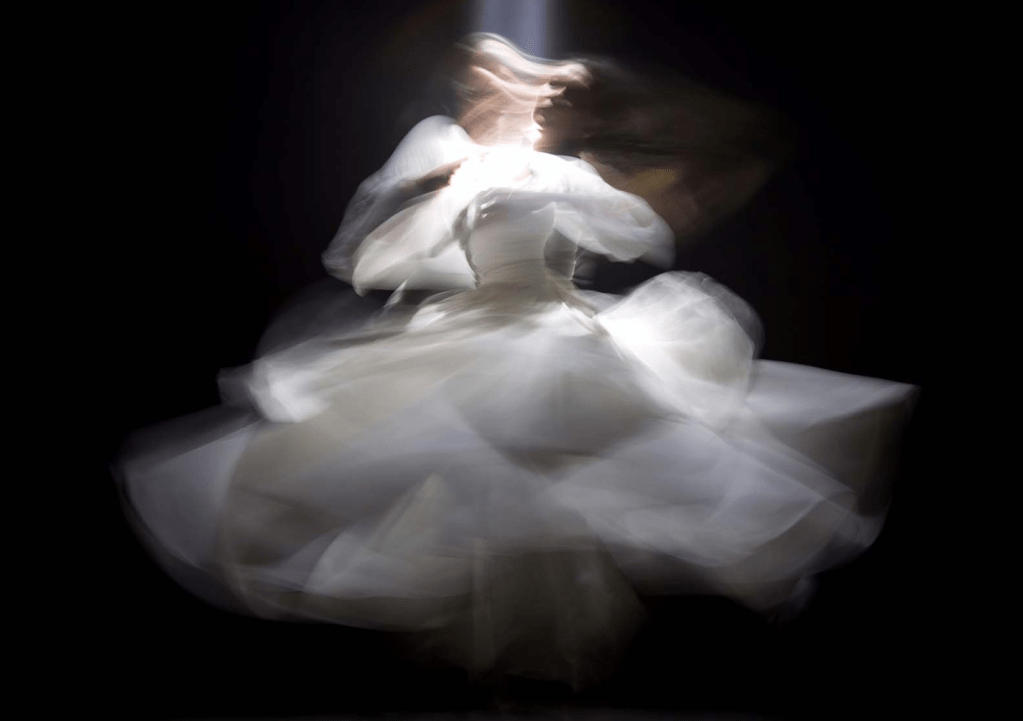
Photo artist unknown.

Dreams

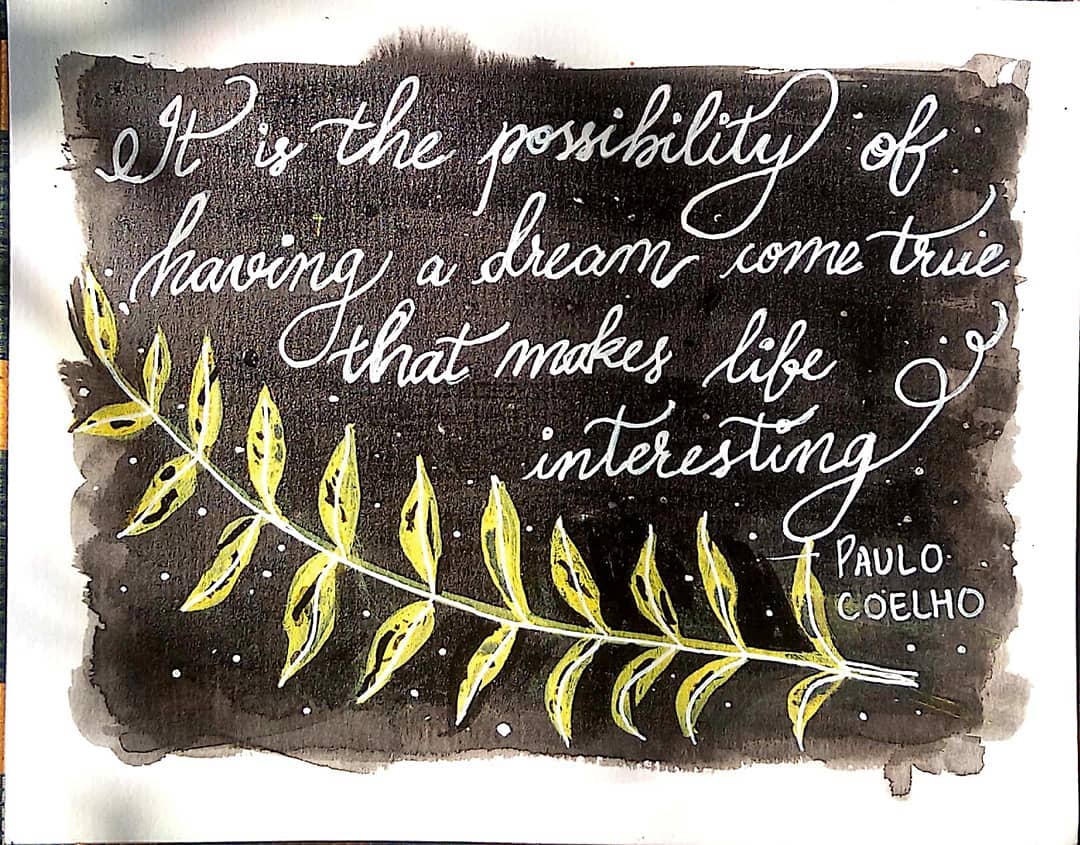
Someone very close to me recently shared a handmade poster with a quote by Paulo Coelho on it:

I stared at it longer than I expected to.

Because for me, having a dream come true has always felt like living in a fantasy. Unreal. Almost miraculous. As if something extraordinary had to happen for it to even be possible. So somewhere along the way, I stopped dreaming.

It wasn’t a conscious decision, more like quiet self-preservation. I let life, or the universe, decide what happened next. Personally, professionally, spiritually. It was safer that way. Safer not to want too much. Safer not to picture something beautiful and risk watching it crumble.

Having a vision used to terrify me. Because what if it didn’t happen? What if no matter how hard I tried, it all still fell apart? I couldn’t bear the thought of failing myself, let alone the shame of failing in my family’s eyes. So, I learned to live inside my head. In that world, everything worked out. It was peaceful there. Predictable. Dreams could unfold without fear of disappointment, because they weren’t real.

But the irony is when you stop dreaming to avoid pain, you also stop feeling alive. You mistake numbness for peace. You start mistaking control for safety.

I’m realizing now that dreams aren’t promises, they’re invitations. Not all of them come true, but each one teaches you something about who you are and what you’re capable of. Maybe Coelho was right. Maybe it’s not the dream coming true that makes life interesting, but the possibility—the movement, the hope, the pulse it gives to an otherwise monotonous existence.

Lately, I’ve also been thinking that maybe not having one dream isn’t such a bad thing after all. For the longest time, I felt guilty for not knowing what I wanted. I thought I was supposed to have that one big vision—the kind that gives your life direction and makes everything else fall into place. But what if that kind of singular focus also blinds you to everything else that’s waiting to unfold?

I used to think my uncertainty meant I was lost. But maybe I was just open.

Not having one fixed dream has allowed me to stay receptive to the unexpected, the unimaginable, the bigger and better things that I couldn’t have possibly planned for. Because when you attach yourself to just one outcome, you close the door on everything else the universe might be trying to send your way.

Imagination and possibility aren’t flaws. They’re freedom.

I’ve been in a kind of decision paralysis for almost two years now, unsure what direction to take professionally since leaving teaching. But when I look back, I don’t see wasted time. I see exploration. I see curiosity. I see faith.

I’ve dabbled across roles, industries, and identities. Some fit for a while; others didn’t. But all of them were necessary detours leading me closer to alignment, closer to my highest self.

So no, maybe I haven’t been wrong. Maybe I’ve just been patient.

I’ve always believed that whatever happens next will unfold in divine timing, in alignment with who I’m becoming. Maybe that’s what it means to dream differently—not by holding on tightly to one vision, but by trusting that the right one will find you when you’re ready to receive it.

Because sometimes, life isn’t about chasing the dream. It’s about becoming the person who can hold it.