To Be, Or not to Be

To summarize Shakespeare’s famous soliloquy…

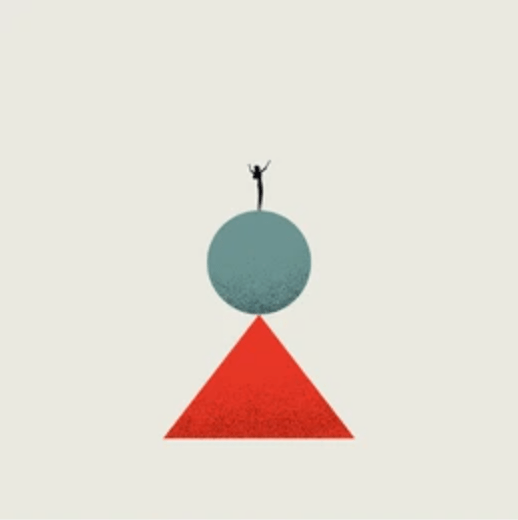
“To be or not to be” dives into the ultimate question: should we keep dragging ourselves through life’s mess, or just tap out? Hamlet wonders if it’s better to face life’s endless chaos or take “the easy way out.” But then, what if the afterlife is just as bad—or worse? That dreaded “what if” holds him (and let’s be honest, probably all of us) in place, too uncertain to make any decisions. So, we stick around, tolerating the absurdity, clinging to the hope that one day, maybe things will be different. Fun times.
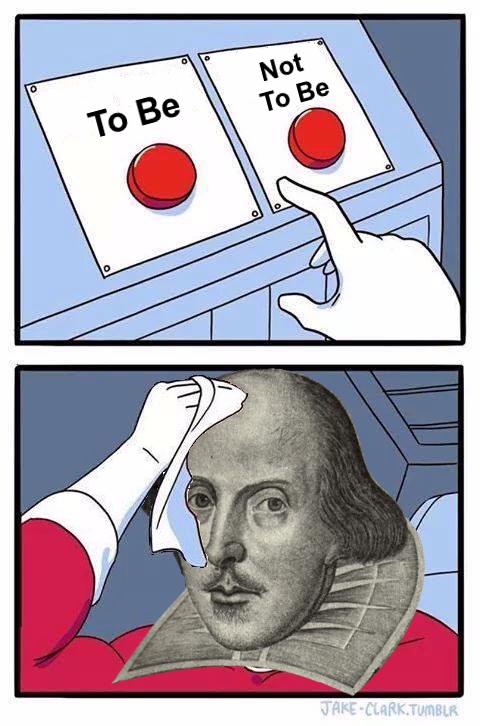
As for me, each time I moved countries, a version of myself was left behind— a mini existential crisis with a side of evolution. When I left India for Egypt, it was the end of one phase and the start of another. I was a fresh college grad, ready to conquer the world. By the time I reached the UK, I was searching for meaning. When I left London, I was craving stability, which led me to Australia. Life, however, had other plans (read: I’m now in Canada). Now, the Australian me is just another ghost of my past, and here I am, striving for some semblance of establishment. Call it my own personal To Be > Not To Be > To Be… saga, with every new start requiring a part of me to “die.” Every leap forward requiring a tiny internal funeral.

Afterall, death is inevitable—whether it’s the literal kind or just saying goodbye to a former self. Of course, this transformation doesn’t always require a passport stamp. Life’s got plenty of curveballs lined up no matter where you are. At first, change is scary, full of resistance (and maybe a bit of bargaining). We resist it at first because, well, the unknown is basically a horror movie in our heads. This is what Hamlet feared most—the great unknown, that keeps us in limbo. But when I chose “not to be” my old self, and took that plunge, I faced the unfamiliar. Only then could the new me “be” once again, stronger and a little wiser after each leap.

Well, guess what? In the end, Hamlet does die—but not by his own hand. He spends a good chunk of time contemplating an exit strategy, only to be killed in a final act of revenge. The irony? Fate, not Hamlet, decides his end in a bloody duel. All that existential dread, and life takes the choice right out of his hands.

And that’s life: whether we like it or not, it’s happening, and yes, maybe it’s all serendipitous. Whether we willingly let go parts of ourselves or not, life inevitably steps in and does some editing. Sometimes, a catalyst nudges us toward surrender; other times, tragedy pushes us headlong. Either way, I’m learning to lean into it—because if life’s going to decide whether I should be or not be, I might as well sit back and savor the excruciating beauty called growth.

Yes, this is a Halloween Special!
Meaning of life

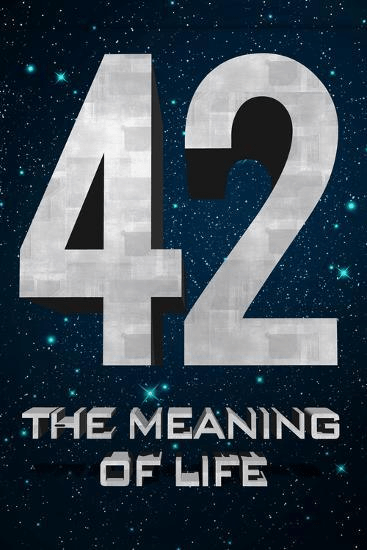
During my travels, I met some pretty fascinating people. Take Egypt, for example. A friend and I were chatting and something absurd about favorite numbers came up, and he casually mentioned his was 42. Now, most people pick something simple like 7 (mine is 7 only cause it’s the magical number, duh!) or 10—rounded. But 42? That caught my attention.

At the time, I had no clue about The Hitchhiker’s Guide to the Galaxy, where 42 is famously the answer to the “Ultimate Question of Life, the Universe, and Everything.” Naturally, I was intrigued and had to dig deeper. Now, I’m not much of a math person, so most of the geeky stuff about 42 went way over my head. But beyond the numbers, 42 has found its way into philosophy, religion, history—it’s got layers. Some fans say it explains everything. Yet, the author himself claims he randomly picked 42. But can something truly be random if it holds so much meaning across so many areas? Is it everything or nothing? Maybe it’s both.

You can see why this idea has stuck with me for over a decade. I’m someone who craves answers, explanations, and logic. I want to know how everything fits together, and I usually can piece it all into a neat, scientific explanation. So when I stumbled on this concept—the meaning of life is everything and nothing—it threw me. It bothered me. I kept thinking, how can these two opposing ideas coexist? Sure, “everything” can be measured, mapped, understood. But “nothing”? It’s intangible, it’s just felt, not seen. And in my world, if you can’t see it, it doesn’t exist.

Yet here I am, 32 years later, realizing there’s more to life. And maybe that “more” isn’t meant to be understood. Maybe it’s a feeling, something I’ll have to learn to trust. I’m not there yet, but I’m trying. Trusting in the unknown is terrifying—it’s messy, it makes me feel vulnerable—but what if that’s the point? What if the magic of life is in its mystery, in the things we can’t explain?

I guess I’ll have to take that leap. Trust in the nothingness, because, well, why not? Isn’t that what makes life beautiful? The mystery, the parts we can’t pin down or rationalize? Maybe that’s where the true meaning lies—not in the answers, but in the journey. After all, some things are just meant to be felt, not explained. And maybe it’s better that way.

What’s crystal clear to me is this—life is what we make of it. We can choose to let our heart believe in the magic of the unknown, the nothing, or let our ego take control and try to manage everything. Sure, you might find some answers along your ego’s journey, but chances are, you won’t like what you discover. It’s like when that supercomputer gave “42” as the answer to the meaning of life and left everyone disappointed. And they waited 7.5 million years for it! Honestly, I no longer have the patience to spend all my time trying to figure everything out. It’s exhausting. But, that doesn’t mean we should be naive and let our heart lead us into delusion either. It’s all about balance—a dance between trusting the mystery and staying grounded in reality.

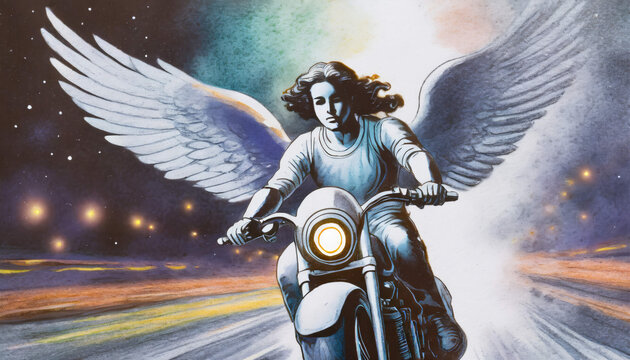
Angel on a motorbike

“I don’t know how to get home. I don’t speak the language, it’s late, my phone’s dead, and all I’ve got is this address scribbled on a crumpled scrap of paper. People at work told me to carry it with me, but who am I even supposed to show it to? Asking the random guy across the street feels like a gamble I don’t want to take. Am I 15 minutes away or 5 hours? Who knows. And where on earth do I even begin walking?”

That was me—19 years old, lost in the middle of Surabaya, Indonesia. I had taken the wrong bus on my way back from the city, and by the time I figured it out, I was far from anywhere familiar. Oh, and that was right after I dodged a creepy cab driver making bizarre kissing gestures. To this day, I still have no idea how I slipped out of that situation!

So there I was, wandering with no plan, figuring I’d just keep walking until something—anything—clicked. Even if it took all night. Honestly, it seemed like the most logical plan at the time. Also, did I mention it was my first week in the country? And my first solo trip abroad? Talk about diving into the deep end.

Then, out of nowhere, this woman on a bike appears like something out of a movie. She slows down, looks at me, and asks if I’m lost. And here’s the kicker—she spoke English! The odds of that? Practically zero. She had her little daughter riding on the back, and she told me she was out waiting for her husband to finish work. That’s the only reason she happened to ride by me. I showed her the address, and she took me all the way home.

When you’re completely lost, help just shows up, like it’s been waiting for you. You don’t see it coming, but it’s always there. Always.

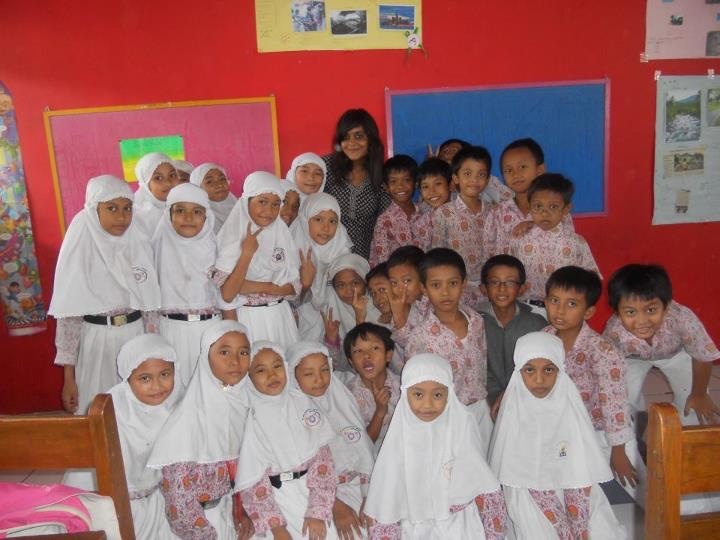
A little snippet from my time in Indonesia!